Get Full Government Meeting Transcripts, Videos, & Alerts Forever!
Get email alerts on the Arbitration Delegation Scope topic
No spam. Unsubscribe anytime.
Texas high court hears dispute over who decides arbitration scope in Urban Air injury case
Summary
The Supreme Court of Texas heard argument in Serna v. Pearland Urban Air on whether a court or an arbitrator decides if a prior waiver and arbitration agreement covers later visits; counsel for both sides disputed whether the issue is formation of a second contract or the scope of the original agreement.
The Supreme Court of Texas on argument day considered whether courts or arbitrators decide if an existing arbitration clause covers later visits to an indoor recreation facility in Serna v. Pearland Urban Air, case No. 240273.
The question presented centers on whether a parent’s earlier signed release and arbitration agreement at an Urban Air location applies to a subsequent visit months later — a dispute the petitioner says is a contract-formation question and the respondent says is a scope question for an arbitrator. The court heard extended questioning from multiple justices and argument from counsel for both parties before the case was submitted.
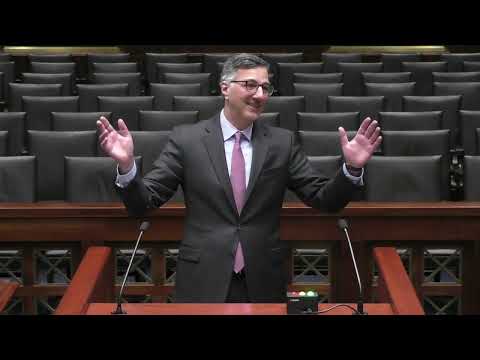
Counsel for the petitioner, Mr. Terrazata, argued that the court of appeals reversed the trial court without performing ordinary contract analysis such as offer, acceptance and mutual assent. “Stop putting arbitration above contract law,” Terrazata told the justices, urging the court to consider whether a later, separate transaction created a new contract rather than sending that issue to an arbitrator.
Responding for Urban Air, Ms. Tari said Section 2 of the Federal Arbitration Act (FAA) supports treating the arbitration clause as binding unless revoked under contract or equity, and that the delegation clause in the parties’ agreement sends arbitrability questions to an arbitrator. “The separability doctrine gets you out from some other defect in some other part of a contract,” Tari said, and if the agreement contains a valid delegation clause, “it goes to the arbitrator to decide.”
Justices pressed both sides on hypotheticals designed to test the limits of each approach. Several justices asked whether a parent who signed a waiver at one visit but then later returned without re-signing or paying would be bound by the earlier agreement; counsel debated whether that scenario showed a separate, unwritten contract or fell within the original agreement’s durational scope. Terrazata repeatedly emphasized that the record lacks evidence (for example, about payment or membership status) that would show the parties intended a continuing relationship, while Tari pointed to contract language covering “premises owned or operated by Urban Air wherever located” and argued that, under Rent A Center and related precedents, the delegation clause should be enforced.
The argumenters and several justices discussed multiple Supreme Court and circuit-era precedents, including Circuit City, Rent A Center, Coinbase, and state decisions cited as “Babydolls,” with debate focused on how those cases affect the line between formation (existence of a contract) and scope (what the contract covers). Counsel and the justices also explored practical consequences, such as whether an old, narrowly negotiated arbitration clause could bind parties to arbitration for unrelated later transactions.
No votes or rulings were taken at argument. After extensive questioning and rebuttal time, the court announced the case was submitted for decision. The transcript record indicates the court did not reach a dispositive ruling at the argument session.
The case raises a recurring arbitration question for Texas courts: when does a dispute over whether an arbitration clause applies implicate contract formation that a court must decide, and when is that question properly delegated to an arbitrator under a delegation clause? The court’s forthcoming opinion will address how federal arbitration doctrine and Texas contract principles interact when a prior release and arbitration clause are invoked to cover subsequent activity.
The case was submitted at the end of oral argument; the court did not announce a decision from the bench.