Get Full Government Meeting Transcripts, Videos, & Alerts Forever!
Get email alerts on the Rla Preemption topic
No spam. Unsubscribe anytime.
Texas Supreme Court hears argument on whether Railway Labor Act preempts pilots' tort claims against Boeing
Summary
The Supreme Court of Texas heard argument in Boeing v. Southwest Airlines Pilots Association over whether the Railway Labor Act preempts state-law claims that require interpreting collective bargaining agreements and whether an associational-suing union has standing.
The Supreme Court of Texas heard argument in Boeing v. Southwest Airlines Pilots Association (No. 230676) over whether the Railway Labor Act (RLA) preempts state-law claims that require interpretation of collective bargaining agreements and whether the union has standing to pursue its members' claims. The court set aside 20 minutes per side for argument and allowed five minutes of rebuttal for the petitioner.
Why it matters: The court's decision could determine whether state courts in Texas may hear tort and other state-law claims that implicate airline collective bargaining agreements when the employer is not a party. Counsel for Boeing told the court that longstanding federal precedent bars state resolution of disputes that require CBA interpretation and that allowing state suits against non-signatories would undercut the RLA's uniform dispute-resolution framework.
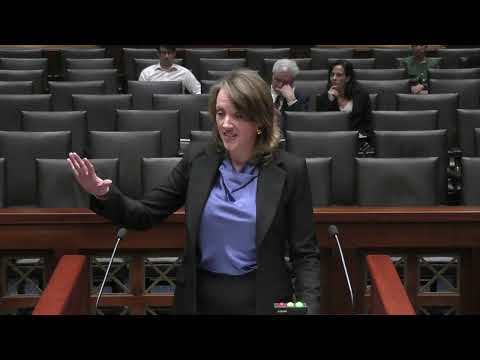
Petitioner counsel, identified in the record as Miss Johnson, argued that the RLA preempts state claims that require interpretation of a collective bargaining agreement and that allowing the union's suit against Boeing (a non-signatory to the pilots' CBAs) would permit state courts to construe CBAs in proceedings from which the employer is absent. "For decades, the RLA has stood for one fundamental principle," Johnson told the court, "No court, state or federal, can resolve a dispute that requires interpretation of a collective bargaining agreement between an air carrier and its employees." She urged the court to follow Norris and other federal precedents that, in her view, bar such state-court suits and to affirm the court of appeals on preemption grounds.
Respondent counsel, identified as Mister Cole, acknowledged that the RLA advances a federal policy but disputed the scope urged by Boeing. Cole told the court the statute's text focuses on disputes "between carriers by air and their employees" and that the RLA chiefly fosters an arbitration-based mechanism for those disputes. He argued that many of the federal cases Boeing cites address fact patterns in which the defendant was effectively the carrier or an agent of the carrier, and that those precedents do not clearly support categorical preemption of claims against unrelated third parties. "The cases they cite either deal with employees of the airline or a successor to the airline," Cole said, and on the facts here the pilots' claims arise from state tort law, with the CBA playing an evidentiary role.
During extended questioning, justices pressed both sides on two recurring issues: (1) whether the court should look to the RLA's text or to the Supreme Court's gloss of that text (principally Norris) when assessing preemption, and (2) whether permitting the union's suit would create a remedial gap (a set of injuries for which federal law displaces state remedies) that the RLA leaves unfilled. Boeing's counsel told the court the case falls within a narrow remedial gap recognized by some federal decisions and that permitting the state-court suit would permit inconsistent and employer-excluding interpretations of CBAs. Respondents countered that the pilots' asserted rights and duties arise under state tort law and that courts routinely use CBAs for evidentiary purposes without treating that use as a preemptive construction.
Counsel also debated standing and procedural choices: Boeing's counsel noted that the union's original associational standing was contested and that the union later used "pass-through" assignments from individual pilots; Boeing argued those procedural choices counsel against allowing the suit to proceed. Respondents' counsel acknowledged case-management difficulties given the number of affected pilots but said those are solvable mass-tort issues and do not resolve the preemption question.
Counsel disputed several factual and record points raised during argument. Boeing's counsel described Southwest's earlier settlement activity and said a press release announced roughly $125 million intended for employees; she also told the court there is no record evidence in the briefing that any specific payments reached individual pilots. Respondent counsel said pilots could still pursue non-CBA-related claims against Boeing if available and described the pilots' damages theory as based in fraudulent inducement and lost flights/wages tied to their agreement to operate certain aircraft.
The court did not rule from the bench. After questioning both sides and hearing rebuttal, the justices took the case under submission. The court announced it would recess briefly and later issue an opinion.
The argument addressed related statutory and case-law authorities, including the Railway Labor Act, Norris (U.S. Supreme Court precedent cited by counsel), the Labor Management Relations Act/section 301 authorities cited by the parties, and several federal circuit opinions cited by counsel (Covenant Coal, Kimbrough, Sears, Mohammed, Inwood). Counsel disagreed about whether those authorities compel preemption of the particular claims the pilots have pleaded.
Future steps: The court has submitted the case and will issue an opinion. That decision will resolve whether Texas courts may entertain this category of state-law claims when adjudication would involve interpretation of airline collective bargaining agreements and when the employer is not a party to the suit.