Get Full Government Meeting Transcripts, Videos, & Alerts Forever!
Get email alerts on the Cancer Epidemiology topic
No spam. Unsubscribe anytime.
Health staff present state cancer-registry data showing higher-than-expected lung cancer cases in Lynn
Summary
A public-health presentation at the March 4 Lynn Board of Health meeting showed Lynn had more observed lung and bronchus cancer cases than expected based on Massachusetts Department of Public Health data; staff cautioned against direct city-to-city comparisons and noted multiple possible drivers.
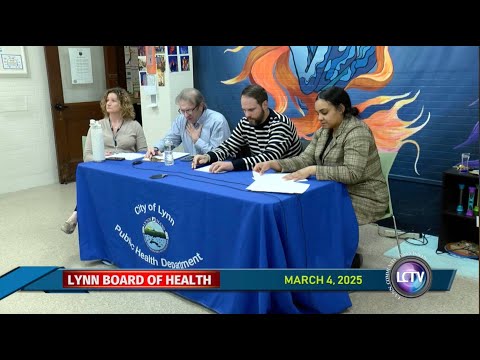
At the March 4 Lynn Board of Health meeting, city epidemiology staff presented Massachusetts Department of Public Health cancer-registry data showing Lynn had more observed lung and bronchus cancer cases than expected between 2006 and 2020.
The presenter said the DPH Office of Population Health’s cancer-incidence dashboard reports observed versus expected cases for each city and town. For the five-year interval cited in the presentation, Lynn had roughly 400 observed lung-and-bronchus cancer cases compared with about 300 expected cases, producing a standard incidence ratio above 100: “3 percent more cases of lung and bronchus cancer were observed than expected,” the presenter said. The presenter cautioned that the standard incidence ratio (SIR) is a relative measure that adjusts for demographic differences and that the dashboard is not designed to be a direct city-to-city comparison without local analysis.
Staff outlined that lung and bronchus cancer was a leading cause of cancer deaths in Massachusetts during the 2016–2020 period and noted that multiple factors — smoking prevalence, socioeconomic status, occupational exposures, or environmental factors — can influence cancer incidence in a community. Board members asked whether the registry numbers align with local smoking-rate data; the presenter said the DPH dashboard did not directly provide smoking prevalence comparisons and that staff could work to correlate state registry numbers with local behavioral data.
Why it matters: Board members said the information supports continued local efforts to reduce tobacco access and to examine social determinants of health that may contribute to higher cancer rates. Staff will provide a copy of the dashboard slides to board members and follow up on questions about smoking prevalence and potential environmental contributors in Lynn.