Get Full Government Meeting Transcripts, Videos, & Alerts Forever!
Get email alerts on the Food Distribution Warehousing topic
No spam. Unsubscribe anytime.
Salem Pantry outlines North Shore distribution hub and requests closer Lynn partnerships
Summary
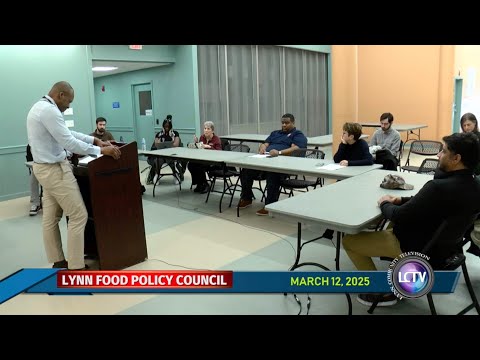
Robin Burns, executive director of the Salem Pantry, told the City of Lynn Food Policy Council the pantry serves thousands from outside Salem, described a warehouse-distribution model in partnership with the Greater Boston Food Bank, and asked for collaboration with Lynn organizations to expand refrigerated distribution and mobile-market reach.
Robin Burns, executive director of the Salem Pantry, told the City of Lynn Food Policy Council on March (2025) that many people who use Salem’s food services come from Lynn and other North Shore communities, and urged deeper operational partnerships rather than duplicative programming.
Burns said Salem Pantry operates three distribution streams: a brick-and-mortar pantry open five days per week, a mobile “market on wheels” that visits about a dozen locations (including Salem State and Salem High School), and a limited home-delivery program for people who cannot access other options.
The pantry also runs a warehouse hub in partnership with the Greater Boston Food Bank that receives multiple truck deliveries each week. Burns said the organization expects to handle roughly 1.2 million pounds of food this year through the warehouse model and that about 20 local organizations already draw supplies from Salem on a rotating basis.
"We receive about three truckloads coming to the Salem Pantry each week in partnership with the Greater Boston Food Bank," Burns said, describing a system where agencies claim pallets or cases of fresh, frozen or nonperishable items and pick them up from Salem.
Burns provided distribution and client data to the council: 9,300 unique households have used Salem Pantry services (her packet lists 9,300 households across a multi-month dataset), roughly 30,000 people represented in those households, and a staff expansion from one employee in March 2020 to a team of 16.
She said heat-mapping of client addresses shows demand spread across municipal lines and that Salem sees many Lynn residents at both mobile and brick-and-mortar sites. Burns said the pantry is actively seeking a larger warehouse site with more cold-storage capacity so it can hold frozen and refrigerated deliveries for partner organizations that lack refrigeration.
Burns emphasized that Salem’s intent is to support existing Lynn programs, not replace them, by offering infrastructure—loading docks, pallet jacks, short-term cold storage and access to additional pallets from the food bank—so local groups can expand offerings such as frozen proteins and fresh produce.
Council members asked about specific connections to Lynn organizations; Burns said Salem already supplies at least seven Lynn-based agencies (including multiple Lynn Shelter Association locations, Bridgewell, St. Stephen’s and Catholic Charities) and that Salem would welcome direct coordination on mobile stops and warehouse pickups.
Burns closed by noting the loss of a Department of Agriculture funding stream (LFPA) that had supported local procurement and cautioned that changes in state/federal support affect local distribution plans. She left a contact card and offered to continue conversations about joint logistics, mobile stops and resource mapping.
The council did not take a formal vote on any specific operational request during the presentation; members expressed interest in follow-up and potential collaboration.