Get Full Government Meeting Transcripts, Videos, & Alerts Forever!
Get email alerts on the Comprehensive Plan topic
No spam. Unsubscribe anytime.
Land Use Commission keeps Envision Evanston 2045 hearing open, sets April deadlines amid sharp public debate
Summary
At a March 19 public hearing, the Evanston Land Use Commission set a public-comment deadline of April 4 and voted to continue deliberations on the draft comprehensive plan to April 16 after more than two hours of testimony. Speakers were sharply divided over proposed zoning changes, housing affordability, preservation and process transparency.
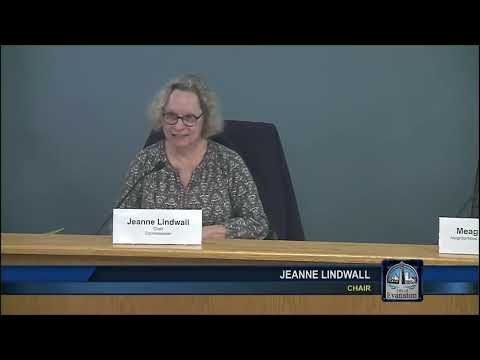
The Evanston Land Use Commission on March 19 continued a public hearing on the draft comprehensive plan known as Envision Evanston 2045 and asked residents, boards and commissions to submit written edits by April 4. Chair Lynn Wall opened the hearing and said, "Our charge from the City Council with respect to development of the comprehensive plan is to do it right but hurry." The commission voted to continue the public hearing to April 16 to begin deliberations on recommended edits.
Why it matters: The commission must decide which edits to recommend to City Council before work begins on a new zoning ordinance. The plan will shape the city's approach to housing, preservation, design and anti-displacement measures for the next two decades.
Public testimony and themes
More than two dozen speakers addressed the commission, including residents, housing advocates, developers and service providers. Testimony clustered around three recurring issues: whether the plan should push for broader zoning reform to increase residential density; how the city should prevent displacement of lower-income renters and homeowners; and concerns about process transparency and consultant selection.
Supporters of the plan's housing recommendations — including Dominic Voss, director of Open Communities, and representatives from Connections for the Homeless — urged the commission to back zoning changes and complementary programs to produce more affordable units. Voss read language from the draft and urged zoning reform so other actions could be implemented. Connections advocate Sue Lolbach said: "We ask you to consider the measures proposed in this plan as a collection of interdependent actions and we ask you to say yes to the zoning changes and to the programming and actions they will enable." Supporters emphasized anti-displacement measures such as a just-cause ordinance, right-to-counsel in eviction court and community land-trust models.
Opponents and preservation concerns
Other speakers, including homeowners and members of the Preservation Commission, warned that large-scale upzoning of R1 and R2 single-family areas could change neighborhood character and would not, by itself, guarantee affordability. Developer and longtime affordable-housing builder Alf McConnell said upzoning alone will not create subsidized affordable housing and highlighted fiscal and infrastructure constraints. John Story Williamson criticized the draft as "more like an ideological manifesto than a practical road map for our city's future," arguing it under-emphasizes homeownership initiatives.
Process, consultant selection and transparency questions
Several speakers raised questions about the planning process dating back to 2022, when a contract with consultant Teska (referred to by some speakers) was not finalized and the city issued a new RFP that ultimately led to HDR being selected. Commenters asked the city to disclose details of that procurement and how earlier equity and economic analyses were used in the present draft. One resident referred to two city-owned buildings (the "Wesley" buildings in testimony) that had been vacated and asked why those 24 units have not been preserved or rehabilitated.
Commission discussion and next steps
Commissioners and staff discussed process logistics for consolidating the public input. Chair Wall and staff asked commissioners to submit specific written proposals (replacement language or clear action items) by April 4; staff will compile those proposals and present them for deliberation at the April 16 meeting and a follow-up session expected May 21. Staff encouraged commissioners to meet individually with planning staff to refine language before the commission votes.
Votes at a glance
- Motion: Approve minutes from October 9, 2024 (minor spelling correction noted). Outcome: approved; abstentions noted in the record (Commissioner Berlin stated she was not a commissioner at that time). Mover/second: not specified in the public record.
- Motion: Approve minutes from October 16, 2024. Outcome: approved; one or more commissioners recorded as abstaining (reasons stated in the record). Mover/second: not specified in the public record.
- Motion: Approve minutes from November 13, 2024. Outcome: approved; abstentions recorded for commissioners not present at that meeting. Mover/second: not specified in the public record.
- Motion: Continue the public hearing on the comprehensive plan to April 16, 2025. Outcome: approved (voice vote). Mover: recorded in the meeting transcript as a member of the commission; second recorded; roll-call not required for continuation motion.
What the commission asked for
Staff and the chair asked for clear, written proposals rather than general comments. The commission’s direction: if a speaker or board wants a change, submit precise replacement language or an action item; staff will compile those items into a consolidated list for commission consideration. Boards and commissions were encouraged to provide line-editable text where possible.
Context and timeline
- Written public comments, edits from boards and commissions and individual commissioner proposals are due April 4, 2025. - The Land Use Commission will begin deliberations on a compiled set of edits during a special meeting on April 16, 2025; a second special meeting is scheduled for May 21, 2025 to continue or finalize recommendations to City Council.
Ending
Commissioners said they expected some items to require longer discussion and that the document could be referred back by council or returned for further edits if necessary. Chair Wall closed the public testimony portion of the meeting while continuing to accept written comments through April 4.
Quotes in this article are from the March 19, 2025 Land Use Commission public hearing transcript.