
Berrien County considers refunding street-drain bonds; advisers cite potential savings but legal hurdles remain
Get AI-powered insights, summaries, and transcripts
Subscribe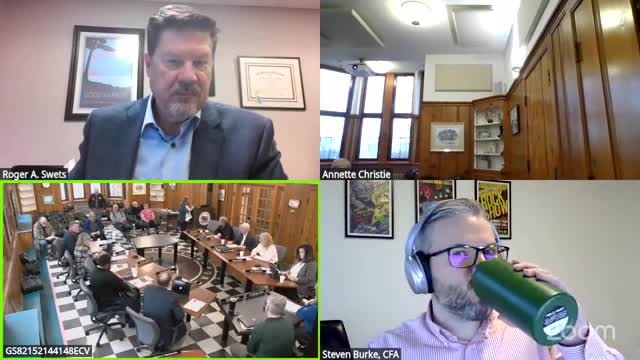
Summary
County officials and outside advisers discussed refinancing bonds for a street drain project that could lower long-term costs if legal and market conditions allow; the refunding would require a county full-faith-and-credit pledge and must close by June 30 under current terms.
Berrien County officials and outside advisers discussed a potential refunding of bonds used to finance a street drain project, with advisers saying a refinancing could yield material savings but that significant legal and market work remains before the county proceeds.
Roger Swetz, bond counsel with Dickinson Wright’s Grand Rapids office, told the Berrien County board that his firm and the county’s financial adviser, Steven Burke of MFCI, had reviewed the November financing documents and identified refunding as a practical option. Swetz said the refunding would have to close on or before June 30 because the existing debt “can only be prepaid on 1 day a year.”
Swetz and Burke provided a preliminary savings estimate but cautioned it is not guaranteed. “There’s a lot of work to be done and issues that we need to dig into to make sure that this can happen. It’s not a sure thing yet,” Swetz said.
Nut graf: The advisers said a refunding that included a county pledge of full faith and credit could lower borrowing costs because investors would price the bonds to the county’s credit, not the drainage district’s. That pledge, the advisers said, is common in Michigan financing but triggers statutory safeguards and contingencies the county must understand before moving forward.
Details: MFCI’s preliminary analysis — described by Swetz and Burke — projects net present-value savings under a refunding scenario. Swetz summarized the figure presented to the county as “potentially approximately” in the low seven figures; he stressed the number depends on market interest rates, issuance costs and unresolved legal questions. He said fees for bond counsel and other advisers typically are paid from bond proceeds and only become due if bonds close.
Swetz described the drainage district as a separate legal entity under Michigan law that lacks employees, a budget or independent taxing power, and relies on special assessments and statutory protections. He described how delinquent assessments are treated similarly to delinquent taxes and can be advanced through a delinquent tax revolving fund, and noted that in a worst-case scenario a deficiency assessment or chargeback mechanism could be used to repay any county advance.
Board members asked for specifics about homeowner impacts. A county speaker said individual total assessments seen in project materials were on the order of tens of thousands of dollars per property (the transcript records the range as roughly $20,000 to $30,000), and the staff member said there are 437 properties in the assessment roll. Swetz said individual annual installments are typically modest and that county calls on its pledge have been rare in his experience.
The board also asked whether construction had begun; a county staff member confirmed that ground had been broken for the project.
Contingency and statutory limits: When asked whether the project contingency percentage would change under a refunding, a county staff member said the contingency is governed by the state drain code and must be between 10 percent and 15 percent; for this project the contingency would remain at 15 percent, the staff member said.
Next steps and caveats: Swetz said his firm and MFCI would need a formal engagement to perform the detailed legal and financial work required to confirm the refunding is feasible and to lock in savings estimates. He emphasized that the analysis so far accepts the existing financing documents “on their face” and that more review is needed to resolve unique legal issues. If engaged, bond counsel’s work would prioritize clearing statutory and tax-law issues and preparing to market a refunding before the June 30 prepayment window.
Ending: County staff thanked Swetz and advisers for the analysis and praised the drain office for moving the project forward. No formal vote or authorization to proceed was recorded at the meeting; the discussion ended with staff noting additional internal follow-up would be required before any formal engagement or bond issuance.