Get Full Government Meeting Transcripts, Videos, & Alerts Forever!
Get email alerts on the Commute Trip Reduction topic
No spam. Unsubscribe anytime.
Spokane commission unanimously forwards four-year commute trip reduction plan to City Council
Summary
The Transportation Commission voted unanimously to send the City of Spokane’s 2026–2029 Commute Trip Reduction (CTR) plan to City Council for adoption after staff review and discussion about goals, induced demand and program scope.
The Transportation Commission of the City of Spokane on March 19 voted unanimously to forward the city’s updated Commute Trip Reduction (CTR) plan to City Council for formal adoption.
The plan, presented by Tyler Cabral, manager for the city, lays out the local commute-trip reduction strategy required by state law and sets a regional goal of reducing the drive‑alone commute rate by 6 percentage points over the plan period. “It was required by state law,” Cabral said while describing how the plan aligns with regional partners, WSDOT technical guidance and the Spokane Regional Transportation Council requirement process.
The plan covers transportation demand management strategies intended to influence land‑use and infrastructure decisions—ranging from bike and pedestrian infrastructure to employer outreach and carpool incentives. Cabral told commissioners the local plan was produced in coordination with SRTC and WSDOT and that it will be in effect through 2029; the next scheduled update is 2030.
Commissioners discussed how the congestion‑reduction goal should be framed to avoid implying that adding vehicle capacity is the preferred solution. One commissioner asked that future drafts better reflect the risk of induced demand—where increased road capacity can prompt more driving—and suggested stronger language tying congestion goals explicitly to mode shift and transit, rather than roadway widening. Another commissioner noted the CTR program’s focus is primarily on commute‑period demand management rather than building new vehicle capacity.
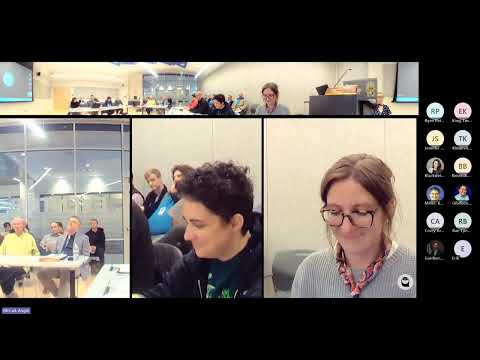
After discussion and public comment, a motion to forward the plan to City Council as written was made and seconded. The motion carried unanimously. The roll call at the start of the meeting recorded President Shipley, Vice President Young, Commissioner Beordahl, Commissioner Harris, Commissioner Joaquin, Commissioner Juliet and Commissioner Pangborn as present; Commissioner Flary was noted absent earlier in the meeting.
The commission’s recommendation begins the local adoption process; if City Council approves the plan by ordinance it will guide local policy and help the city compete for related state and federal grant programs, including CMAQ funding tied to commute trip reduction work.