
Lawmakers describe balancing $30.8 billion budget, tax cuts and Medicaid costs
Get AI-powered insights, summaries, and transcripts
Subscribe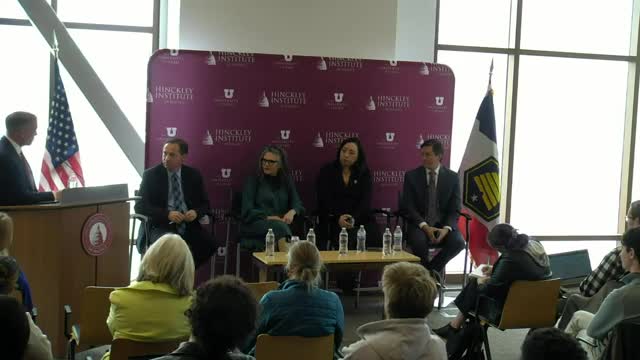
Summary
Panelists described this session's budget trade-offs: a $30.8 billion spending plan, a 0.5% income tax cut, unanticipated Medicaid costs and continued use of rainy day funds.
Senate Majority Leader Kirk Cullimore said the state operated with a $30,800,000,000 budget this session and described a multiyear approach that included tax cuts and reserves: "So even though we cut taxes again this year by a 0.5%, it's more about what we're signaling to the economy," he said.
Panelists said projections shifted during the session. Cullimore said Medicaid expansion required an unexpected additional $75,000,000 beyond December projections. Representative Angela Romero and Senator Jennifer Plumb urged prioritizing social services and safety nets rather than larger tax reductions; Romero said she would have preferred more spending on social services and described the tax cut's per-household benefit as modest in the near term.
Speakers described the budget process as year-round and constrained by a constitutional 45-day session (often cited as 33 working days) and by competing requests: "Let's just say they have... a hundred million of new money to spend. All the appropriations committees may send up requests for a billion dollars," Representative Steve Eliason said, describing the executive appropriations committee's difficult choices.
Panelists discussed rainy day funds and long-range planning. Cullimore said Utah sets aside reserves so the state can continue services if federal funding drops; Eliason noted the legislature created a long-term fund during the session with limits on access for decades. The group cited aggregate tax-cut totals: roughly $160,000,000 this year and about $1.4 billion over five years as a way the state has signaled business friendliness while still increasing overall spending in a growing economy.
Panelists emphasized trade-offs: smaller, recurring tax cuts reduce immediate revenue available for safety-net programs; proponents said tax policy helps attract business and jobs, while critics urged directing more resources to vulnerable populations and social services.