
Lawmakers say session was 'brutal' for some as identity and immigration bills drove sharp debate
Get AI-powered insights, summaries, and transcripts
Subscribe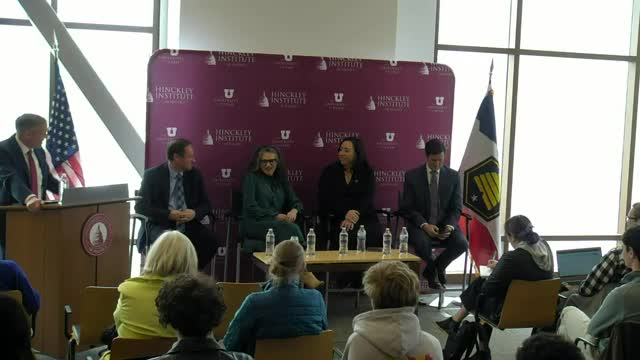
Summary
At a Hinckley Institute forum, Utah legislators described the recent legislative session as emotionally intense, saying battles over identity, immigration and local government authority energized constituents and produced both setbacks and targeted wins.
Senator Jennifer Plumb, minority assistant whip in the Utah Senate, said at a Hinckley Institute forum that "this was a brutal session," describing a legislative year in which bills affecting identity and safety produced intense debate and deep frustration for some lawmakers and constituents.
Plumb said the session included "a lot of issues related to identity and people feeling not safe in who they are," and named immigration, gender-expression and restrictions on diversity, equity and inclusion topics as among those sparking the strongest responses. Representative Angela Romero, House minority leader, said her district—"the most diverse district in the state of Utah"—felt direct effects from immigration bills and other measures, calling it "very frustrating for me" and noting she had hoped congressional action on immigration would have preempted state-level measures.
Panelists tied the heightened tone in Salt Lake City to national political trends. Senator Kirk Cullimore, Senate majority leader representing District 19, said national political fervor filters down to state debates and described the session's forward-looking policy work on infrastructure and energy as occurring alongside more contentious social-policy fights. Romero and Plumb both noted wins they supported—Plumb cited an ombudsman bill aimed at protections for people experiencing homelessness and Romero described a bill limiting required undressing in public-school locker rooms as key accomplishments—but both framed the session as a mix of gains and painful losses for constituents.
Speakers also pointed to differences between chambers: Plumb and Romero said the Senate often serves as a moderating force that blocks some proposals originating in the larger, more ideologically varied House. "The house is a little bit wild," Romero said, and she thanked the Senate for killing some bills she described as "horrible."
The panel—moderated by Jason Perry of the Hinckley Institute of Politics—agreed that, despite sharp disagreements on particular measures, many bills still pass with broad support after the committee and amendment process reshapes proposals.