Get Full Government Meeting Transcripts, Videos, & Alerts Forever!
Get email alerts on the Parks Recreation topic
No spam. Unsubscribe anytime.
Rawlins council reviews VFW Fields renovation plan, seeks options for sewer, building and parking ahead of Little League events
Summary
Rawlins City Council reviewed a recommended renovation plan March 18 for VFW Fields — including sewer replacement, a central concessions/restroom building, asphalt walkways and parking upgrades — and asked staff to return with costed options and funding paths so the site can host regional Little League tournaments.
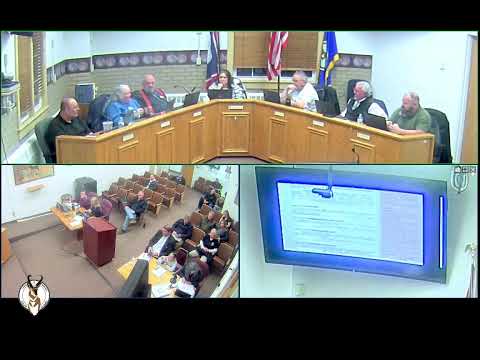
Rawlins City Council held a work session March 18 to review a multi-part renovation plan for VFW Fields aimed at preparing the complex to host regional Little League tournaments in 2026 and later state events.
Recreation Director Nikki Howell told the council that the city currently has $200,000 budgeted for VFW-related work plus an $80,000 Carbon County School District No. 1 recreation grant and previous infield work already paid from earlier capital; the funds are intended for infield renovations, walkways, asphalt, and a central concessions/restroom building. “We are looking at a very high water table that was found to be 1 to 4 feet below grade,” Howell said, listing a collapsed sewer line, deferred walkway maintenance and failing concessions infrastructure among the main problems.
Council members and staff discussed options rather than approving a single plan. A central point of the conversation was that the site has a collapsed sewer service running beneath the fields; staff provided a preliminary contractor estimate for a new sewer tie-in down the southeast corridor of roughly $52,000 to $75,000 and advised that full infrastructure work (water, sewer, storm, and slab/floor drains) could add roughly another $100,000. City staff and the public works representative recommended installing new service lines and a storm drain tied to an existing basin at Daly Street rather than trying to repair the existing line under the field.
Tom (city manager) and Cody (public works staff) estimated an asphalt-overlay approach for the walkways — a 2-inch overlay across the complex — and suggested the city could supply asphalt mix to lower contractor costs; staff estimated roughly $75,000 for asphalt work if the city provides mix and equipment support. Howell recommended spending part of the city’s $100,000 renovation allocation on wiring for scoreboards (estimated $15,600 to run new wiring to two fields), bullpens (estimated $14,210 for two majors/minors), dugout sanding and repainting, a single-field sound system for the majors field, and improved player/umpire staging.
On the central building, staff presented two cost paths: a stick-frame structure estimated at about $70,000 for the building shell with another roughly $100,000 for slab, water, sewer and floor drains (bringing the total near $200,000 for a fully serviced building), or a larger prebuilt modular option staff said could reach about $300,000 once infrastructure is included. “The structure itself would approximately be in that $70,000 range. That’s without a slab. The all the water, sewer infrastructure, floor drains in the slab, that is just another cost in itself,” Tom said.
Council discussed non-structural priorities and incremental approaches. Staff proposed short-term measures to protect player and spectator safety for the coming season: compacted asphalt millings donated by the highway department to smooth the central walkways and an interim storage/concession shed with electrical and water hookups; porta-potties would be secured (Howell said donations were likely). Howell said the donated asphalt milling “would last 4 or 5 years in really good shape” as a temporary surface until full infrastructure work can be completed.
Council members raised options for expanding parking, including asking Carbon County for a memorandum of understanding to use county-owned land adjacent to the fairgrounds and grading an existing city lot to add spaces. Staff said grading and putting down gravel or millings could be done by city crews or a local contractor. Several council members urged using local contractors and sponsorships for donated labor or advertising on fences.
Council discussion also covered accessibility and tournament requirements: the district expects bullpen fencing for majors/minors and a staging/changing area for umpires (staff discussed using a camper or donated staging building during tournaments), and handicapped-accessible restroom access was cited as a reason to prefer a centrally located building. Howell said irrigation was functioning, with 16 zones running roughly an hour per day in non-drought conditions, and earlier infield renovation work has been completed.
Next steps and funding: staff asked council for direction on the building scope so they can begin sewer and groundwork. Tom said the city will bring options, cost ranges and potential funding paths back to council and indicated the city would seek additional capital in next year’s budget for full building work if council wishes to proceed. “We currently have the $200,000 in budget that’s been allotted. We’re looking at about a hundred thousand for the infrastructure, for the sewer line and the water line,” Tom said, and staff said they would return with quotes and a recommended timeline. Meanwhile, staff will pursue donated asphalt millings and a temporary shed to support the upcoming season.
Council did not take a formal final vote on a construction contract or on reallocating capital in this session. Instead, council asked staff to present firm options and costed alternatives at a future meeting and to prepare any necessary budget amendment language if outside reserves or enterprise funds are needed.
Supporters from the Little League attended the session; Don Arcey, Little League board chairman, and Chelsea Monroe were acknowledged by staff for their input and help in identifying needs.
Council members and staff agreed to prioritize sewer replacement and safer walkways and to return to council with granular line-item estimates, vendor options (including prefabricated building vendors), and clear funding recommendations so the council can decide whether to spend the remaining 2025 capital or request additional funds in the next budget cycle.