Get Full Government Meeting Transcripts, Videos, & Alerts Forever!
Get email alerts on the Immigration Rights topic
No spam. Unsubscribe anytime.
Commission discusses immigrant community fears, 'red card' resources and local legal supports
Summary
Commissioners discussed community fear about deportations, local legal resources and education strategies after reports that residents are avoiding public life; they said town halls, an immigration-attorney briefing and printed 'red card' information are being circulated to help residents know their rights.
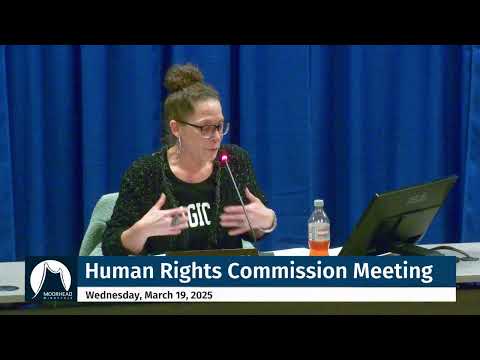
Commissioners and community members devoted a portion of the March 18 Moorhead Human Rights Commission meeting to concerns about immigrant-community fear stemming from deportation activity and uncertainty about legal rights.
Commissioners recounted reports that some residents are avoiding work, school or public events because they fear enforcement actions. Multiple speakers urged education and rapid-response resources rather than speculation. A commissioner noted that community members are being advised to carry immigration documents such as green cards or passports; another commissioner said the commission previously invited an immigration attorney to brief residents on their rights.
Commissioner remarks singled out several local resources and efforts: an upcoming town hall with the Minnesota attorney general at Minnesota State University Moorhead; the Immigrant Development Center (referred to in discussion as an area resource), Legal Services of Northwest Minnesota, and other regional legal-aid and resettlement agencies that can provide referrals. Commissioners said capacity is limited among local legal-service organizations but that referral networks exist.
Commission members discussed a practical outreach tool they called a “red card” — a wallet-sized handout with basic legal-rights information recommended by an immigration attorney — and agreed to circulate an electronic link to commissioners and consider quiet distribution strategies (leaving cards in restrooms or on bus seats) to reach people who might be reluctant to engage publicly.
Commissioners asked whether the Human Rights Commission’s role should include broader public education campaigns; several suggested partnering with immigrant-serving organizations and resettlement agencies to promote trust and awareness rather than undertake standalone efforts without partners.
Captain Swenson of the Moorhead Police Department reiterated that police priorities include community protection and community policing efforts; commissioners thanked law enforcement for previous community-engagement work and suggested continued collaboration to reduce fear.
Commissioners agreed to share red-card links internally and to track developments from attorney-general and local legal-aid outreach so they can provide referrals and meet community needs as they evolve.