Get Full Government Meeting Transcripts, Videos, & Alerts Forever!
Get email alerts on the Arts Partnership Update topic
No spam. Unsubscribe anytime.
Arts Partnership outlines grants, artist mentoring and venue programs in annual update
Summary
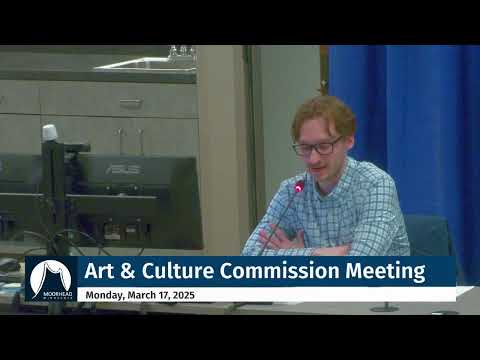
Tanya Blanich, executive director of the Arts Partnership, updated the Moorhead Arts and Culture Commission on the organization's grants, artist support programs, studio space and a new mentoring cohort for artists of color.
Tanya Blanich, executive director of the Arts Partnership, told the Moorhead Arts and Culture Commission on March 17 that the local arts council supports artists and arts organizations across the metro and distributes grant funding to local groups and individuals. "As you probably know, the Arts Partnership is the local arts council. Our mission is cultivating community through the arts," Blanich said.
The update described the Partnership's mission and grant programs and why they matter to Moorhead's arts ecosystem. The organization funds mid-sized and larger organizations through City Arts Partnership grants, supports smaller or volunteer-run groups with community cultivation grants, and runs smaller targeted awards called Art for All grants to channel arts into health and human services programming.
Blanich said the Partnership also operates artist studios at West Acres (19 studios originally, now 18 after the Partnership moved), publishes a weekly arts column for the Forum newspaper, runs a Community Supported Art program that pays participating artists stipends, and manages ArtWorks, a rotating exhibit program placed in roughly 23 community venues.
She described a newly launched mentoring program for emerging artists of color that began in January and includes one-on-one mentoring, group sessions with guest speakers, professional video work donated by Jay Evans of Off Color Media, headshots, networking and a $1,000 grant to each participant upon meeting program requirements. "We have launched a program ... to mentor emerging artists of color," Blanich said. She said three artists are in the first cohort: a recent NDSU classical-music graduate who is also a poet; a poet/theater artist in their late 20s; and a Native artist who works as a nurse and creates beadwork and contemporary Native imagery.
Blanich also detailed Community Supported Art, a long-running program modeled on community-supported agriculture in which purchasers receive performances, take-home art and food; she said artists have received nearly $120,000 in stipends over 13 seasons. The ArtWorks exhibit program places about a dozen works in each site each quarter; Blanich said it has helped artists sell roughly $50,000 of work since July 2017 (information reported anecdotally by the Partnership).
Commissioners asked several clarifying questions about grant sizes, studio occupancy and program operations; Blanich answered that Tier 1 grants can be up to $10,000 and that the Partnership gives an average grant near $5,000 to mid-sized groups. She described the Art for All grants as intentionally small to avoid burdening social-service organizations with program administration.
The commission did not take formal action on the update; Blanich fielded questions and concluded the presentation so she could attend another engagement.