Get Full Government Meeting Transcripts, Videos, & Alerts Forever!
Get email alerts on the Procurement topic
No spam. Unsubscribe anytime.
Tomball ISD trustees hear detailed review of district procurement process
Summary
Chief Financial Officer Zach Bowles briefed the board on federal, state and local procurement rules, the district’s decentralized purchasing structure, approval thresholds and audit controls; trustees asked about audits, aggregate thresholds, cooperative purchasing and conflict-of-interest safeguards.
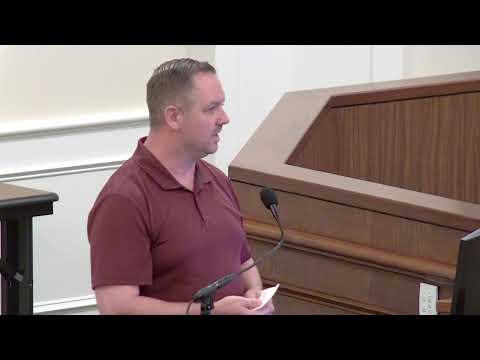
Chief Financial Officer Zach Bowles presented a review of Tomball Independent School District’s procurement process and the layers of regulation that govern how the district spends federal, state and local funds.
Bowles told the board that multiple federal requirements apply when federal funds are used, including the Uniform Guidance and Education Department (EDGAR) rules, and that districts must follow the most restrictive applicable rules. “All federal funds have to be supplemental in nature,” Bowles said, saying federal dollars may not replace local funding and that documentation, price analysis and quarterly/annual reporting are required to avoid disallowed costs.
The presentation summarized state and local rules as well. Bowles identified Texas Education Code 44.031 as the primary statute governing competitive procurement for the general fund and described the district’s local policy framework, including board policy CH legal and CH local. He said Texas law requires competitive procurement for aggregated commodity-category spending that exceeds $50,000 on a rolling 12‑month basis and that formal bids (CSP, RFP, RFQ) or interlocal/purchasing-cooperative contracts are typical methods when that threshold is reached.
Bowles described Tomball ISD’s practical approach: the district uses the Texas Comptroller’s commodity-code listing for standardization, operates a decentralized purchasing model that gives campuses and departments authority to identify products and vendors, and maintains a small central purchasing team of two people who process roughly 9,000 purchase orders per year. He summarized approval thresholds used by the district’s finance processes: purchasing staff may approve documented purchases from $0–$5,000; the director of finance handles $5,000–$25,000; the chief financial officer reviews larger purchases up to $50,000; superintendent approval is required for purchases of $50,000 and up; and board approval is required for purchases of $100,000 and greater except for CH local exceptions (interlocal contracts, continuing bid purchases, produce or fuel) where the board has locally set an exception threshold of $200,000.
Bowles emphasized controls used to enforce those thresholds and to prevent artificial splitting of purchases: “We have flags set in place to try and catch that and make sure that we then go back to the campus,” he said, describing consecutive‑purchase monitoring and commodity‑code tracking on a daily rolling basis. He also explained why the district relies heavily on purchasing cooperatives: cooperatives do formal bidding and contracting work for many vendors, provide access to a broader vendor pool, and can reduce administrative burden for a small purchasing team. Bowles estimated that “at least 80% of our purchases probably run through [cooperatives] in some manner.”
Trustees asked questions about recent audits, the commodity‑code aggregate rules, staffing and conflict‑of‑interest procedures. One trustee asked whether third‑party financial auditors had reviewed procurement; Bowles said an internal‑controls audit was completed by a division of the district’s audit contractor and that it found no material weaknesses. On the $50,000 aggregate threshold he clarified: “The commodity code applies to the district as a whole… it’s a rolling continuous 12 month period.” On conflict of interest, Bowles said vendor conflict forms are reviewed, employees with conflicts are removed from the procurement process, and board members abstain from votes when conflicts exist; he also described an alternate signer if the superintendent has a conflict.
Bowles described the district’s training and peer‑review practices, including annual participation in a purchasing peer review through the Texas Association of School Business Officials, and said Tomball ISD had received a purchasing award of merit for three consecutive years. He reiterated that federal audits may be unannounced and that documentation must be available, typically within a 10‑business‑day response window, to avoid disallowed expenditures.
Board members thanked Bowles for the briefing and commented on the lean size of the purchasing staff and the role of cooperatives in the district’s processes.
The presentation closed and the board moved into questions.