Get Full Government Meeting Transcripts, Videos, & Alerts Forever!
Get email alerts on the Funding Impact Fees Transportation topic
No spam. Unsubscribe anytime.
County and district weigh impact-fee study and a smaller transportation referendum after recent defeats
Summary
Following a failed transportation sales tax referendum and a prior unsuccessful school referendum, county council and school trustees discussed an impact-fee study, options to change the school impact-fee boundary, and a likely smaller transportation package to re-present to voters.
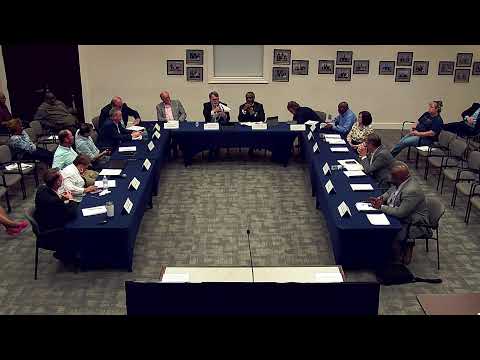
Lancaster County Council members and school trustees used the joint session to re-examine funding tools after a recent county transportation sales-tax referendum failed and a prior school referendum did not win voter approval.
County officials described the last transportation measure as having covered more than 25 road projects including a major widening of Highway 521 and said the County Transportation Committee (CTC) will meet March 27 to consider a smaller package—participants discussed a possible $250 million package over a shorter term, such as 10 years—before deciding whether to seek voter approval in November 2025.
From the district side, trustees approved an impact-fee study to reassess the 2021 residential school impact fee (a fee that currently applies only north of Highway 521). The district estimated the study will cost about $70,000–$75,000 and said the current fee is roughly $9,000 per single-family and about $9,900 per multifamily unit; the district reported approximately $900,000 in collections to date. County attorneys and council members noted that several developments approved before the 2021 ordinance remain exempt from that fee and that the state attorney general will not provide a definitive opinion on the enforceability of retroactive changes to local ordinances.
Board and council members debated whether to extend impact fees south of Highway 521. Several council members said growth patterns make a countywide fee impractical, and some said imposing high fees in lower-cost areas could affect housing affordability. The district noted that impact fees are limited by state statute to capital projects (land acquisition, expansion or construction of elementary and middle schools in the defined geographic area) and, if adopted, must be spent within prescribed timelines.
County and district officials stressed that impact fees are only one tool and not a substitute for bond financing. Trustees noted that mobile classrooms in growth areas cost approximately $1 million each and that the Panhandle area currently has about 53 mobile classrooms, which underscores the urgency of capital planning. Officials said they will continue to study options and return to their respective bodies with more detailed recommendations and cost estimates.