Get Full Government Meeting Transcripts, Videos, & Alerts Forever!
Get email alerts on the Service Programs topic
No spam. Unsubscribe anytime.
California Service Corps webinar spotlights paid-service pathways, training and application timelines
Summary
California Volunteers hosted an online panel introducing the California Service Corps and its paid-service programs, with alumni describing how service translated into jobs, training and community projects.
California Volunteers hosted an online panel introducing the California Service Corps and its paid-service programs, with alumni describing how service translated into jobs, training and community projects. The webinar included program overviews, alumni stories and application guidance for prospective applicants.
The California Service Corps, launched by Governor Gavin Newsom and administered by California Volunteers, includes College Corps, California Climate Action Corps (CCAC), Youth Service Corps and AmeriCorps California. The programs together account for over 10,000 members and fellows, the presenters said, and are designed to provide living allowances, education benefits and hands-on experience in areas such as climate action, education support and community resilience.
Panelists outlined program specifics and outcomes. Laurie Marvin, Director of Recruitment at California Volunteers, summarized the suite of programs and the statewide scale of the initiative. She said College Corps places full-time undergraduate students at more than 40 colleges and universities and that fellows "earn up to $10,000 after completing 450 hours of service over the course of one academic year." Marvin said CCAC offers targeted climate-sector placements and that fellows "earn over $40,000 spread across an 11-month service term" in a combination of living allowance and education funds. She described Youth Service Corps as providing on-the-job experience for young people with public agencies and nonprofits, and AmeriCorps California as a broader program connecting members to work on education, environment, disaster preparedness and health equity.
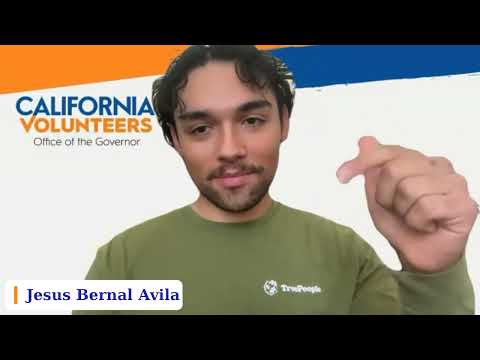
Alumni on the panel described concrete career transitions and skills gained. Jesus Bernal Avila, a College Corps and CCAC alumnus who now works as a mountain forestry coordinator with TreePeople, said service helped him gain entry-level experience and led directly to his current position: "I get paid to be outside and work in the beautiful outdoors," he said, describing reforestation work, cone collection and a podcast project that helped him secure a full-time role. Brandon Contreras, a College Corps alumnus now a waste diversion and recycling specialist with the City of Long Beach, described learning office skills and program compliance work, noting he gained experience implementing the campus rollout of new organic-waste bins and cited state organic-waste law when describing his work. Emily Estrada, a former CCAC fellow now at the California Energy Commission, described earning a climate stewards certification during her term and using site-specific mentorship to build professional skills. Ryan Murphy, a Youth Service Corps alumnus and engineering technician at the City of Fresno Public Utilities Department, said the program provided the minimum practical experience that led his department to hire him full time: "It gave me a career job," Murphy said. Annika Bridal, a two-term AmeriCorps California alum with Sierra Nevada Alliance, described outreach, partnership-building across the Sierra Nevada and regional public-education campaigns such as Take Care Sierra.
Panelists emphasized professional-development components that applicants should weigh. They listed common features across sites: structured training time, mentorship from site supervisors, on-site technical or certification opportunities (Emily cited a climate stewards certification tied to CCAC service), and routine office and field tasks that build résumé-ready skills (e.g., Microsoft Office, meeting facilitation, community outreach). Several panelists said the programs can substitute for unpaid internships that many applicants cannot afford, especially for first-generation or low-income applicants.
Practical application details were provided: Marvin said College Corps recruiting is occurring now through participating campuses, CCAC applications open May 1 (year noted in the webinar), and AmeriCorps California and Youth Service Corps maintain rolling or year‑round application windows with many partners recruiting for fall start dates. Panelists also discussed program eligibility limits: Youth Service Corps has an upper age limit of 30, while other programs typically do not impose an upper-age limit. Several panelists noted that CCAC and College Corps placements are usually full‑time commitments and that balancing full-time coursework with a 40‑hour service term requires schedule planning.
Panelists offered advice for applicants: review program descriptions and host-site postings to match interests, treat the position as a professional commitment, and take full advantage of training and networking opportunities offered during the service term. The hosts directed prospective applicants to the California Service Corps programs page (caservicecorps.com) for program details and partner contact information. The webinar was recorded and will be shared with registrants and posted to the California Volunteers YouTube channel.
The panel combined program-level information and several personal examples of career outcomes, but did not make policy changes or issue new guidance on program eligibility or funding during the webinar. Attendees were encouraged to contact program partners for site-specific details and to review application timelines on program pages.