Get Full Government Meeting Transcripts, Videos, & Alerts Forever!
Get email alerts on the Comprehensive Plan Housing topic
No spam. Unsubscribe anytime.
Woodland planning commission reviews draft 2025 comprehensive plan, vacant‑land analysis and housing allocations
Summary
At a March 20 workshop the Woodland Planning Commission and staff discussed a consultant’s vacant and redevelopable‑lands analysis, how Growth Management Act allocations from Clark and Cowlitz counties affect Woodland’s 20‑year housing targets, and next steps including refined GIS analysis and chapter assignments for the draft comprehensive plan.
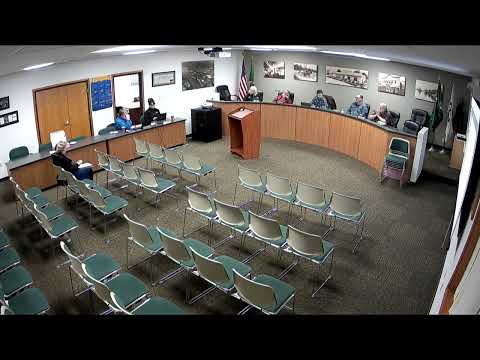
WOODLAND, Wash. — At a March 20 workshop the Woodland Planning Commission examined consultant data on vacant and redevelopable parcels, housing allocations driven by the Growth Management Act (GMA), and public survey results as staff sought direction on next steps for the city’s 2025 comprehensive plan update.
Planning staff told the commission the consultant produced a vacant and redevelopable parcels map from Cowlitz County assessor records, using land‑use tax codes and a simple logic comparing land value and improvement value to flag vacant parcels and low‑value structures as potential redevelopment candidates. "The vacant and redevelopable lands map is before you here. And you see in the solid green is the parcels that are vacant," planning staff said, describing the map’s green (vacant), green hash (vacant/planned for development) and yellow (potentially redevelopable) designations.
Why it matters: the consultant applied those parcel counts and local and county population projections to produce a 20‑year housing capacity estimate that must be shown in Woodland’s comp plan for GMA compliance. Commissioners were warned that allocations coming from Clark County’s planning process — including a roughly 105‑unit figure allocated to Woodland under Clark County calculations — may not be realistic for physical constraints inside the city and Horseshoe Lake area.
Planning staff summarized the tension: Clark County’s methodology assigns Woodland a fraction of Clark’s projected growth and expects many of the units to be inside the Horseshoe Lake area. “That’s a little problematic for us… the math just doesn’t work,” planning staff said, noting two large parcels — a wetland and a small RV/mobile‑home park — limit development in the area Clark County counted. Staff added that in contrast to Clark County, “Cowlitz County doesn’t necessarily collect the same data and they don't necessarily do the same analysis.”
Commissioners pressed data quality and assumptions. Commissioner Dave Simpson said, “I guess at the end of the day, I'm kind of questioning the quality of the data,” citing concern that the consultant used a low structure‑value threshold (about $50,000) that may omit plausible redevelopment candidates. Commissioner Robin Zorick asked a specific, recurring question: “So what happens to properties like Woodland Park East?” Planning staff explained the difference between tax parcels and subdivided lots, and how assessor records show structure and land valuations that feed the consultant’s classification.
Staff and commissioners discussed recent local changes that affect capacity calculations: sewer construction to serve the Island Air RV/mobile‑home park outside the city limits, pending subdivisions now in the pipeline that will consume a large portion of Woodland’s near‑term vacant‑land supply, and higher recent building‑permit activity that could concentrate much of the 20‑year supply into the first five years. Planning staff warned that, while the comp plan must demonstrate a 20‑year buildable lands supply for GMA compliance, local construction could exhaust the city’s practical supply well before 20 years.
On affordability, staff reviewed how the consultant and Clark County slice housing needs by share of area median income (AMI). Staff noted the difference between median and average and explained the consultant’s need to show capacity by income band (0–30% AMI, 30–50% AMI, 80–120% AMI, etc.). The group noted differing definitions and data sources for AMI may shift the counts; staff said the 2023 assessment used city boundaries and older Census data (2019) while a quick online check produced a higher figure ($83,163) that may reflect broader geographies or different source data.
Directions and next steps: planning staff said they will request additional, refined analyses from the consultant (SCJ Alliance) to truth‑test the parcel inventory and run alternative thresholds and queries on the assessor/GIS data — for example, searching for large single‑house lots (e.g., lots greater than 20,000 sq. ft.) and rerunning the redevelopable‑structure cutoff at higher thresholds (e.g., $75,000–$100,000). Staff agreed to provide the planning commission a tracked, dated Excel spreadsheet that consolidates goals and policies from each chapter, consultant comments, and public input; staff also asked commissioners to send chapter comments to staff one week before the next meeting so staff can fold them into the shared spreadsheet.
Commissioners volunteered to focus review on specific chapters (land use, housing, transportation, environment and capital facilities were all named during the meeting), and staff suggested using upcoming open houses and an April meeting as checkpoints. Planning staff noted they would contact the consultant’s data analyst directly to request the refined GIS queries discussed in the workshop.
Votes and formal items at the start and end of the meeting were brief: the commission approved the meeting agenda and the February minutes by voice vote; the meeting closed by motion to adjourn. The agenda item about an apparent extra set of November minutes in the packet was discussed but not resolved formally during the workshop.
Ending: Staff will post an updated version of the consolidated goals/policies spreadsheet to the project page and the public comp plan web page; commissioners will return detailed chapter comments a week before the next meeting and staff will ask SCJ Alliance to run the refined parcel queries requested during the workshop. The commission scheduled continued work on chapter review at upcoming meetings and public open houses.