Citizen Portal
Sign In

Mesa Council hears study recommending upgraded convention center, amphitheater and hotel improvements to boost downtown events

2729592 · March 20, 2025

Loading...

AI-Generated Content: All content on this page was generated by AI to highlight key points from the meeting. For complete details and context, we recommend watching the full video. so we can fix them.

Summary

City staff and consultants presented a yearlong facility-improvement study recommending targeted upgrades to the Mesa Convention Center, Mesa Amphitheater and a partnering hotel to attract higher‑value conventions and concerts and increase downtown economic activity.

Andrea Moore, director of Parks, Recreation and Community Facilities, told the City Council that staff and outside consultants completed a yearlong facility improvement study for the Mesa Convention Center and Mesa Amphitheater and were presenting “an overview of the facility improvement study” and a draft report available in the meeting agenda materials.

The study, led by consultant Tyler Oton of Convention Sports & Leisure with input from HMC Architects and others, recommends a set of targeted, phased improvements rather than a full replacement. The plan aims to raise the quality of events Mesa can host, increase hotel room nights downtown and improve the amphitheater’s artist and fan amenities so the district generates more economic activity for Mesa’s downtown.

Why it matters: consultants told council members that Mesa has increased convention activity in recent years but still trails newer, higher‑amenity venues in the region. Planners reported that the number of high‑impact conventions held in Mesa rose from about 15 in 2019 to 26 in 2024, and study participants said a lack of modern meeting and food‑function space limits Mesa’s ability to attract higher‑spending events.

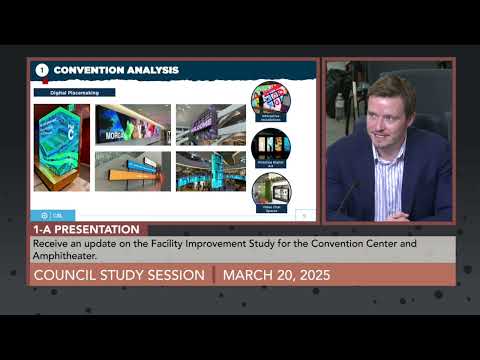
Key findings and recommendations from the study include: - Event space limits: the convention complex has a main hall of about 15,000 square feet but the primary hotel ballroom is constrained at roughly 9,700 square feet, which limits the venue’s ability to host large food‑function general sessions that many associations require. - Hotel room supply: the anchor hotel identified in the study has about 274 rooms, which consultants said is adequate for many mid‑size events but leaves Mesa less competitive for citywide events that require multiple downtown headquarter hotels. - Planners’ familiarity: of 65 event planners interviewed, consultants said 86% were familiar with Mesa as a place but were not familiar with the convention facility; many described the building as dated and in need of upgrades. - Place‑making and technology: the report recommends new, larger lobbies (7,000–8,000 square feet), digital placemaking (LEDs, projection mapping and other immersive technologies) and improved downtown wayfinding and lighting to better connect attendees to nearby destinations such as the ASU Mix Center. - Outdoor, flexible event space: the study highlights strong promoter interest in an indoor‑outdoor patio/terrace for banquet and general‑session use (consultants said roughly three‑quarters of planners expressed high interest) and includes concept visuals for a three‑season space with retractable doors, high‑end AV and lighting. - Amphitheater upgrades: recommended improvements include expanded backstage hospitality/green‑room space, enhanced rigging capacity to accommodate modern touring production needs, additional shading/overhead canopies to lengthen seasonality, VIP seating and better concessions.

Randy McGrane, owner/manager of the Delta Hotel and representative of the Ensemble Group, said the hotel and convention center must be planned as one complex. McGrane told council he has invested about $15 million in the hotel since 2018 and described negotiations with Marriott to upgrade the hotel brand and the hotel’s food and beverage offerings to better support the convention market.

Consultant Tyler Oton summarized the economic case the report offers, saying a full suite of coordinated improvements to the hotel, convention center and amphitheater could generate substantial downtown spending. The draft report estimates a 20‑year net present value of new direct spending in the downtown area (the consultants presented figures for direct and indirect impacts in the presentation materials).

Council questions focused on cost and financing. City staff and the consultant said the presentation was intended to establish a preferred program of improvements and that a separate, detailed financing and phasing plan would be prepared for council review. City Manager staff noted the city’s general fund currently subsidizes convention center operations and that additional capital funding would require a separate council decision on financing sources.

Council reaction was broadly supportive of further study. Several members said they liked the focus on a phased, executable plan rather than an overly large master plan; others emphasized the need to return with clearer funding options. No formal action or vote on capital funding was taken at the meeting.

The presentation included examples from other markets and visuals prepared by HMC Architects; consultants said a longer draft report (about 190 pages) is available on the council agenda for review. The council moved on to the next agenda item after the study Q&A.