Get Full Government Meeting Transcripts, Videos, & Alerts Forever!
Get email alerts on the Shelter Access Resolution topic
No spam. Unsubscribe anytime.
Council delays vote on resolution that would guarantee councilor access to city‑run shelters after months of public debate
Summary
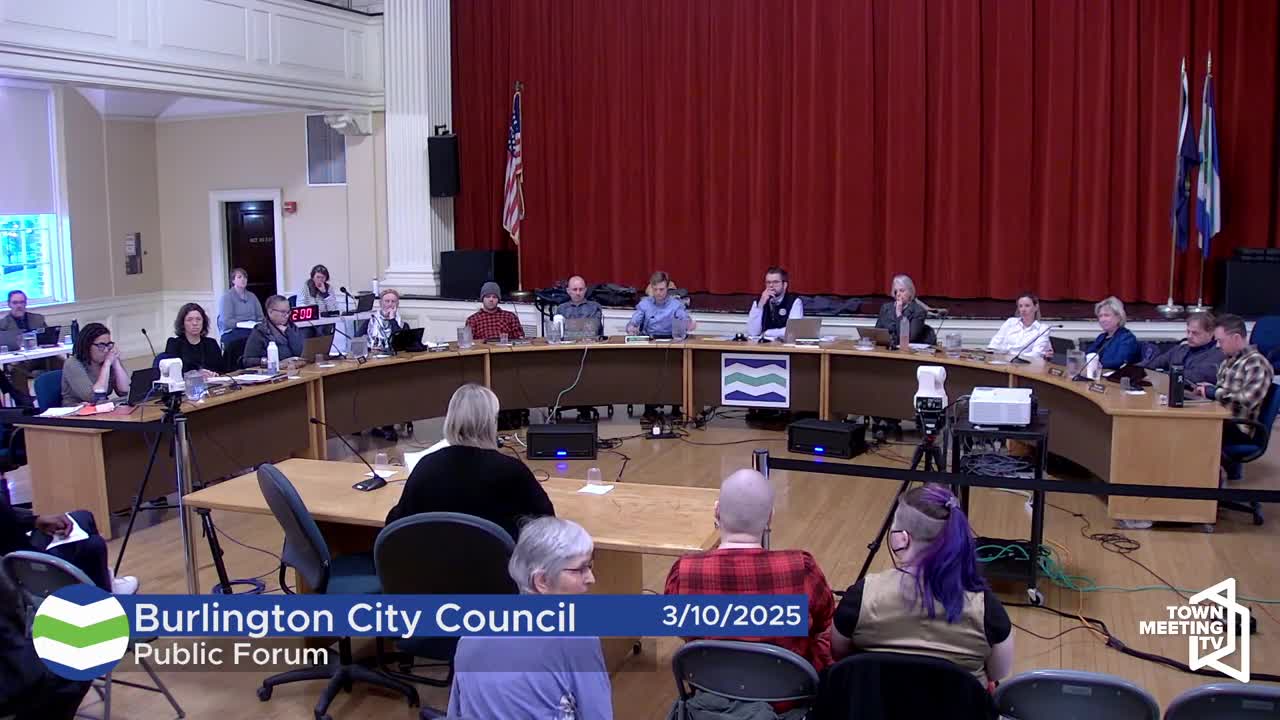
After extensive public comment and heated council debate, the Burlington City Council voted 6–5 to postpone consideration of a resolution that would guarantee councilor access to city‑owned buildings and programs, including emergency shelters.
The Burlington City Council on Monday postponed action on a contentious draft resolution that would guarantee councilors access to city‑owned buildings and programs, including emergency shelters and similar operations. The motion to postpone moved by Councilor Peter Carpenter carried 6–5 and the item was rescheduled for the March 24 meeting.
Councilors and the public debated the resolution after a prolonged public‑comment period in which many speakers opposed allowing councilors to visit shelters while they were operating. Speakers who work with or have used shelter services warned that visits by elected officials would deter people from using low‑barrier services and would harm clients’ privacy and dignity. For example, Aspen Cooper said, “These sites need to be as welcoming and accommodating as possible with low barriers for use,” and expressed concern about “infiltration by the government.” Several shelter users and service providers — including volunteers and shelter staff named in public comment — urged the council to protect guest privacy and said staff already manage complex operations.
Supporters of the resolution, led by Councilor Shannon, said the council has a charter responsibility to oversee municipal programs and that city councilors have been denied the ability to observe a city‑run emergency shelter at the Miller Center even after providing notice. Shannon said she and a state representative were turned away from the facility on Feb. 17 and argued the council should be able to confirm conditions in city programs: “This resolution is merely to recognize this council as a full partner in resolving challenges and to create transparency as to how our city program is being run.”
City officials — including the mayor and the city attorney — told the council that the Miller Center pop‑up shelter is operated by CVOEO with funding and contract terms from the Agency of Human Services and that the shelter’s visitor policy responds to privacy rules and partner contract language. The city attorney said obtaining informed consent from every guest would be required before permitting visitors while the shelter is operating, and staff said the pop‑up shelter model (often stood up with 48 hours’ notice and changing nightly guest lists) makes that very difficult.
Amid the debate, several councilors urged a collaborative process. Councilor Heather Litwin said the resolution “kick starts a much needed collaborative dialogue” and requested more time for discussion. Councilor Carpenter moved to postpone the item to March 24; the motion passed 6–5 with Travers, Shannon, McKnight, Carpenter, Barlow and Litwin voting in favor and Grant, Bergman, Broderick, Kane and Neubieser voting no.
Public commenters on both sides repeatedly referenced the Miller Center’s dual use as a shelter and a location for child care and after‑school programs. Multiple public speakers recounted experiences at the shelter and urged the council to prioritize dignity and safety. The council’s postponement allows time for additional meetings among council members, the mayor’s office and shelter partners before the item returns to the agenda.