Get Full Government Meeting Transcripts, Videos, & Alerts Forever!
Get email alerts on the Budget Fy26 topic
No spam. Unsubscribe anytime.
Chariho presents FY26 budget preview: 3.19% proposed increase, fund-balance and capital needs spotlighted
Summary
Administration presented a preliminary FY26 budget that proposes a 3.19% increase, holds state-aid estimates at prior-year levels, plans a 2.25% fund balance and flags capital project needs and rising health-care costs; public commenters raised concerns about facilities, special education services and politicization of school governance.
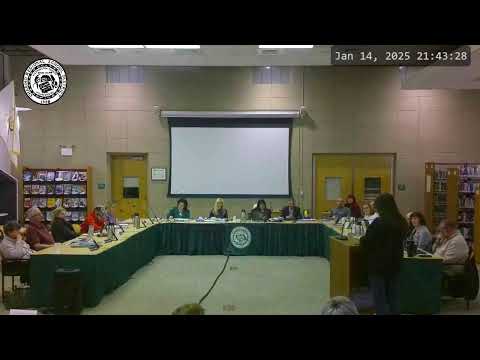
At a Jan. 14, 2025 meeting, Chariho Regional School District administrators presented a preliminary Fiscal Year 2026 budget that proposes a 3.19% overall increase and relies on preliminary state aid projections; the board and the public discussed fund balance levels, capital needs and special-education and safety concerns ahead of the district’s omnibus and budget workshops.
The proposed FY26 budget matters to taxpayers across Charlestown, Richmond and Hopkinton because the membership formula allocates costs among the three towns and the budget will be voted by residents on April 8, 2025. The preliminary plan also sets the schedule for public hearings, omnibus sessions and the March district finance meeting.
Superintendent Picard opened the presentation by framing the budget as an effort to “provide a transparent overview” that balances academic priorities with fiscal responsibility; she told the committee the materials are preliminary and based on current state-aid estimates. “This budget ensures Chariho stays on track to provide a high quality and rigorous public education to all of our students,” she said.
Gregory Zegnan (director of administration and finance) presented detail on revenues and major cost drivers. Key figures and points included: - Proposed overall budget increase: 3.19% (FY26 proposed vs. FY25). - CTC (Career & Technical Center) tuition revenue estimate: $3,024,088 (estimate based on expected in-district and out-of-district enrollments). - Grants: administration reported more than $3,000,000 in multi-year grant awards (Project AWARE, USDA Project SCALES and other competitive grants) that support mental-health, farm-to-school and internship programming. - Health-care costs: the administration cited New England health-care trend estimates of about 15%–20% for premium increases. - Fund balance: the FY26 proposal would retain 2.25% of the general fund as district policy currently sets fund balance at 2%–4%; the administration said auditors recommend 7%–10% as a best practice. The budget proposal also includes a $641,143 transfer from fund balance to capital and a planned reallocation of fund-balance distributions back to member towns totaling approximately $2,482,006 (as presented in the packet). - Capital and facilities: the administration emphasized deferred maintenance and capital needs (HVAC, roof and site work) as a near-term priority and noted the district plans to use a portion of the fund balance for capital requests in FY26.
Zegnan said the district posts budget documents online and will continue to update a frequently asked questions document after the omnibus meeting and subsequent workshops. He also invited committee members to request the underlying budget in Excel if they want line-item breakdowns; staff said some line-by-line exports may require additional staff time because the budget uses state-required coding and cross-campus allocations.
Public comment and committee discussion highlighted operational and policy concerns: - Goldie Williams (Richmond) asked about bullying and special education services and whether families and the special education advisory committee had adequate membership and supports. - Deb Carney (Charlestown Town Council president) said pipes ruptured at Charlestown Elementary and that some classrooms do not have appropriate heat, urging attention to facility repairs and capital priorities. - Several residents, including Chris Kona and Justin Bentley, urged the committee to avoid politicizing personnel decisions and to focus votes on students’ well-being and the district’s reputation; Etta Zasloff, a retired educator, said political conflict at the committee level can harm students by distracting staff and the public.
Committee members asked follow-up questions about how the budget reflects unfunded state and federal mandates, special education caseloads and compensatory services, and whether the accounting system could produce school-by-school expenditure summaries. Administrators responded that much of the district’s staffing and many services are required by federal law (IDEA) or state regulations and that some line-item reporting could be produced but might not capture all cross-cutting costs (for example, district-level custodial or central-services charges that are not easily allocated to a single building without additional work).
Administrators reminded the public and committee that the FY26 calendar includes an omnibus meeting (Jan. 22), budget workshops (Jan. 28 and Feb. 20 referenced), a formal adoption meeting in March and the municipal vote on April 8. The committee encouraged residents to attend the January omnibus session and the February workshops for deeper line-item review.
The budget presentation concluded with the administration offering to provide requested reports and to meet directly with committee members for detailed breakdowns; members requested clarifying materials about fund-balance uses, audit findings related to prior-year surpluses, and school-level maintenance expenditures.
Next steps: the committee will hold the omnibus budget meeting and subsequent workshops; administration and finance staff committed to post answers to questions within a week and to provide additional breakdowns to individual members on request.