Get Full Government Meeting Transcripts, Videos, & Alerts Forever!
Get email alerts on the Traffic Enforcement topic
No spam. Unsubscribe anytime.
LB222 would limit non-safety traffic stops and require consent for non-probable-cause vehicle searches, sponsor says
Summary
Senator Terrell McKinney introduced LB222, proposing to limit traffic stops for non-safety violations and to require written consent before vehicle searches absent probable cause.
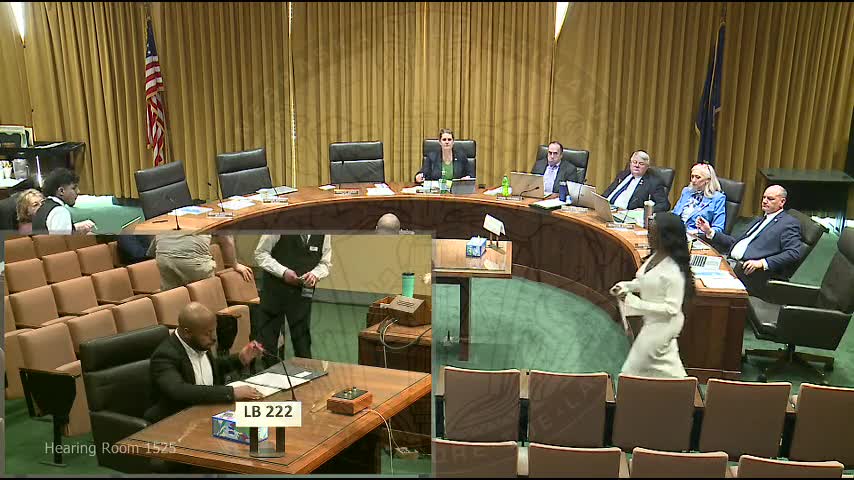
Senator Terrell McKinney told the Judiciary Committee LB222 would limit traffic stops for non-safety violations and require written consent before non-probable-cause searches of vehicles, arguing the change would reduce unnecessary police encounters and racial disparities in stops and searches.
McKinney said nonsafety traffic stops “do not reduce crime or enhance public safety” and disproportionately affect Black and Latino drivers; he cited a Nebraska Crime Commission report and said Black drivers in some counties are pulled over two to 3.5 times as often as white drivers. He cited a fatal October 2024 Omaha shooting, saying “If LB222 had been law at the time of Mr. Phipps' death, [it] probably could have been prevented.”
Jason Whitmer of the ACLU testified in support, citing survey data and national studies showing low arrest yield from minor-violation stops and urging focus on dangerous driving behaviors. Whitmer said 70 percent of surveyed Nebraskans questioned minor-stop necessity and 77 percent wanted officers to focus on dangerous driving.
Opponents including Douglas County Sheriff Aaron Hansen and representatives of the Omaha Police Officers Association warned LB222 would limit law enforcement's ability to detect serious crimes that often begin with traffic stops, with Hansen pointing to historical cases where routine stops led to arrests for major crimes. Patrick Dempsey of the officers association said restricting stops and searches would remove “one more tool out of the toolbox” used to seize narcotics, weapons and arrest intoxicated drivers. The bill drew extensive testimony; the transcript does not record a committee vote or final action.