Get Full Government Meeting Transcripts, Videos, & Alerts Forever!
Get email alerts on the Law Enforcement Training topic
No spam. Unsubscribe anytime.
Sen. DeKay seeks lower continuing-education floor for officers in small counties with LB73
Summary
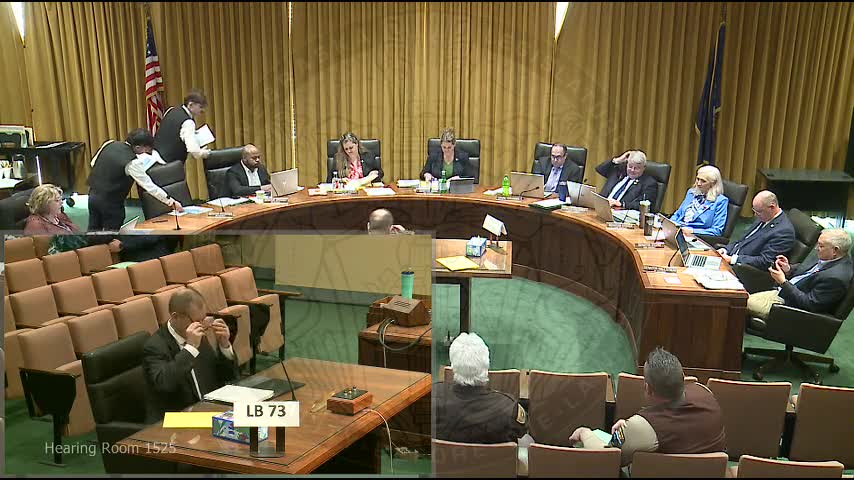
Senator Barry DeKay introduced LB73 to reduce mandatory annual law enforcement continuing education from 32 hours to 20 hours in counties with population under 40,000; sheriffs from Knox, Douglas and Brown counties offered mixed testimony about staffing, training methods and officer wellbeing.
Senator Barry DeKay introduced LB73 to adjust statutory continuing-education requirements for law enforcement officers in smaller counties, proposing the floor be reduced from 32 hours per year to 20 hours for counties with populations under 40,000.
DeKay said LB73 is aimed at easing staffing and scheduling burdens on rural agencies that he and local sheriffs said struggle to keep officers on patrol while also meeting large training blocks. He told the committee the change would be a “workable solution for rural parts of the state” and that his amendment would retain the 32-hour standard for Nebraska State Patrol troopers.
Knox County Sheriff Don Henry and Brown County Sheriff Brent Neiler described small staffing rosters and frequent overtime when officers travel for multi-day training. “When we train as a group somewhere, somebody has to stay home and take a call,” Henry said; he added that classroom training strengthens team cohesion. Douglas County Sheriff Aaron Hansen, while sympathetic to rural constraints, said his agency provides far more than the statutory minimum and oversees a dedicated training staff, but he supported giving rural agencies flexibility. Supporters and opponents encouraged preserving training quality while matching requirements to agency capacity.
The record shows proponents emphasized mental-health and hands-on skills training, the difficulty of splitting scarce staffing to attend in-person sessions, and the desire that the statewide minimum remain a floor, not a ceiling. No final committee action on LB73 is recorded in the transcript.