Get Full Government Meeting Transcripts, Videos, & Alerts Forever!
Get email alerts on the Housing Conditions topic
No spam. Unsubscribe anytime.
Nebraska bill would require housing agencies to inspect and remediate bedbug infestations; gives Omaha option to enact local oversight
Summary
LB287, advanced to E & R March 20, would require housing agencies to inspect for bedbugs, notify tenants, use professional remediation and keep records; AM608 lets cities of metropolitan class opt into additional oversight by ordinance.
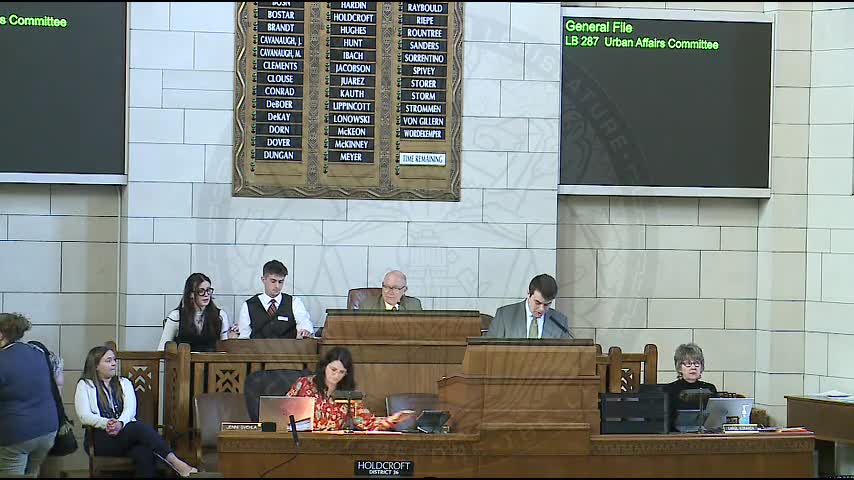
Lawmakers on March 20 advanced LB287, a bill from the Urban Affairs Committee that directs certain housing agencies to inspect for and remediate bedbug infestations, notify prospective and current tenants, and keep records of complaints and control measures.
Why it matters: The bill responds to persistent habitability complaints at the Omaha Housing Authority, including a class-action lawsuit referenced during floor debate. Supporters say it fills gaps in inspection and pest-control practices for public housing and gives local officials a tool to hold housing authorities accountable.
Provisions and committee amendment Senator McKinney introduced LB287 as a response to constituent complaints about bedbugs in residential units owned by the Omaha Housing Authority. Under the bill as explained on the floor, housing agencies would be required to conduct inspections, inform prospective tenants of any known infestations, promptly address reported infestations using professional remediation services, and maintain records of complaints, investigations and remediation costs.
The committee amendment (AM608) incorporated language from LB514 to allow a city of the metropolitan class to adopt, by ordinance, additional regulatory authority over housing authority properties. That local authority is permissive ("may"), not mandatory, and could include code enforcement, pest-control requirements, property registration for housing authorities, penalties for code violations and monthly reporting to the city council, proponents said. "This is a may. It says the city may. It's not a shall," Senator McKinney told colleagues, arguing the amendment does not create an unfunded mandate.
Floor debate and concerns Supporters emphasized the local connection: city officials appoint housing authority boards and may be better positioned to inspect and enforce property conditions than the Legislature. Senator John Cavanaugh said the measure gives the city an option to act when problems arise rather than forcing a recurring state fix.
Several senators voiced caution about the potential cost to cities if they accept oversight authority under the amendment. Senator Klaus said the amendment "places a lot of responsibility on the city if they accept that responsibility" but noted the choice remains optional.
Votes and next steps The body adopted AM608 (committee amendment) on a recorded floor vote (26 ayes, 2 nays as read on the floor). The Legislature then advanced LB287 to E & R initial with a separate recorded tally (clerk reported 29 ayes on advancement); the bill will return to the engrossing stage for preparation of the next reading.
Ending: If enacted, the bill would add explicit duties for housing agencies and leave cities the option to assert local oversight by ordinance. Implementation details such as enforcement mechanisms and funding were discussed on the floor but would need to be resolved as the bill proceeds through engrossing and later steps.