Get Full Government Meeting Transcripts, Videos, & Alerts Forever!
Get email alerts on the Alcohol Tax Treatment Funding topic
No spam. Unsubscribe anytime.
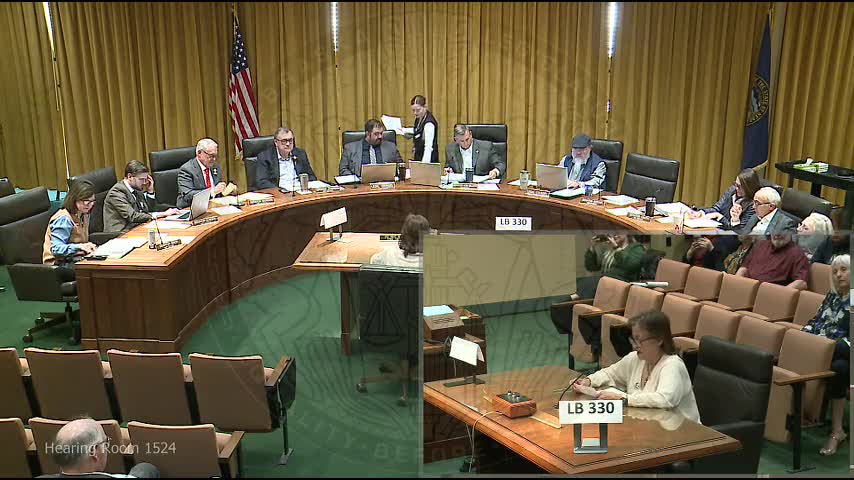
Senate committee hears bill to raise alcohol sales tax for treatment, enforcement and school funding
Summary
Sen. Margaux Juarez introduced LB330 to raise the sales tax on alcoholic products and dedicate revenue to an education fund, alcohol treatment and liquor enforcement. The hearing included youth testimony and divided written comments; industry groups opposed the magnitude and raised business and cross‑border concerns.
Senator Margaux Juarez (D‑5) introduced LB330, a proposal to increase the sales tax on alcoholic products and dedicate the proceeds to three new or augmented funds: 50% to the Education Future Fund, 45% to an Excessive Alcohol Consumption and Treatment Fund, and 5% to a Nebraska State Patrol Liquor Control Enforcement Fund. Juarez said the bill follows research showing higher alcohol prices reduce excessive consumption and that youth advocates asked her to file the measure.
Key provisions and fiscal context: The bill as presented would increase the sales tax on alcohol to 15.5% (sponsor’s amendment text and committee discussion showed the new rate and the intended revenue split). Witnesses and proponents cited academic reviews and state examples (Maryland) that they said linked tax increases to reductions in binge drinking; proponents provided a revenue estimate of roughly $122,000,000 annually under the proposed rate, while committee discussion referred to other estimates appearing in the fiscal note that were larger or unclear.
Testimony in support included multiple high school student leaders from Project Extra Mile and local prevention coalitions who gave personal accounts of how family members were harmed by alcohol and urged the committee to use price as a public‑health tool. Caleb Vaughan (Midwest High School) and Anna Meyer (Gering High School) described family harms and pressed for prevention and treatment funding. Chris Wagner of Project Extra Mile summarized public‑health evidence and said Nebraska has not raised alcohol taxes since 2003; proponents argued the proposal would both reduce consumption and generate revenue for prevention, treatment and enforcement.
Opponents included the Associated Beverage Distributors of Nebraska and allied trade groups, represented by Joe Kohout, who said a jump from the current 5.5% sales tax to 15.5% would disproportionately affect small restaurants, bars, breweries and retailers and could shrink sales, jobs and state revenue if consumer behavior changes sharply. Kohout and other opponents raised cross‑border competitiveness concerns, noting that neighboring states’ tax systems differ and that a large rate differential could shift sales across state lines.
Committee discussion focused on the fiscal estimate and administrative details (including an amendment drafting error that the sponsor corrected on the record regarding a 5.5% figure in one section). Senators asked for clarification on the proposed funds, the estimated revenue amount and distribution, and whether the Department of Revenue could reliably project revenues given behavioral changes.
Ending: Senator Juarez closed by emphasizing the origins of the bill in youth leadership and public‑health data and asked the committee to advance LB330. The committee did not take a final vote at the hearing.