Get Full Government Meeting Transcripts, Videos, & Alerts Forever!
Get email alerts on the Transportation Planning Mpo topic
No spam. Unsubscribe anytime.
FAST Planning briefed commission on MPO role, air-quality freeze and funding squeeze
Summary
Jackson Fox, executive director of FAST Planning, told the Fairbanks North Star Borough Planning Commission that the area—aces a federal "conformity freeze" tied to PM2.5 rules, slowed project delivery and uncertain reimbursements for an expanded MPO boundary; he outlined FAST Planning—unctions, committees, plans and next steps.
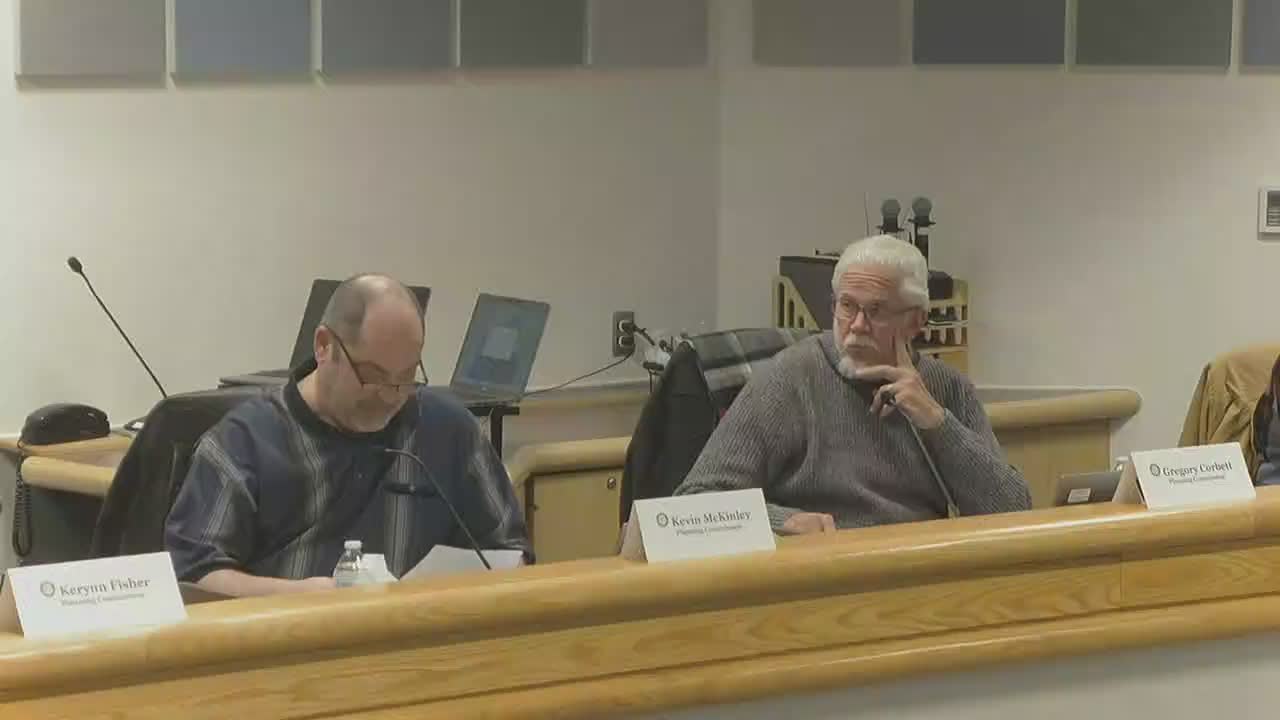
Jackson Fox, executive director of FAST Planning, told the Fairbanks North Star Borough Planning Commission on Feb. 11 that the Fairbanks-area Metropolitan Planning Organization (FAST Planning) is continuing routine long- and short-range transportation planning but is constrained by a federal air-quality "conformity freeze" tied to the area's PM2.5 nonattainment status.
FAST Planning is the region's federally designated MPO that prepares a 20-year metropolitan transportation plan and a short-range transportation improvement program. Fox said FAST Planning coordinates local governments, state agencies and public input and provides an annual suballocation of local federal funds to build streets, trails, transit vehicles and other projects. "We bring all of our governments to the table ... and identify transportation projects that can meet those needs and approving that funding plan of projects, in priority order," Fox said.
The presentation described the MPO's governance and staffing: a seven-member policy board made up of three mayors, one city council member, one borough assembly member and two state seats; an 18-seat technical committee with city, borough and state department representatives; and supporting groups including a bicycle and pedestrian committee, a project enhancement committee and a seasonal mobility task force. Fox identified staff members including Olivia Lunsford and Deborah Todd and noted FAST Planning's transition from FMATS to an independent nonprofit in 2019.
Fox outlined required products and timeframes: a 20-year long-range plan updated every four years, a 0-to-5-year short-range list that feeds the four-year funding plan (the Transportation Improvement Program), and additional documents such as a unified planning work program and Title VI plan. He said FAST Planning receives a local suballocation currently "somewhere between $12 and $13 million per year" for local projects and that the area typically averaged about $50 million per year in federally funded projects inside the MPO boundary, although that total has declined recently.
Fox described recent supplemental planning work: freight mobility, railroad crossing safety, road-service-area options, a bicycle and pedestrian plan, an updated transit plan for MAX Transit and a coordinated human-services transportation plan used by smaller providers for grants. He also said FAST Planning has a recently adopted electric vehicle infrastructure deployment plan but has paused a call for project nominations pending federal direction on reimbursements after a recent presidential executive order.
On challenges, Fox said a partial approval of the state's PM2.5 state implementation plan placed the area under an EPA-imposed conformity freeze that "freezes our plans in place" so FAST Planning cannot amend its long- or short-range plans while the freeze remains. "So it's frozen in place and really tied our hands," he said, adding that EPA indicated it intends to lift the freeze but that it may not be cleared until the fall and could affect this construction season. He noted the state's implementation plan requires attainment by 2027.
Fox said most local PM2.5 emissions are not from vehicles: "about 80% of the pollution contribution to our air quality problem is from wood stoves," he said, and motor-vehicle emissions account for about 6.8% of the modeled contribution. He explained the Clean Air Act nd federal conformity rules still focus sanctions on transportation funding even though local sources differ.
Fox also described a controversy tied to new bridge projects associated with an ore-haul route (referred to in the presentation as the "ore hall" route). He said the Alaska Department of Transportation submitted bridge replacement projects to the statewide funding plan without coordinating those projects through FAST Planning's technical committee and policy board. Because those bridges were not identified in FAST Planning's local planning process, the MPO rejected adding them to its short-range list pending a new long-range plan update.
The board adopted a new Metropolitan Planning Area boundary in October 2023 that would expand FAST Planning's area to include Eielson Air Force Base, Moose Creek and more of Farmers Loop. Fox said the governor has not yet approved that boundary (a required regulatory step), and DOT has delayed forwarding it to the governor, in part because of the state nd federal discussions over the ore-haul bridge work. He said FAST Planning will begin a year-and-a-half long long-range plan update the following month and that staff will use the new boundary while acknowledging the lack of federal reimbursement until state approval is complete; the FAST Planning board directed staff to document unreimbursed costs and seek state reimbursement.
Commissioners asked about the federal infrastructure law, inflation and funding allocation. Fox said the 2021 infrastructure act increased funding and created new programs such as the carbon-reduction program and a direct allocation for Transportation Alternatives to MPOs, and allowed FAST Planning to prioritize certain air-quality beneficial projects locally. On inflation, Fox said rising construction costs have reduced the number of projects FAST Planning can advance despite higher nominal funding. When asked whether projects outside the current MPO boundary could receive federal funds, Fox said FAST Planning could assist outlying road service areas to apply to statewide programs such as the Community Transportation Program but that the MPO's direct suballocation covers only the MPO boundary.
Fox closed by highlighting FAST Planning's public resources, including an online map that shows maintenance responsibility, agency contacts and supervisors for individual roads. He said FAST Planning held about 48 open meetings last year and provides public-comment opportunities at every meeting.
The planning commission did not take formal action on any FAST Planning items during the Feb. 11 work session; the meeting moved on after questions and the work session closed.