Get Full Government Meeting Transcripts, Videos, & Alerts Forever!
Get email alerts on the Land Use Rezone topic
No spam. Unsubscribe anytime.
Planning Commission recommends rezoning of borough land along Chatanika River to remote recreation site
Summary
The Fairbanks North Star Borough Planning Commission voted 10-0 to recommend approval of Ordinance 2024-45, rezoning roughly 459 acres near the Chatanika River from General Use (GU-1) to Remote Recreation Site (RRS), a zone intended for low-density, personal-use recreational lots.
The Fairbanks North Star Borough Planning Commission on Feb. 11 recommended approval of Ordinance 2024-45, a borough-initiated rezoning that would convert about 459 acres southwest of the Elliott Highway and north of the Chatanika River from General Use (GU-1) to Remote Recreation Site (RRS).
Planning staff presented the request as the first rezoning to the recently created remote recreation district, describing it as borough-owned land intended for low-density, personal recreational parcels. "This request is our very first to rezone to the newly created remote rec site," said Steph, a planning staff presenter, during the staff report.
The rezone area, described in staff slides as largely undeveloped forest crossed by the Pete Simpson Memorial Trail, is designated in the comprehensive plan as rural settlement. Staff said the area lacks sewer, water and road service and is currently zoned GU-1. The proposed rezoning would limit permitted uses to low-impact recreational development, with a nominal minimum lot size of 3 acres and 50-foot setbacks on all sides, built to preserve a "remote" character. Staff also described a preliminary concept showing roughly 49 parcels in the design concept ranging from 5 to 10 acres, while noting the concept is not final and could later be further subdivided into 3-acre lots under RRS standards.
Daniel Welch, manager of the Division of Natural Resources Development, told commissioners the project is in concept and follows assembly authorization (ordinance cited in the staff report) to pursue land disposition. "The intent was never to have that road," Welch said when discussing access; he and staff explained Pete Simpson Memorial Road functions now as a trail or logging road and is not built to borough road standards. Welch said the borough and the state have discussed access improvements on their respective parcels but that borough services are not planned for the subdivision.
Staff said the remote recreation zone specifically anticipates limited access—trail, air, water or rail—and that at the time of adoption the assembly added airports and heliports as conditional uses to reflect the potential need for air access. Staff recommended approval, citing conformance with the comprehensive plan, the size of the rezone (well over the typical spot-zone threshold), and public-notice requirements. Staff said 16 "dear property owner" notices were mailed after expanding the notification radius to 6,000 feet because the remote nature of surrounding parcels yielded fewer owners within the standard 2,000-foot radius; staff reported no responses to that notice and that one public-hearing sign had been posted.
Commissioners asked about access, soils, likelihood of road upgrades, utility proximity and public feedback. Commissioners were told logging trucks currently use portions of the trail; Army Corps engineers assessed the road corridor as well drained; Golden Valley Electric Association (GVEA) serves the nearby Himalaya area about six miles away; and that the state owns adjacent sections to the south and has no stated development plans for that parcel. Welch said roughly 40 people attended a borough open house on the concept and that feedback included support for zoning that preserves the recreational character and concern that the use stay limited as promised.
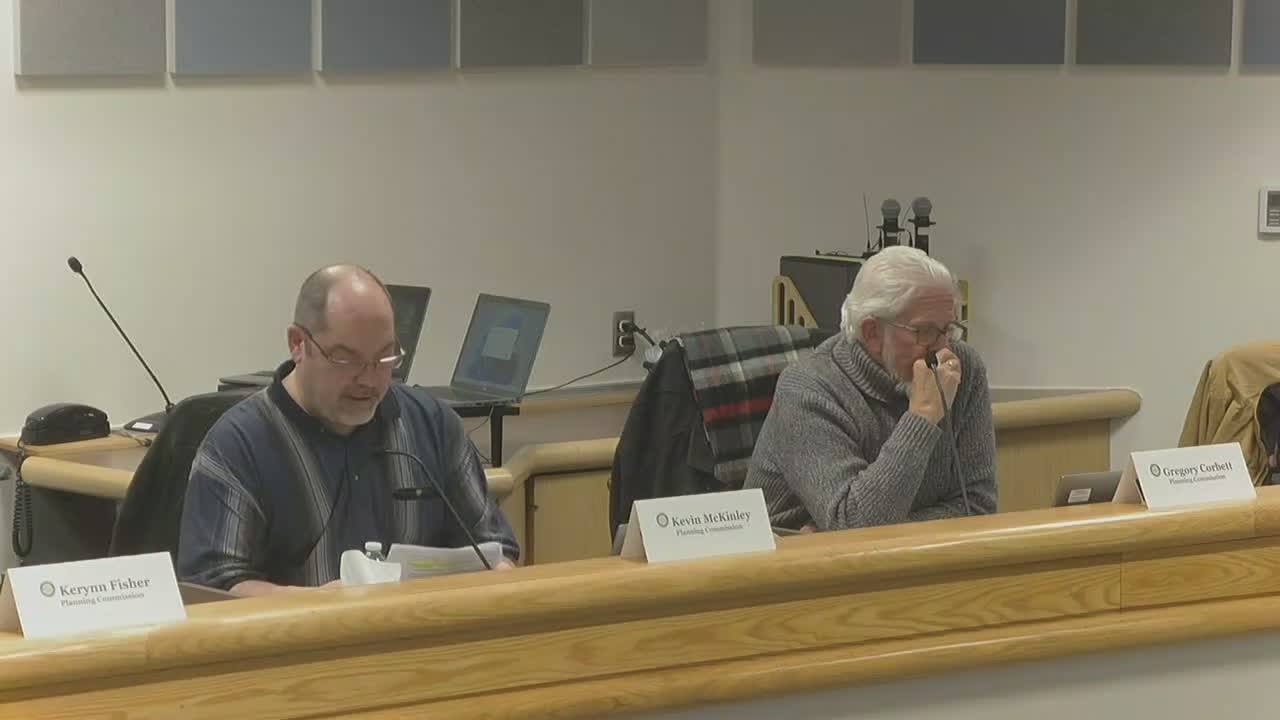
During deliberations several commissioners voiced support. "I love this idea," said Commissioner Greg Corbett after moving the recommendation. Commissioner Brittney Smart said the proposal "checks so many boxes" for land disposition and quality of life. The motion to recommend approval was seconded (second not specified in the record) and passed on a roll call vote of 10-0. The clerk confirmed the motion would be forwarded to the borough assembly for final consideration.
Votes at a glance Ordinance 2024-45 — Recommend approval (rezoning from GU-1 to Remote Recreation Site) Motion: Recommend approval adopting the staff report and five findings of fact (mover: Commissioner Greg Corbett; seconder: not specified) Roll-call: 10 yes, 0 no; outcome: recommend approval (forwarded to borough assembly for consideration)
Why it matters If the borough assembly adopts the rezoning, the change would limit future uses on the parcel to low-density recreational development, reducing the range of industrial or high-impact uses allowed under GU-1 and preserving the borough’s stated intent to sell or dispose of selected public lands for recreational parcels. The decision does not commit the borough to immediate road upgrades or borough-provided water, sewer or other services; staff and the sponsor said future subdivision engineering, any access improvements and infrastructure decisions would be separate steps.
Next steps The planning commission’s recommendation will be scheduled for borough assembly consideration. Staff and the sponsor indicated additional engineering, survey and platting steps would be required before any sale or lot development could proceed, and that potential variances or subdivision-level decisions would address standards for access and emergency-service requirements.