Get Full Government Meeting Transcripts, Videos, & Alerts Forever!
Get email alerts on the Air Quality Regulation topic
No spam. Unsubscribe anytime.
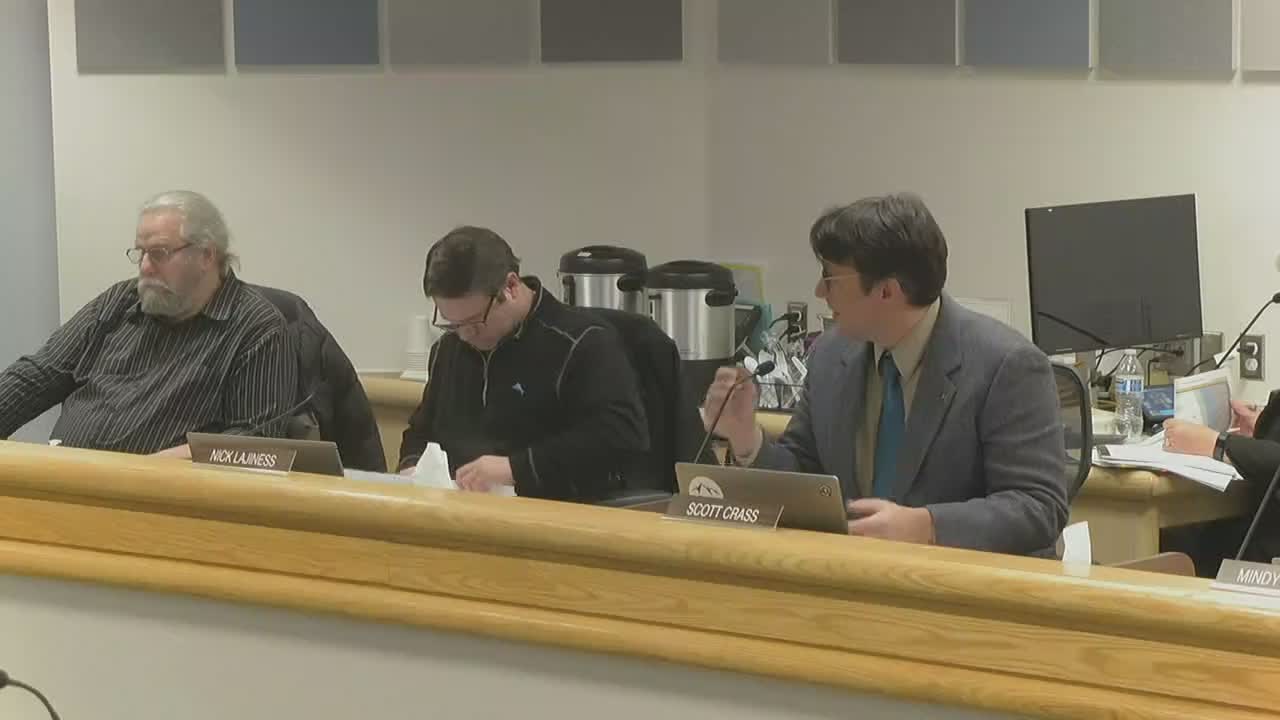
Assembly opposes requirement for pre-sale energy rating in PM2.5 SIP rule
Summary
The assembly passed a resolution opposing a proposed regulatory requirement that homes in the borough's PM2.5 nonattainment area carry an energy rating before being listed for sale, citing lack of local rater capacity and potential burdens on homeowners and the housing market.
The Fairbanks North Star Borough Assembly voted to oppose a requirement in the state Environmental Conservation plan (the SIP) that would require an energy-rating document on residential properties before they are listed for sale within the borough's PM2.5 nonattainment area.
Assemblymember Geri O'Neil, who sponsored the resolution, said the borough supports measures to reduce fine-particulate pollution but that the energy-rating mandate placed an unobtainable burden on many homeowners. Testimony and assembly debate noted that the region has very few qualified energy raters, that training courses have not been offered locally for many years, and that the practical effect could be to delay transactions or penalize sellers who have already invested in cleaner home heating.
The resolution asks state and federal regulators to remove the pre-sale energy-rating requirement from the SIP or to delay and provide implementation resources and training so local markets are not disrupted. The assembly also asked the borough mayor to transmit the resolution to the Alaska Department of Environmental Conservation and to the U.S. Environmental Protection Agency (EPA) and other legislators.
Why it matters: The state's SIP is the formal plan used to obtain federal approval for air-quality attainment strategy. If a SIP is denied by EPA, the community faces potential sanctions that could affect transportation funding and other federal approvals. Assemblymembers emphasized they were not opposing air-quality improvements but rather requesting a different, locally feasible approach to reach the same goals.
The resolution passed on a roll-call vote (clerk recorded), 8-1.