Get Full Government Meeting Transcripts, Videos, & Alerts Forever!
Get email alerts on the Trail Easement Eldorado Creek topic
No spam. Unsubscribe anytime.
Trails commission weighs narrower easement, commercial use limits for Eldorado Creek property
Summary
The Fairbanks North Star Borough Trails Advisory Commission discussed a property owner's request for a narrower trail easement along Eldorado Creek, concerns about commercial snowmachine tours and summer ATV damage, and next steps for scoring and formal recommendations to the borough.
At a meeting of the Fairbanks North Star Borough Trails Advisory Commission, members discussed a proposed public easement across a Goldstream property that contains an established route of the Alaska Long Trail and raised concerns about easement width, commercial snowmachine use and enforcement.
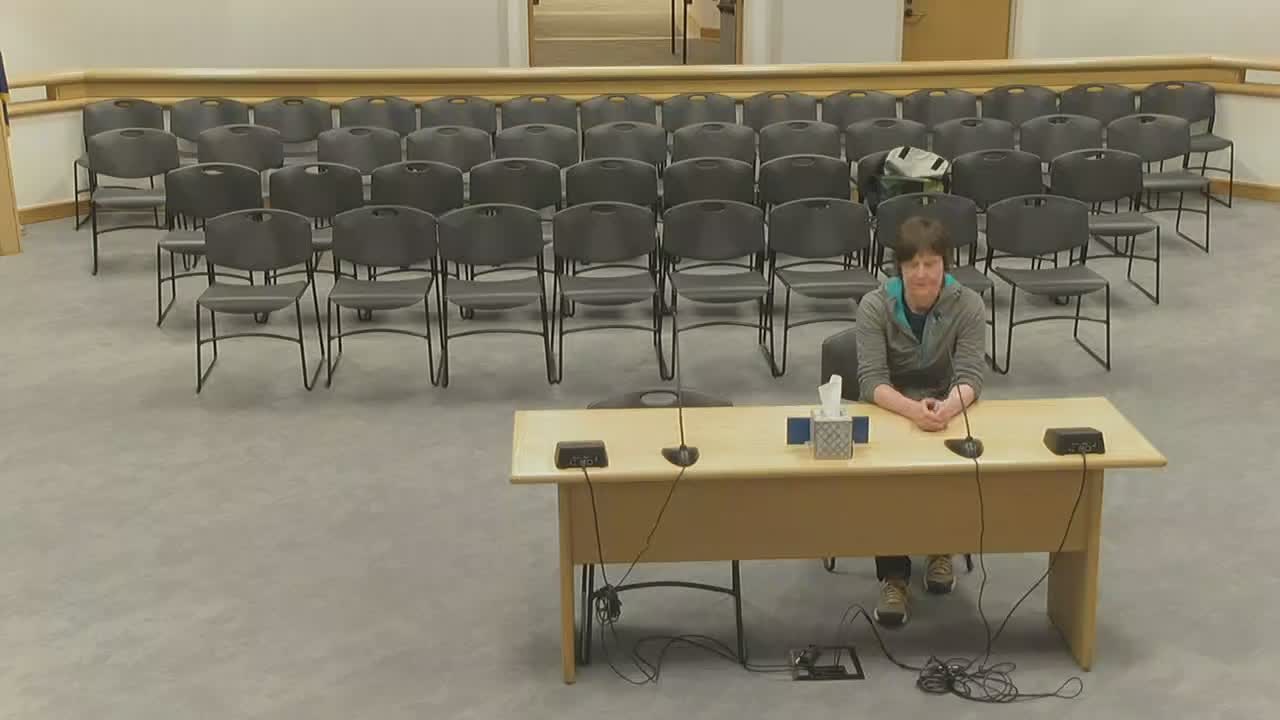
Property owner Sarah Tabbert told the commission the trail runs primarily on her parcel and said she and a co-owner are "interested conversation" about selling an easement to the borough but have concerns about commercial operators and the width the borough proposed. "We have never had any intention of closing it to public use," Tabbert said, "although we have some concerns about commercial operations running on the trail." She described recent summer damage from off-season use and said she wants the trail preserved in a form close to its present condition.
Daniel Welch, manager for the borough Division of Natural Resources Development, told commissioners the borough is the land manager for the proposed development parcel and noted the current request is about setting an easement through private property rather than a subdivision requirement. "The borough is the land owner or at least the management owner on behalf of the public through this development," Welch said, and he outlined that the borough's current easement practice follows Title 17 standards when an easement is created through the subdivision process.
Commissioners and staff explained there is no standing borough standard that applies automatically when the borough negotiates an easement outside the subdivision code. Under Title 17 subdivision standards, Category B trails on private lands have generally accepted guidance of a 20-foot easement for nonmotorized and larger widths for multi-use; staff said those figures are commonly used as recommendations but are not automatically enforceable when the borough acquires an easement by agreement. Andrea (borough staff) told the commission she could not unilaterally require a 20-foot width for this voluntary acquisition and asked the commission for guidance on whether the borough should seek code changes or negotiate exceptions in individual cases.
Commissioners debated options. Some favored keeping trail easements away from road corridors where feasible; as Commissioner Max put it, he generally prefers trails "to be offset in the woods, if possible," to reduce conflicts with road maintenance and snow clearing. Commissioner Jeff urged the commission to distinguish easement width from trail tread width and suggested using established design guidance (for example, Alaska State Parks design elements) to set a fixed tread width while allowing a somewhat wider easement corridor to accommodate minor alignment changes over time. Several commissioners and staff discussed practical measures to limit off-season motorized damage, including signage, removable seasonal gates or bollards, and volunteer or nonprofit agreements to open and close seasonal access. Commissioners noted gates and bollards can be bypassed and that ongoing maintenance and enforcement would impose recurring costs.
Tabbert said she would prefer a narrower easement and mentioned a 12-foot tread as her expectation in conversation with staff. Staff said the borough could negotiate a narrower easement if that was the owner's preference, but warned that narrower legal corridors limit the borough's ability to respond if the trail needs to be re-aligned in the future or if users widen the trail by repeatedly riding off the established tread. Commissioners also discussed that RS 2477 rights and historical alignments complicate the legal picture; staff said the state's RS 2477 records are incomplete and that DNR has not conclusively cleared the route.
After extended discussion the commission gave staff direction to proceed with two concrete next steps: (1) staff will score the parcel segment using the commission's trail-priority score sheet and return the scored item in the commission's next packet, and (2) a three-member working group of commissioners (Max, Jeff and Gail) will convene as a small working group to develop alignment preferences and draft language for the commission's next meeting. Andrea said she would include the scored item and any draft recommendation in the April agenda packet so commissioners could review staff scoring and propose formal recommendations at that meeting.
The commission also discussed a broader policy question: whether to recommend that the mayor and assembly consider a formal borough process for review of commercial use on borough-managed trails. Commissioners supported drafting a staff-prepared letter and further review at a later meeting, but they deferred any formal letter until staff had a chance to test the voluntary easement process a few times and bring back practical recommendations.
Votes at a glance: two procedural motions occurred early in the meeting. The commission voted to move agenda item E4 to be considered before E1 (motion moved; second recorded as "Gail"; roll-call attendance later recorded as affirmative by the commissioners present), and the commission voted to approve the modified agenda by roll call (recorded yes votes from commissioners present; one commissioner excused). Those were procedural agenda votes and did not change substantive trail policy.
What happens next: staff will produce a scored recommendation for the Eldorado Creek segment and include it in the April packet. A working group (Max, Jeff and Gail) will meet to draft alignment suggestions and language for a public recommendation. Commissioners said they remain open to negotiated, case-by-case easements but expressed interest in a future, more formal standard if voluntary negotiations prove difficult or inconsistent.
Ending: The commission did not adopt a final easement width or a formal limit on commercial operations at the meeting; instead it asked staff to return a scored recommendation and committed three commissioners to a working group to develop draft language for the commission to consider at the next meeting.