Get Full Government Meeting Transcripts, Videos, & Alerts Forever!
Get email alerts on the Elections Contracts topic
No spam. Unsubscribe anytime.
Assembly declines five‑year renewal with Dominion Voting Systems after widespread public opposition
Summary
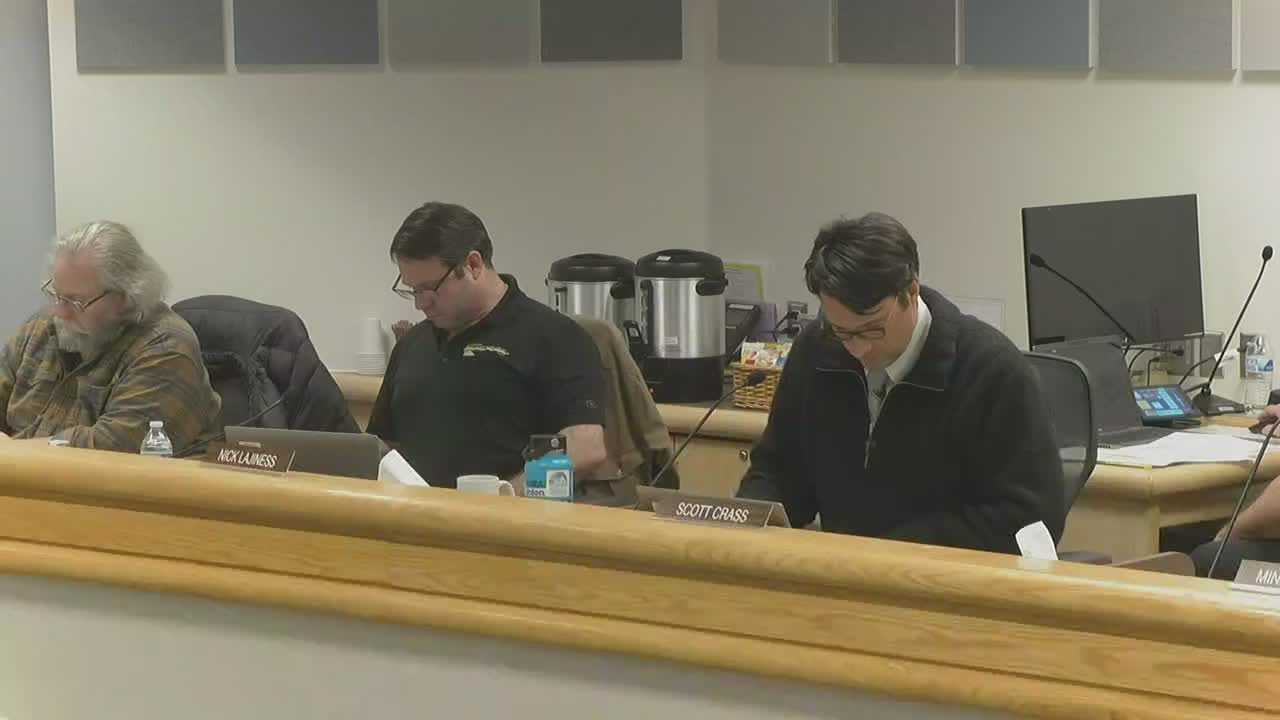
After more than two hours of public testimony and committee debate, the Assembly Finance Committee voted 4–4 and failed to approve a five‑year sole‑source contract with Dominion Voting Systems for ballot programming, licensing and warranties.
The Fairbanks North Star Borough Assembly Finance Committee voted on a sole‑source contract renewal with Dominion Voting Systems but failed to reach the majority needed on the 4–4 vote, leaving the five‑year licensing and warranty agreement unapproved.
Residents and local election volunteers filled the committee’s public comment period and urged the committee to reject or delay the contract. Dozens called in and testified that they distrust the machines and want a return to hand‑counted paper ballots; several cited demonstrations or reports they said showed security weaknesses in Dominion equipment. “I do not support renewing the Dominion Voting Machine contract because it is a no‑bid contract and no other options are being considered,” Ruby Shorey told the committee during public comment. “Paper ballots can accomplish a more transparent, verifiable, auditable outcome at a fraction of the cost,” she added.
Why it matters: the contract would have continued annual programming, license and warranty services for proprietary election equipment the borough purchased in 2020. Borough staff told the committee the vendor is the sole provider of support for the borough’s existing equipment and that a contract is the standard way to budget and guarantee licensing and warranty coverage. Corey Beal of General Services summarized the recommendation: “We’re recommending approval of the award in the amount of $219,489.32 for the total five year contract.” Clerk Miss Tricky explained that borough code currently authorizes machine‑counted optical‑scan ballots, and that changing back to hand counting would require an ordinance.
During debate, Assemblymembers stressed competing priorities: several members said they were persuaded by the intensity of public opposition and by examples of jurisdictions that tried hand counting; others argued the borough still needs a stable, budgeted licensing arrangement to run legally required elections and that staff would be left without a maintenance and programming path if the contract were not approved. A motion to postpone the award until the May 15 finance meeting failed. A later motion to award the sole‑source contract (moved by Mr. Guttenberg, seconded by Mr. Kress) failed on a 4–4 roll call, so the committee did not approve the five‑year agreement.
Next steps and constraints: staff and the clerk told the committee they can run elections under current procedures while the borough examines options. The clerk said the current contract for those services expires in spring; she also noted that the borough owns the hardware and would need a path for licensing and warranties if it keeps operating optical scan equipment. Several assembly members suggested short‑term remedies such as a one‑year contract, targeted audits, or a pilot hand‑count audit of a small number of precincts by lot. The committee did not adopt an alternative contract at the meeting.
Public testimony highlighted a sustained distrust among some voters and volunteers. Committee members noted that distrust itself can depress turnout and that the borough must balance legal requirements, technical support needs and community confidence. The committee did not approve the five‑year sole‑source renewal; any future contracts or ordinance changes would return to the assembly for action.