Get Full Government Meeting Transcripts, Videos, & Alerts Forever!
Get email alerts on the Firearms Permits topic
No spam. Unsubscribe anytime.
Committee advances concealed-carry overhaul that shortens training, raises some penalties
Summary
The House Judiciary Committee recommended a due pass for the Senate substitute to Senate Bill 507 after amendments that restore a renewal/refresher requirement while reducing initial training hours for concealed-carry permits and raising some penalties.
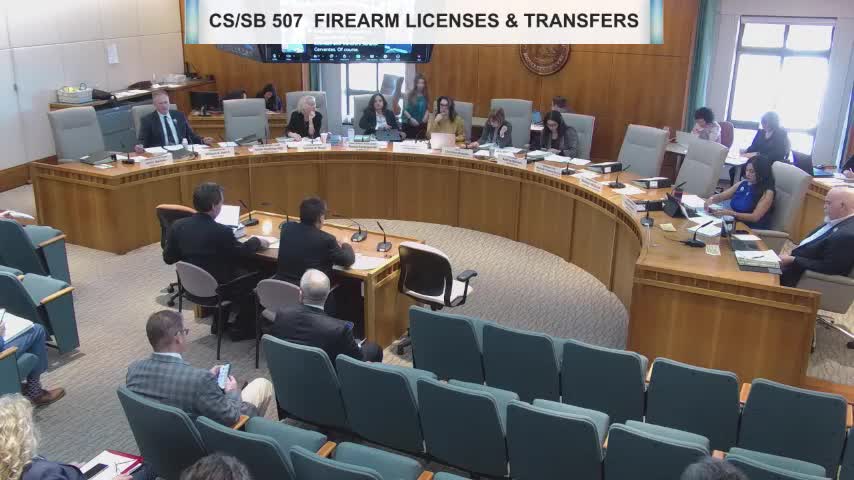
The House Judiciary Committee on a voice and roll call vote recommended a due pass on the Senate substitute to Senate Bill 507, a bill that would change New Mexico’s concealed-carry permitting process by shortening initial training requirements, adjusting renewal and refresher requirements and increasing penalties for some unpermitted carrying.
The bill’s sponsor, identified in committee as “the senator” during debate, told the committee the measure “is intended to do two things: increase penalties for carrying without a permit and make it easier in some respects to obtain a concealed-carry permit.” The sponsor said the bill would reduce the original training requirement from 15 hours to a smaller number (the substitute set 6 hours for initial qualification) while preserving some renewal oversight.
Lawmakers and guests debated how often refresher training should be required and whether the Department of Public Safety (DPS) has the capacity to administer renewals. Representative Andre Romero raised concerns that DPS previously reported permitting backlogs and asked whether the department had been consulted on implementation. The sponsor said DPS had not appeared at hearings and that the sponsor had not seen budget requests indicating the program was underfunded.
Several committee members pushed to restore a renewal/refresher provision. Representative Romero and others proposed reinstating language the substitute had struck, so renewal certificates and a modest refresher requirement would remain in statute. The committee agreed: members moved to reinstate subsection f (renewal/refresher language) while striking a separate mid-license requirement, and to preserve an associated fee provision. The adopted amendment restored a renewal/refresher process (the committee debated two- versus four-year spacing) and clarified that the license term remains four years per existing statute (cited in committee as 29-19-3).
Public commenters voiced both opposition and support. John Fosin, identified as district 7 director for the New Mexico Firearms Institute / New Mexico Shooting Sports Association, said the bill might complicate reciprocity with other states and called for no further changes; Meredith Mason, appearing for the League of Women Voters of New Mexico and the American Association of University Women, testified in support.
After the amendments, the committee voted on a due-pass recommendation for the Senate judiciary substitute to Senate Bill 507 “as amended twice.” A roll call recorded the following positions: Representative Beto — yes; Representative Chavez — no; Representative Hall — no; Representative Hoffman — yes; Representative Martinez — no; Representative McQueen — yes; Representative Reed — yes; Leader Sapanski — yes; Madam vice chair — yes; Madam chair — yes. The chair announced the committee action as a due pass on the substitute as amended.
The bill text as amended in committee reinstates a renewal/refresher requirement (committee-reinstated subsection f, including the fee language), strikes a separate mid-license refresher provision, reduces the original qualifying course hours from 15 to 6 (subject to further amendment), and leaves the misdemeanor/penalty language in place as discussed in committee. Implementation questions about DPS capacity and course approval and auditing remain on the record.
Committee members said they would continue to consider the exact number of training hours and the renewal interval before floor debate. The sponsor signaled openness to further technical amendments to clarify fees and timing.
Votes at roll call are recorded in the committee minutes and reflect the amended substitute moving forward to the next legislative step.