Get Full Government Meeting Transcripts, Videos, & Alerts Forever!
Get email alerts on the Juvenile Justice topic
No spam. Unsubscribe anytime.
Senate committee advances bill adding voluntary manslaughter to juvenile code, frees $5.5M for community programs
Summary
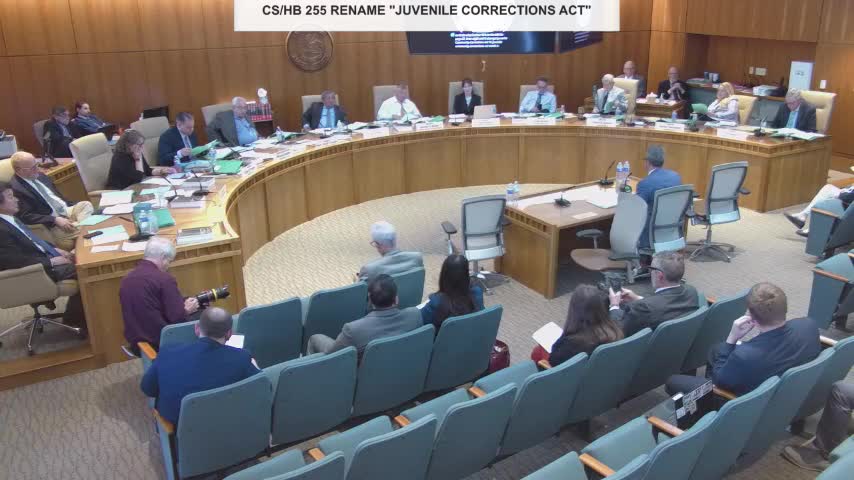
A Senate committee voted 6-5 to advance a bill that adds voluntary manslaughter to the list of offenses that can move a youth into the adult system, gives judges wider sentencing options and allows $5.5 million in juvenile corrections grants to pay for community programs serving non-adjudicated youth.
A Senate committee on an unspecified date voted 6-5 to advance a bill that changes the children's code to add voluntary manslaughter to the list of offenses that can place a young person under the adult system, expands judges' sentencing options for youth, and redirects roughly $5,500,000 in juvenile corrections grant money so it can fund community programs for youths who are not adjudicated delinquent.
The bill's sponsor, identified in committee as the presenter, told the committee the change adds the crime of voluntary manslaughter to the youthful-offender definition and gives judges a full range of sentence lengths between current statutory minima and maxima. “We added the crime of voluntary manslaughter to that list,” the sponsor said. The sponsor also said the change would let department-managed grant funds be used more broadly: “We're doing a definition change, which will allow the money to flow.”
Committee members pressed for detail about how the bill alters current law and what the $5.5 million would pay for. Under current statute, the sponsor explained, juveniles convicted of voluntary manslaughter remain strictly under the children's code; the bill would permit prosecutors to seek transfer to the adult system for that offense in some cases. The sponsor said the bill also expands probation options from the current 90 days to up to six months and lets judges select intermediate jail terms “anywhere in between” the two statutory choices now available.
The bill also strikes the statutory phrase “adjudicated delinquents” from language governing the juvenile community corrections grant fund and replaces it with broader language to allow “delinquent children or youthful offenders subject to juvenile sanctions or children or youth referred by the department” to be eligible for grants. The sponsor said the bill lists priorities for grant awards on page 20, including programs focused on reducing gun violence, substance abuse, gang activity, trauma-informed treatment, mental-health services, arts, sports and leadership programming.
Several senators said they supported the goal of increasing community programming but expressed deep concerns that increased judicial flexibility could reduce punishment for the state's most serious juvenile offenders. “What how do we know if we vote this bill through? How do we know that we're not allowing judges to give juvenile murderers less time in jail?” Senator Tobias asked during the discussion. Multiple senators described recent high-profile cases involving very young defendants, and some said they feared the bill could be read as making punishments more lenient for violent juvenile crimes.
Committee members also asked about the role of the Children, Youth and Families Department (CYFD). The sponsor explained that CYFD includes juvenile-justice probation officers and that the department manages the grant fund; the bill does not create a CYFD program but would change who is eligible for grant-funded services. The sponsor said the fund is currently underused because eligibility is limited to adjudicated delinquents.
After debate, the committee took a motion to “do pass.” The motion was moved by Senator Steinborn and seconded by Senator Trujillo. The recorded roll call in committee showed six votes in the affirmative and five votes in the negative, and the chair announced the motion passed.
The bill's sponsor and some supporters framed the measure as a step toward modernizing the children's code, which one presenter said had not been substantially amended since 1993. Dissenting senators sought further safeguards and signaled they may press for changes on the floor or with additional hearings before final passage.
Votes at a glance: The committee motion to advance (do pass) was moved by Senator Steinborn and seconded by Senator Trujillo; committee roll call produced 6 yes, 5 no. The committee chair announced the motion carried.
Next steps: The bill will go to the full Senate (floor) for further consideration; committee members signaled differing positions ahead of a floor vote.