Get Full Government Meeting Transcripts, Videos, & Alerts Forever!
Get email alerts on the State Fairgrounds Redevelopment topic
No spam. Unsubscribe anytime.
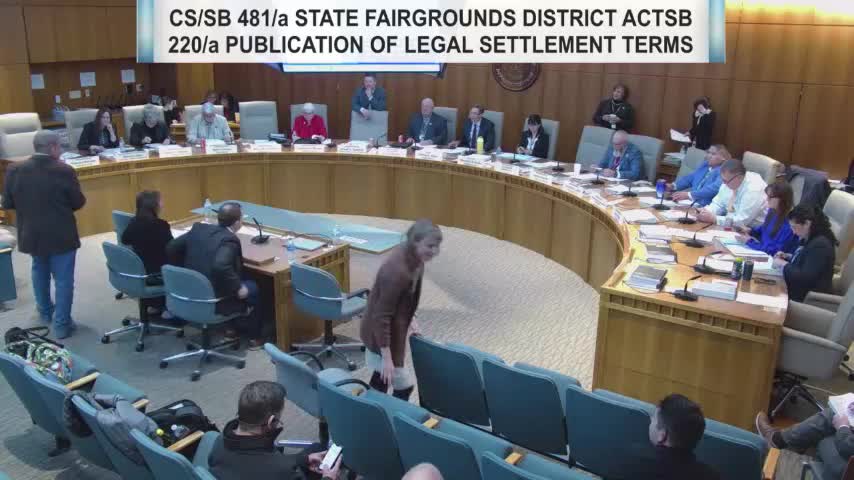
House committee advances bill to create State Fairgrounds redevelopment district in Albuquerque
Summary
The House Appropriations Committee on a 10‑6 vote recommended passage of Senate Bill 481, a measure to create a State Fairgrounds District intended to guide redevelopment of the State Fairgrounds and surrounding International District in Albuquerque.
The House Appropriations Committee on a 10‑6 vote recommended passage of Senate Bill 481, a measure to create a State Fairgrounds District intended to guide redevelopment of the State Fairgrounds and surrounding International District in Albuquerque.
Supporters told the committee the proposal would capture gross‑receipts tax and gaming tax revenue from the fairgrounds area to fund infrastructure, affordable housing and other redevelopment. “This will generate opportunities to enhance public school facilities, enrich our educational programs, and create a more vibrant learning environment,” Jessica Martinez of Albuquerque Public Schools said in support.
The bill would create a state‑level, tax‑increment‑type district on state‑owned property governed by an elected board that includes the governor, the mayor, a city councilor, a county commissioner, a state representative and state senator, and one community member. Sponsors said the bill aims to retain about $12 million a year in gaming and gross‑receipts tax (GRT) revenue now flowing from the site for local reinvestment. The measure would give the district bonding authority up to $500 million and includes a 4‑year milestone requiring progress or a wind‑down and return of funds, sponsors said.
Public comment was mixed. Supporters included Roger Valdez of the Center for Housing Economics and Marcos Gonzalez of Bernalillo County, who said the revenue and a master plan would help bring housing, retail and jobs back to the area. The Greater Albuquerque Chamber of Commerce’s Terry Cole said the bill contains conflict‑of‑interest safeguards and open‑meeting requirements for the new board. Opponents included Carla Sonntag of the New Mexico Business Coalition, who said there has not been adequate public input and that one public member on the board is insufficient representation.
Committee members pressed sponsors on several specifics. Representative Vincent asked whether existing fair uses — including the rodeo arena and Tingley Coliseum — would be preserved; sponsors said no final decision has been made and that the master plan (the RFP for which has already been issued) will present options including renovating the current site or relocating some uses. Representative Duncan raised questions about how property taxes or other levies would be imposed; Justin Horowitz, a law firm attorney appearing for the General Services Department, said the act lays out a process for the district to call an election among residents if and when there are residents in the district, and that a local property tax would not be an immediate financing tool because “no one lives there now.”
Representative Luhan and others asked about board continuity and how the master‑plan vendor would be selected; sponsors said the RFP for the master plan will be selected by the existing State Fair Commission and the elected district board will have authority over later development decisions, subject to statutory guardrails and legislative or Board of Finance approval where required.
The committee motion to give SB 481 a due‑pass recommendation to the full House was moved by Vice Chair Dixon and seconded by Representative Herndon. The roll call included 10 “yes” votes and 6 “no” votes. The committee record shows: Baca (No), Brown (No), Chatfield (No), Dow (No), Duncan (No), Garrett (Yes), Hernandez (Yes), Herndon (Yes), Herrera (Yes), Little (Yes), Luhan (Yes), Sanchez (Yes), Silva (Yes), Vincent (No), Dixon (Yes), Small/Chair (Yes). The committee clerk recorded the action as a due pass to the floor.
What’s next: With the committee recommendation the bill advances to the House floor. Committee and public testimony indicates the master plan and related RFP will be pivotal to how the district is ultimately configured and which fairground uses remain on site or are relocated.