Get Full Government Meeting Transcripts, Videos, & Alerts Forever!
Get email alerts on the Housing Infrastructure And Permitting topic
No spam. Unsubscribe anytime.
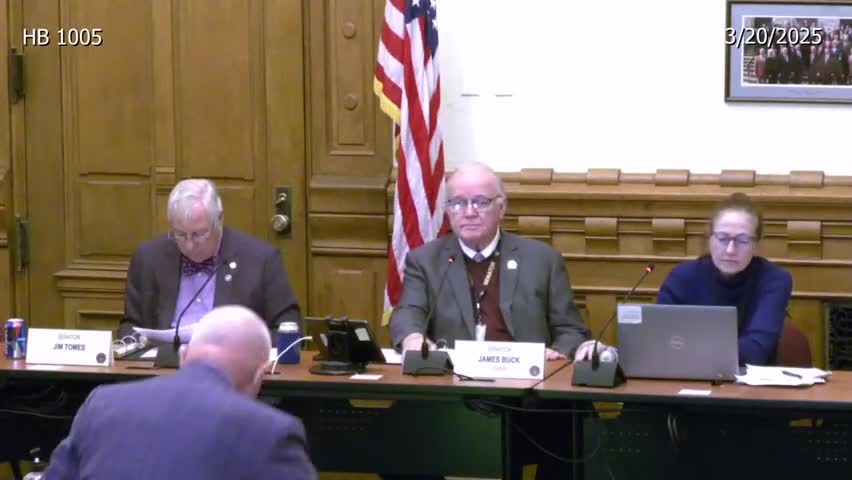
House Bill 1005 expands residential infrastructure priorities and allows private plan‑review/inspection option; bill held for amendment
Summary
House Bill 1005 would prioritize infrastructure funding for communities that adopt pro‑housing zoning and would let permit applicants hire qualified private providers to perform plan review and inspections for one‑ and two‑unit homes and townhouses when local ordinances allow; the committee heard extensive implementation questions and held the bill for amendment.
Representative Miller presented House Bill 1005, which would add priority criteria for residential infrastructure financing and allow private providers to perform plan review and inspections for Class 2 structures (one‑ and two‑unit homes and townhouses) when a local unit requires those services.
Representative Miller said the bill expands the residential housing infrastructure program and “incentivizes local units who enact residential zoning and regulatory reforms with financial assistance for the residential infrastructure.” He described a program that has already financed projects supporting more than 3,300 housing units over two rounds and said the bill also shortens plan‑review timelines to 10 days when private providers are used.
The bill would permit a permit applicant to hire a qualified private provider — a certified building official, architect, professional engineer or licensed home inspector who is not affiliated with the project — to provide plan review and inspections when the local unit’s ordinance allows. The local unit would retain final authority to issue permits and certificates of occupancy; under the proposal the local unit would keep 50% of the fee for permitting when the private provider performs the work, and the private provider must carry specified insurance and sign an affidavit confirming qualifications and lack of financial interest.
City and county witnesses generally supported the residential infrastructure fund language but urged amendments and implementation clarifications for the third‑party inspection provisions. Abby Brands of the City of Indianapolis said her office’s “single family residential first review time is 1 to 2 days,” and asked for enough lead time to build a separate workflow if private plan‑review options are added. AIM and county officials asked for clarity on timelines, how unified development applications and impact‑fee processes would be handled, and removal of impact fees from the bill’s 50%‑fee split because impact fees are not inspection costs.
Supporters including the Indiana Apartment Association, Indiana Association of Realtors and the American Institute of Architects backed the infrastructure priorities and the program’s earlier rounds; Chris Lee (Indiana Apartment Association) and Maggie McShane (Indiana Association of Realtors) said the residential infrastructure fund has helped infill and single‑family projects across the state.
Committee members pressed for protections and asked how the proposal would prevent developers from bypassing local review; Representative Miller and stakeholders said the application must be complete and the local unit retains authority to accept or reject inspections and certificates. The sponsor said the proposal both preserves local control and offers a pathway to speed permitting when local offices are backlogged.
The committee did not vote on HB 1005; Representative Miller said he is working with stakeholders on a technical amendment and the chair held the bill for further testimony and amendment next week.