Get Full Government Meeting Transcripts, Videos, & Alerts Forever!
Get email alerts on the School Budget topic
No spam. Unsubscribe anytime.
Colchester School Board presents FY26 budget: $65 million proposal, 2.95% estimated tax increase
Summary
The Colchester School Board detailed a proposed FY26 budget just under $65 million, citing rising enrollment, contract-driven personnel costs and a new state funding formula as main drivers. Officials estimate a 2.95% residential tax-rate increase if voters approve the warrant article on March 4.
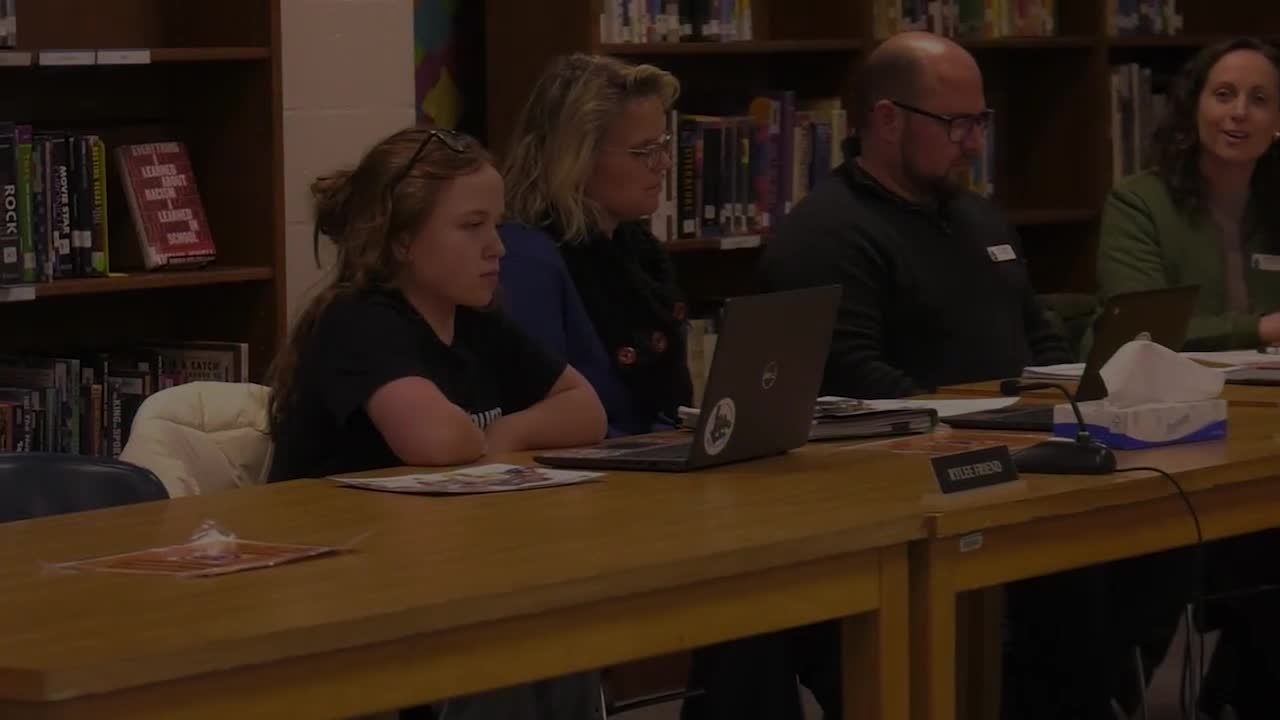
The Colchester School Board on Feb. 18 presented its proposed fiscal year 2026 budget — a warrant article just under $65 million — and told residents the plan would produce an estimated 2.95% increase in the town’s residential school tax rate if approved.
The presentation, given in a Q&A format by board members and district administrators, tied the increase to rising student enrollment, statewide funding formula changes, higher health-care and transportation costs, and the first full year of bond interest payments. Lindsay Cox, school board chair, described the package as intended to preserve current programming while covering those cost pressures.
Officials said enrollment in the Colchester School District is growing; Superintendent Amy Minor said the district currently enrolls 2,202 students and uses a demography firm to project modest growth through the 2030s. Minor cited state class-size guidance and said kindergarten rooms this year are running about 22 to 24 students and that fourth-grade classrooms are about 24 students each.
Gwen Carmoli, director of curriculum, said the district is investing in professional learning, instructional coaching in grades 6–12 for literacy and math, and targeted early-intervention supports in K–3, and that those investments are showing gains on Vermont’s statewide assessments. Carmoli said, "We are above the state in language arts, math, and science," and that the district has seen gains for some historically underserved student groups.
Business and operations manager George Trebe said staff salaries and benefits account for just over 75% of the district’s budget, covering about 400 employees; he also noted outside cost drivers, including a 12% rise in the statewide health-care contract and a roughly 5% increase in contracted transportation costs. Jennifer Fath, a board member, said the proposed warrant budget reduces 14 support-staff positions but maintains current programming and services, including counselors, co-curricular activities and summer school.
Officials provided several fiscal details: current per-pupil spending this year is $12,818, they said, and the per-pupil figure to appear on the FY26 ballot will be $14,391 — an increase the board described as 12.27% from last year’s per-pupil amount. The budget also includes the first full-year bond interest payment they put at $1.1 million.
Lindsay Cox noted that not all households face the same tax impact: about 60% of Colchester residents qualify for state income-sensitive property tax adjustments; the district gave an example that a home assessed at $350,000 would see roughly a $188 annual increase under the proposed 2.95% tax-rate change. Nick Longo, vice chair, encouraged residents to check state property-tax-credit rules; the board said households with household income at or below $115,000 may qualify for the state's property tax credit.
The board urged residents to review materials, vote on March 4 at Colchester High School from 7 a.m. to 7 p.m., or use absentee or early voting options. Officials said budget details, the per-pupil figure and the ballot wording are posted on the district website and will be included in the district’s annual report mailed to residents.
The board did not take a formal vote on the budget at this meeting; it presented the warrant and encouraged voters to decide the article at the March 4 election.