Get Full Government Meeting Transcripts, Videos, & Alerts Forever!
Experts tell Transportation Committee lowering per-se BAC to 0.05 would reduce fatal crashes, supporters say
Summary
Public health and traffic-safety experts testified that lowering the legal blood-alcohol limit to 0.05 would reduce alcohol-related fatalities, citing international studies, a U.S. meta-analysis and Washington state data; lawmakers raised enforcement and staffing questions.
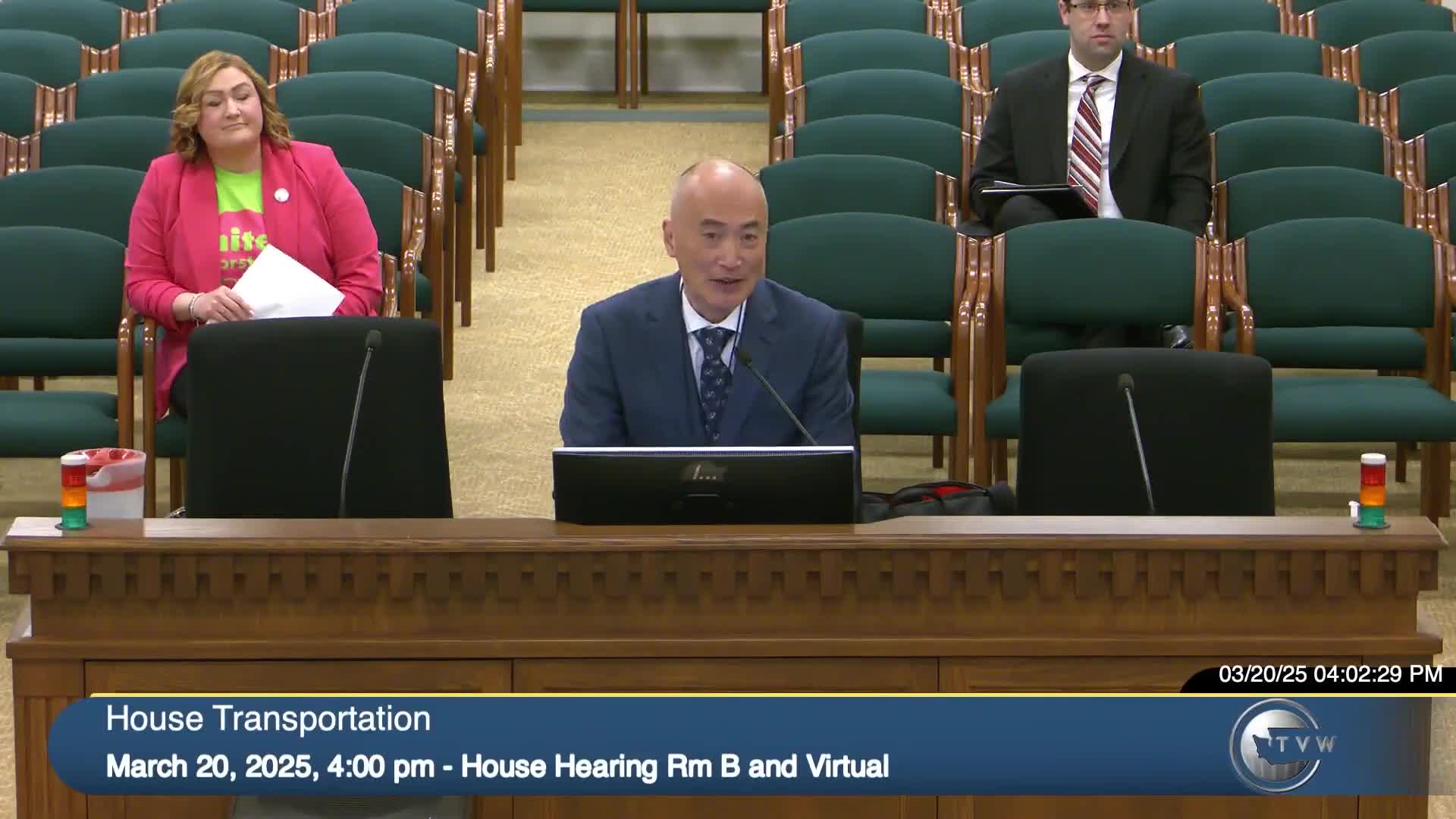
Dr. Taosheng Quan Get, the state health officer at the Washington Department of Health, told the Transportation Committee that alcohol “begins to affect the body and the brain almost immediately,” impairing judgment, coordination and perception and making driving dangerous even at relatively low blood-alcohol concentrations.
James Felt, principal research scientist at NORC at the University of Chicago, summarized decades of research and a meta-analysis his team produced on lowering per-se blood-alcohol concentration (BAC) limits. Felt said the meta-analysis estimated an 11 percent decline in fatal alcohol-related crashes if all U.S. states lowered the adult per-se limit to 0.05 and added, “we estimated that almost 1,800 lives could be saved each year if all states lowered their limit to 0.05 in the U.S.”
The committee heard national and state data showing impaired-driving fatalities have risen in recent years. Mark McKechnie, external relations director for the Washington Traffic Safety Commission, said total traffic deaths in Washington rose 75…
Already have an account? Log in
Subscribe to keep reading
Unlock the rest of this article — and every article on Citizen Portal.
- Unlimited articles
- AI-powered breakdowns of topics, speakers, decisions, and budgets
- Instant alerts when your location has a new meeting
- Follow topics and more locations
- 1,000 AI Insights / month, plus AI Chat