Get Full Government Meeting Transcripts, Videos, & Alerts Forever!
Get email alerts on the Housing Accountability topic
No spam. Unsubscribe anytime.
Committee reviews bill to have Commerce review local housing plans under GMA
Summary
Senate Bill 5,148 would require the Department of Commerce to review housing elements and development regulations from fully planning cities and counties for Growth Management Act compliance; sponsors and witnesses said the measure aims to make state housing laws more enforceable while opponents flagged workload and local-control concerns.
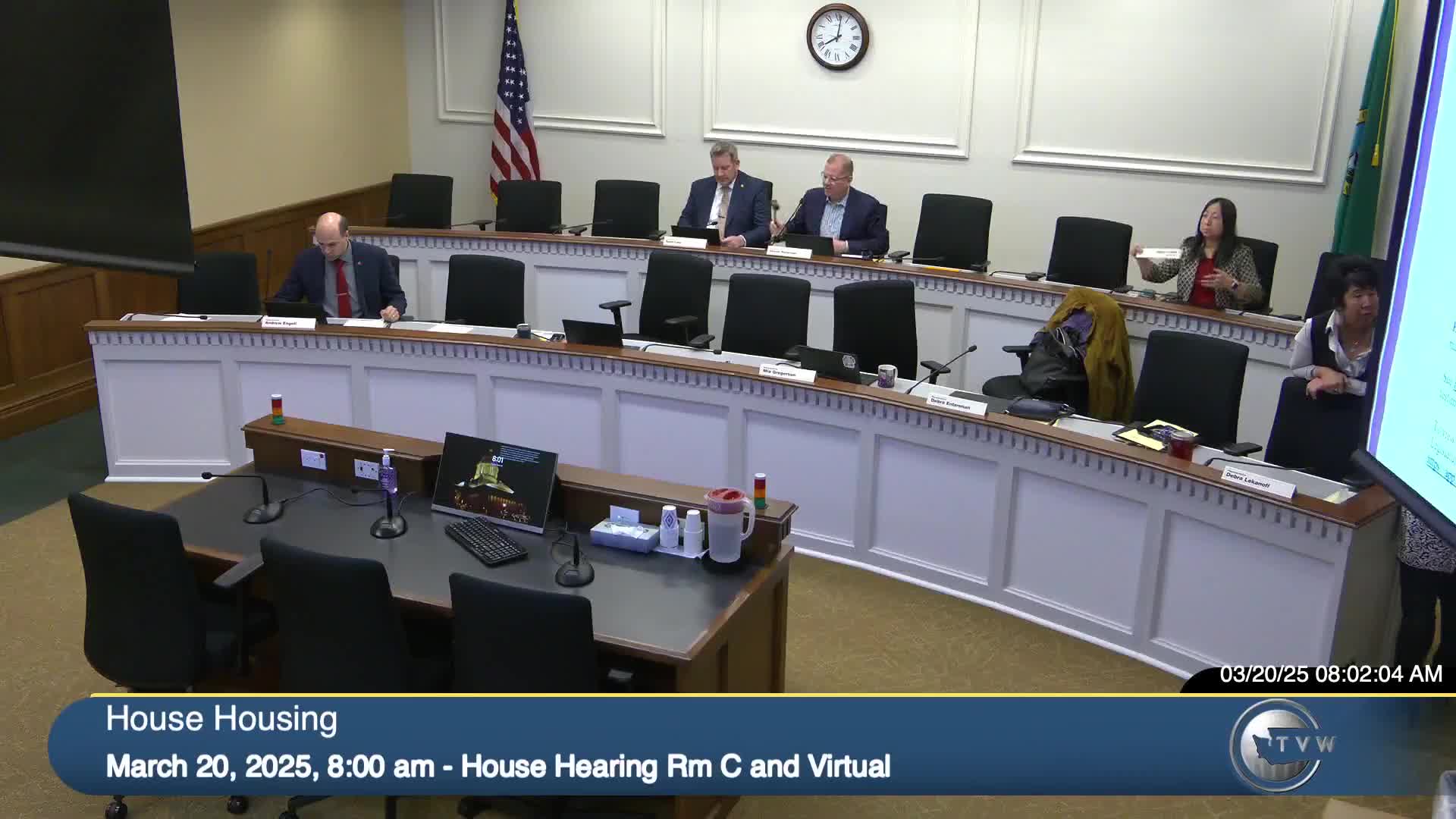
Senate Bill 5,148, the Housing Accountability Act, was introduced to the House Housing Committee on March 20, asking the Washington State Department of Commerce to review local housing elements and housing-related development regulations to determine whether jurisdictions comply with the Growth Management Act (GMA).
Supporters, led in the hearing by sponsor Senator Bateman and Commerce staff Audrey Vazic, said the bill creates a voluntary early-review option and a mandatory targeted review timeline — requiring review no later than three years after a jurisdiction enacts or updates its comprehensive plan — to ensure that state laws meant to expand housing actually function on the ground. "We don't have any actual mechanisms for ensuring that that housing gets constructed," Senator Bateman told the committee, arguing the measure would provide accountability without relying solely on costly appeals to the Growth Management Hearings Board.
Committee staff and witnesses described how the bill would work and why proponents say it matters. Audrey Vazic, staff to the committee, summarized the proposal: Commerce would review housing elements and development regulations, follow timelines and published criteria, and issue determinations of compliance unless it finds the local housing element or regulations are "clearly erroneous" with respect to certain GMA provisions. Commerce would publish minimum-objective compliance standards within six months of the bill's effective date, and jurisdictions that fail targeted review and opportunities for correction could become ineligible for some public works grants; the bill also creates processes intended to avoid immediate punitive outcomes and to allow corrections.
Department of Commerce managing director Dave Anderson said the agency's preferred process is a pre-adoption dialogue so local governments and commerce can address issues before adoption. "We're hoping that they would come to us not when they're ready to adopt, but when they first form the intent to do something," Anderson said, explaining that the hearings-board route provides an after-the-fact court decision but not detailed guidance on fixes.
Builders' and development-industry witnesses, including Alex Herr of the Master Builders Association of King and Snohomish Counties and Andrea Smiley of the Building Industry Association of Washington, told the committee the bill could increase certainty for builders by flagging conflicts between adopted local codes and recent state housing statutes. Local-government groups raised implementation concerns: Carl Schroeder of the Association of Washington Cities and Curtis Steinhauer of the Washington State Association of Counties said the bill as drafted could create workload and timing impacts, lengthen review timelines for development regulations and impose new compliance costs. Schroeder noted the fiscal note includes funding for Commerce staffing to carry out reviews and said cities are already building and implementing many state laws while questioning whether mandatory review is necessary.
No formal action or vote occurred in the committee; members asked technical questions about timelines, the voluntary versus mandatory track, how the Commerce review would relate to Growth Management Hearings Board appeals, and what protections or safe harbors would be available to local jurisdictions. Commerce representatives said the bill would extend the agency's existing technical-assistance role into a more formal review and noted potential synergies with other bills in the committee that aim to produce model codes and clear-and-objective standards.
The hearing was suspended with the committee planning follow-up; no vote or referral was recorded in the transcript.