Get Full Government Meeting Transcripts, Videos, & Alerts Forever!
Get email alerts on the Driver Privilege Cards topic
No spam. Unsubscribe anytime.
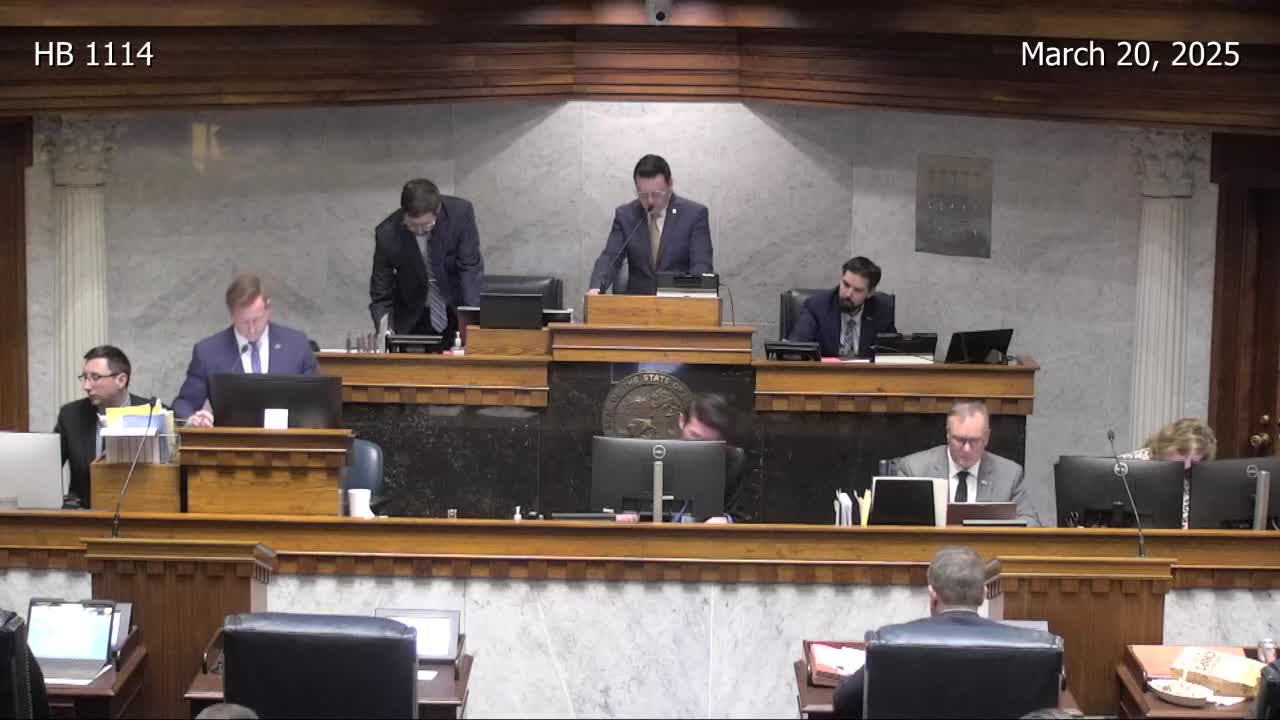
Senate rejects amendment to create driver privilege cards; amendment fails 8-39
Summary
The Indiana Senate voted down an amendment that would have created a state "driver privilege" card for people unable to show lawful U.S. status, rejecting the measure 8-39 after hours of debate about road safety, immigration and criminal checks.
The Indiana Senate rejected an amendment to a House bill that would have authorized a state driver privilege card for people who cannot show lawful U.S. status, voting 8 in favor and 39 opposed on March 19, 2025.
Supporters, led on the floor by Senator Pohl (state senator), said the amendment would improve road safety and reduce hit-and-run crashes by bringing drivers out of the shadows and requiring them to pass driving tests and obtain insurance. “There are 19 other states that currently offer identification cards or driver's privileges cards,” Senator Pohl said, adding the cards “cannot be used to vote.”
Opponents raised national-security and enforcement concerns and cited a fiscal estimate and past committee treatment. Senator Cook (state senator) told colleagues the amendment was identical to Senate Bill 296, which was not heard by the Homeland Security and Transportation Committee, and said the measure carried a $1,380,000 fiscal impact; Cook urged defeat on public-safety and fiscal grounds. “If this amendment is adopted, it will kill the bill,” Cook said.
Several senators who ultimately supported the amendment emphasized guardrails included in the proposal. Senator Hundley (state senator) said the amendment required fingerprints for local and national criminal background checks, a learner's permit, a driving assessment and proof of insurance. “This is not a driver's license. It's different,” Hundley said, describing the proposal as limited in scope and aimed at safety and identification for law enforcement.
Those opposing the amendment argued that licensing could make some people harder to scrutinize and that criminals or foreign terrorists might exploit new credentials. Senator Young (state senator) described hypothetical scenarios to argue against the change; Senator Toms (state senator) said the current process posed hurdles even for citizens renewing licenses and opposed easing access.
After debate and a roll call, the clerk announced the result: 8 ayes, 39 nos. The amendment failed. The underlying House bill remained on second reading and was ordered to engrossment.
The transcript records several other procedural and policy points raised during the debate: supporters cited a Pew Charitable Trusts study referenced on the floor that claimed unlicensed drivers were more likely to cause fatal crashes, while opponents pointed to committee history and a fiscal estimate; the amendment explicitly stated the cards would not be valid for voting. The roll call on the amendment closed the evening's major floor debate on the topic.
The Senate continued consideration of other bills after the vote.