Get Full Government Meeting Transcripts, Videos, & Alerts Forever!
Get email alerts on the Short Term Rentals topic
No spam. Unsubscribe anytime.
Senate committee advances short-term rental bill amid split between property-rights and local-control advocates
Summary
Senate Bill 1162, which would limit local restrictions on short-term rentals and set disclosure and licensing rules, was moved to the fourteenth order for possible amendment after a lengthy hearing that featured testimony for and against the bill and concerns about public safety, local control and property rights.
The Senate Local Government and Taxation Committee voted to advance Senate Bill 1162 to the fourteenth order for possible amendment after a multi-hour hearing that drew local officials, resort-city administrators, law-enforcement representatives, rental managers and property-rights advocates.
Senator Brian Lenny, R., District 13, described SB 1162 as a property-rights measure intended to curb "local overreach" and unclear regulations affecting short-term rentals since 2017. "We've seen cities basically imposing things like mandatory home remodeling, new egress installs, sprinkler systems, excessive licensing fees," Lenny said, framing the bill as a clarification of existing law.
Representative Jordan Redmond, the bill sponsor in the House, said the measure would clarify that short-term rentals are a residential use for zoning purposes and would: preserve local tourism-tax revenue, allow (but not require) licensing and fees, adopt a three-strikes enforcement approach for problem properties, and require disclosure to prospective renters about safety features such as operating smoke alarms, minimum-size exit windows or doors for below-grade rooms, a fire extinguisher on every floor and a first-aid kit. "It clarifies that all STR properties are subject to all other city and county ordinances and penalties that apply to residential use," Redmond said.
The hearing revealed sharp divisions. Opponents warned the bill would weaken local public-safety protections and undercut locally negotiated ordinances. Jade Riley, city administrator for Ketchum and representing the Idaho Resort Cities Coalition, urged the committee not to support the bill, saying local ordinances are crafted to protect customers and adjacent property owners. "Self certification is not a realistic approach," Riley said, and the bill "significantly reduces the public safety elements" used by resort cities.
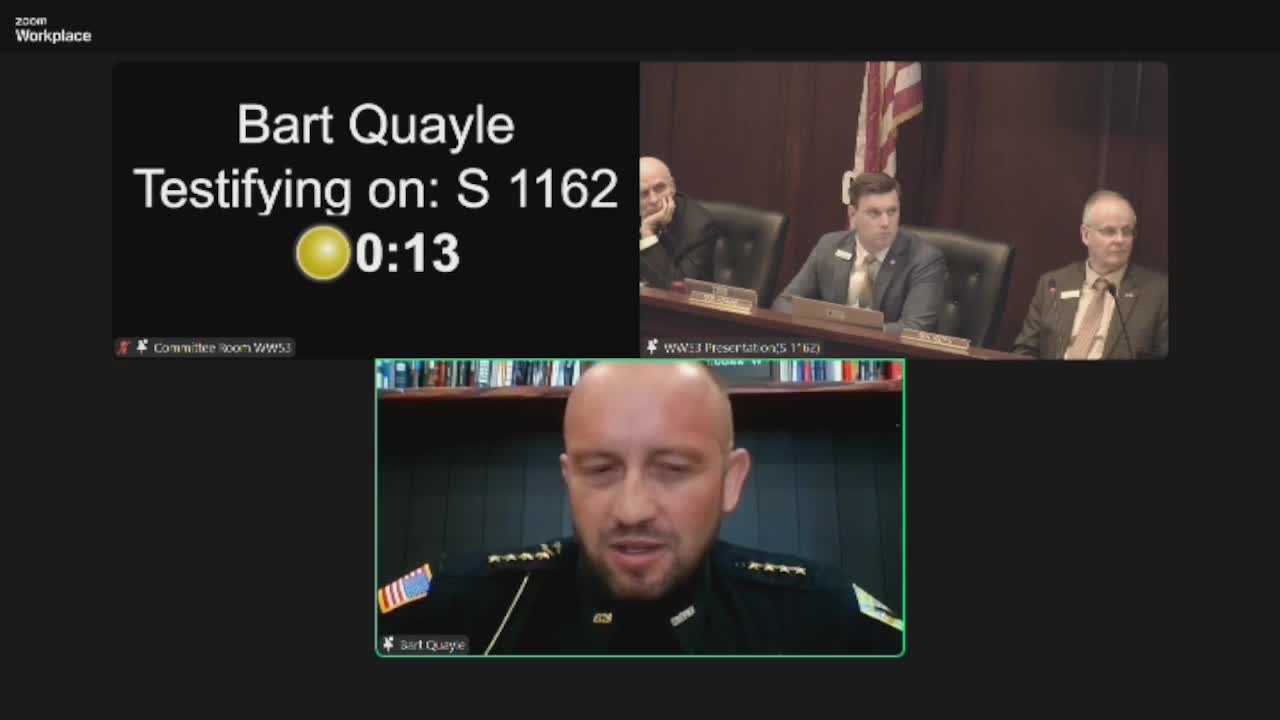
Fremont County Sheriff Bart Quayle said short-term rentals bring unique safety challenges in resort and gateway areas and said the bill’s three-strikes rule could delay removal of repeatedly problematic properties. "Short term rentals generate more calls than traditional homes," Quayle said, adding that the bill "blocks essential protections like additional fire safety measures or improved access for first responders."
Supporters said the bill protects property owners from onerous local rules and preserves the right to rent property. Melissa Radford of Coeur d’Alene called the measure a defense of property rights and due process, saying current statute "is so vague that it's like a blank check for local government officials." Kyle Delore, a property manager, described short-term rentals as economically essential for tourism, emergency housing after disasters, and temporary medical housing.
Several witnesses and committee members highlighted negotiations that took place after a similar bill. Max Pond of the Idaho Realtors Government Affairs office said stakeholders met several times and that parts of prior negotiations are reflected in the current draft. Some committee members urged specific amendments before floor consideration, including restoring a struck line that would subject short-term rentals to all applicable zoning requirements and clarifying whether building-code items should be addressed by the Idaho Building Code Board.
Committee debate included procedural and policy arguments. Senator Toews moved to send the bill to the fourteenth order for possible amendment; Senator Burnt seconded the motion. Multiple senators spoke in favor of advancing the bill to allow additional work and amendment on the floor, with several acknowledging the tension between protecting property rights and preserving local control. The committee approved the motion by voice vote; committee minutes recorded that the motion "carried." SB 1162 will proceed to the fourteenth order for possible amendment and further floor consideration.