Get Full Government Meeting Transcripts, Videos, & Alerts Forever!
Get email alerts on the Public Health Safety topic
No spam. Unsubscribe anytime.
House expands 'lifeline' immunity to minors in alcohol-related medical emergencies
Summary
The House voted to extend Indiana's 'lifeline' law so that immunity from prosecution for alcohol offenses applies to the person experiencing an alcohol-related medical emergency when someone calls for help; roll call was 87–3.
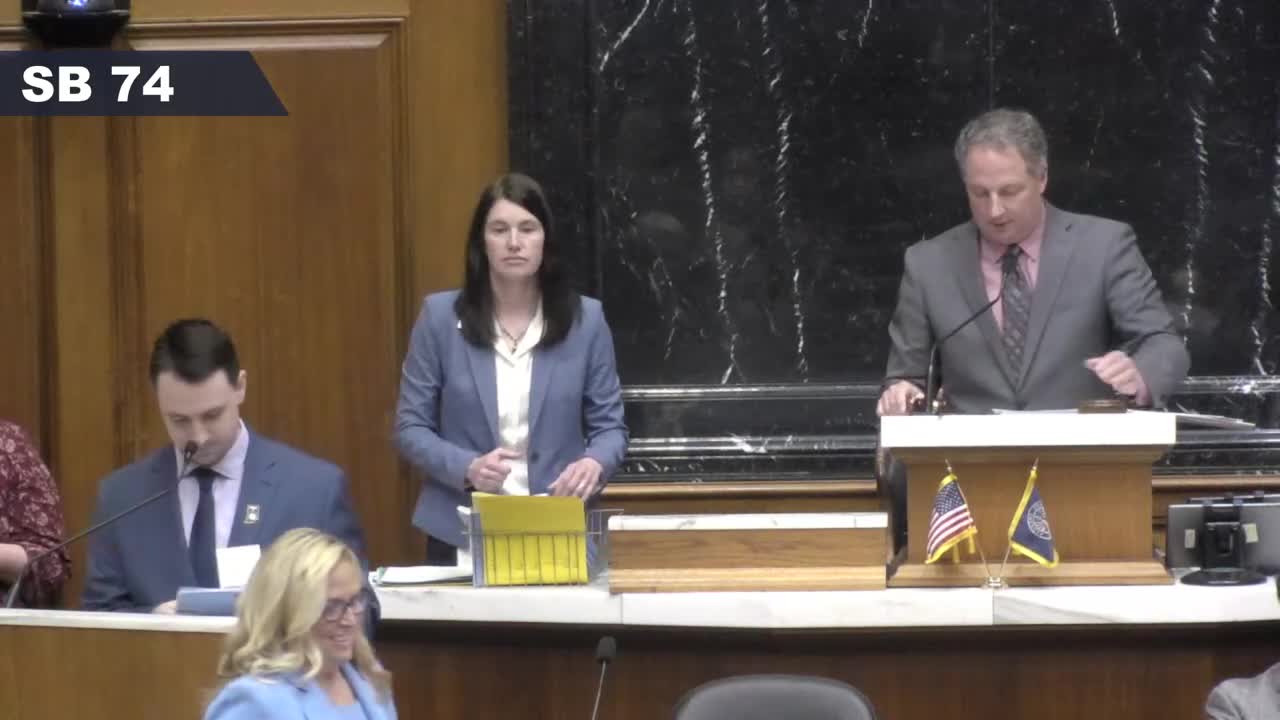
The Indiana House passed Senate Bill 74 to expand the state’s “lifeline” law to protect not only the person who calls for medical help but also the individual experiencing an alcohol-related medical emergency, lawmakers said on the floor.
Representative Bankmaker (floor remarks recorded under the bill’s sponsorship) explained the change: currently the law shields callers who request emergency assistance for someone under the illegal drinking age; SB 74 broadens the immunity so the individual needing medical care is also protected from prosecution for certain alcohol-related offenses as long as a qualifying set of conditions is met.
Under the extension described by the sponsor, to qualify for immunity the caller must provide their full name and other requested information to law enforcement, remain at the scene until law enforcement and emergency medical services arrive, and cooperate with authorities. The statute’s protections would apply to offenses such as public intoxication and minor transportation of alcohol when someone seeks help for a person facing an alcohol-related health emergency.
Supporters said the change encourages young people to seek life-saving assistance without fear of legal repercussions; Representative McNamara and others labelled it a potentially lifesaving reform based on anecdotal experience with campus and residence assistant medical responses.
The House roll call on final passage showed 87 ayes and 3 nays. The bill’s sponsor said the change narrows legal risk for those who request assistance and the people receiving it, and the floor record shows the author waived closing remarks before the final vote.
Why it matters: Extending the lifeline statute to the person in need aims to reduce barriers to calling 911 in alcohol-related emergencies, with supporters framing the measure as a public-health intervention for youth. The bill also specifies cooperation and identity requirements as conditions for immunity.