Get Full Government Meeting Transcripts, Videos, & Alerts Forever!
Get email alerts on the Hospital Property Tax Exemptions topic
No spam. Unsubscribe anytime.
Committee sends hospital property‑tax bill to amendment order after contested hearing
Summary
House Bill 130, which would give county commissioners discretion over property‑tax exemptions for nonprofit hospitals and associated facilities, was moved to the fourteenth order for possible amendment after extensive testimony from county officials, hospitals and advocacy groups about uniformity, personal property and fiscal uncertainty.
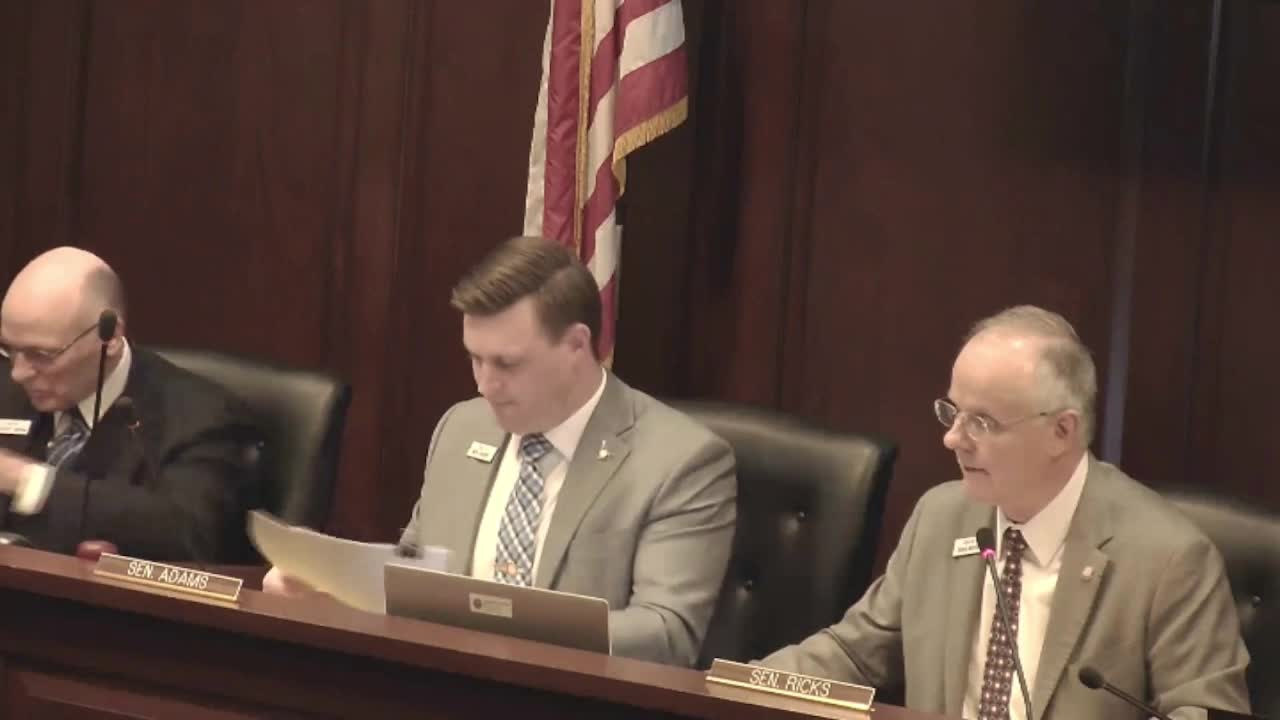
The Senate Local Government and Taxation Committee voted to send House Bill 130 to the fourteenth order for possible amendment after more than an hour of testimony and questions over whether the measure would create uneven tax treatment and financial uncertainty for hospitals and counties.
Representative Josh Tanner, R‑District 14, said the bill is intended to put county commissioners in the position to negotiate tax exemptions with nonprofit hospitals and their satellite facilities on the same basis commissioners already use for other nonprofit property. Tanner said the change would not remove exemptions automatically but would allow counties to grant full or partial exemptions based on local needs and what hospitals provide back to their communities.
"What this bill does ... is to put the county commissioners in the same room as the hospitals and to sit down and negotiate what that give back to our community actually looks like," Tanner said.
Proponents included several county officials and the Idaho Association of Counties, who argued that county boards already apply a consistent, case‑by‑case methodology (often citing the Sunny Ridge Manor v. Canyon County decision) and need clear authority to evaluate hospital properties and any associated personal property.
Opponents — including executives or counsel for St. Luke's Health System, the Idaho Hospital Association and the Idaho Association of Commerce and Industry — urged the committee to hold the bill. They raised three principal concerns: (1) the change could create uncertainty for hospitals that rely on predictable tax treatment, (2) it could allow counties to treat personal property differently year to year, and (3) it could undermine statewide uniformity and the legislature’s constitutional role in setting exemptions.
Anna Courtney, associate general counsel for St. Luke's Health System, told the committee that county commissioners already have authority under existing statute to deny or partially grant exemptions and warned that adding a broader, boundless discretion would “create significant uncertainty” and could lead to oscillation of exempt status from year to year.
Ada County Commissioner Tom Daley and Kootenai County Commissioner Leslie Duncan described county processes that include detailed initial applications and routine annual reviews or affidavits for properties claiming tax‑exempt status. Rod Beck, a county commission chair who provided county materials to the committee, emphasized that counties routinely use the Sunny Ridge factors to determine exemptions and that his county had handled hundreds of exemption requests.
Fiscal estimates offered by witnesses illustrated the stakes. Bingham Memorial Hospital estimated the bill could result in a $600,000 to $1,000,000 annual tax impact for that provider depending on the county and whether personal property were included; the witness said the hospital’s margin last year was about 0.5%, leaving roughly $2,000,000 in net operating margin.
Hospital representatives and the Idaho Hospital Association warned a taxable shift would be passed to patients through higher health‑care costs. The hospital association presented a polling result it said showed 72% of Republican respondents opposed raising taxes on hospitals if it meant higher health‑care costs, and 73% favored uniform tax treatment across counties. County and association witnesses countered that the Sunny Ridge case law and statewide Tax Commission training promote a consistent approach across counties.
Committee members raised concerns about unintended consequences in the bill’s drafting, particularly language that could be read to subject certain personal property to county discretion. Senators said that uncertainty over whether personal property would be included justified sending the bill to the amending order to clarify legislative intent and preserve uniformity.
Senator Toews moved to send the bill to the fourteenth order for possible amendment; Senator Ben Hartog seconded. The committee approved the motion by voice vote.
The bill will be returned to the amending order for drafting changes to address the disputed language and questions about personal property and uniformity before the committee takes further action.