Get Full Government Meeting Transcripts, Videos, & Alerts Forever!
Get email alerts on the Local Government And Taxation topic
No spam. Unsubscribe anytime.
Committee advances bill to shift burden in large property-tax increases, clarify homeowner-exemption proration
Summary
The Senate Local Government and Taxation Committee recommended sending House Bill 354 to the Senate floor. The bill would shift the burden of proof to assessors for property-tax appeals when a parcel’s assessed value increases more than 10% and would codify how to prorate the homeowner's exemption when eligibility changes midyear.
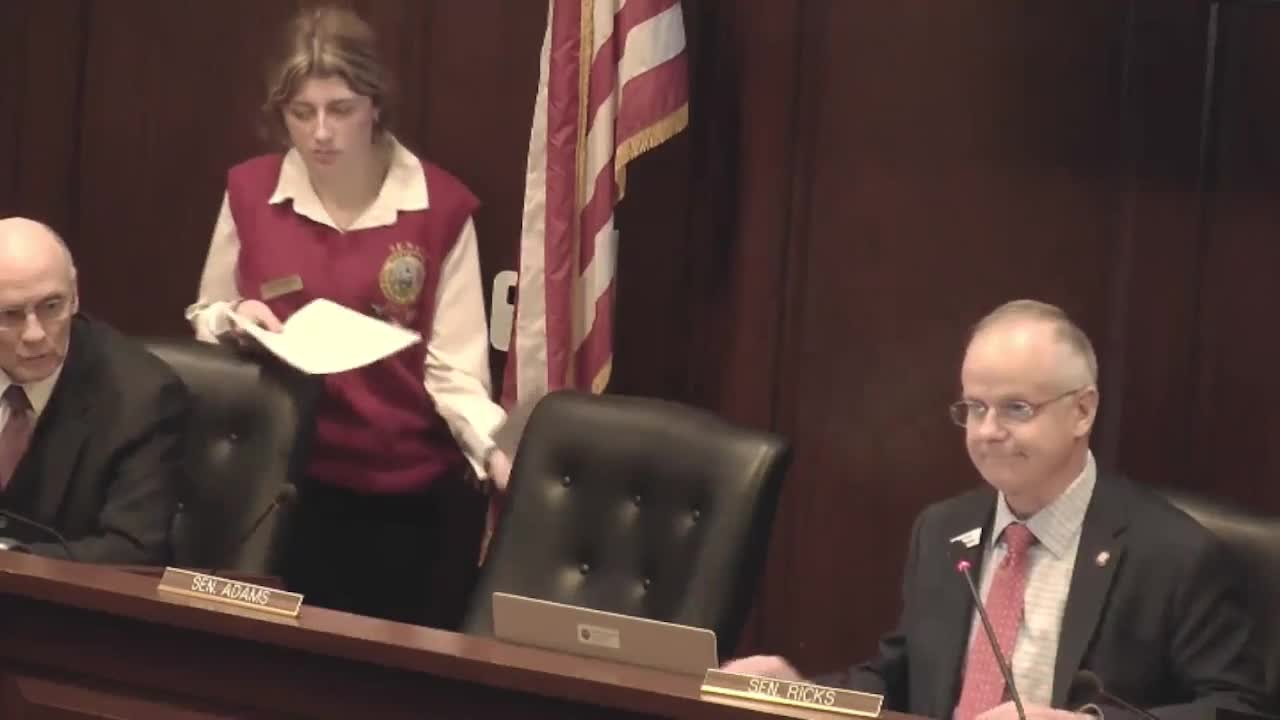
The Senate Local Government and Taxation Committee on Thursday voted to send House Bill 354 to the Senate floor with a "do pass" recommendation after hearing testimony from the bill sponsor and industry groups.
The bill has two main provisions: it shifts the burden of proof in property-tax appeals to the county assessor when a property’s assessed value rises by more than 10% in one year and the assessor did not follow the State Tax Commission’s equalization methods; and it codifies how counties must prorate the homeowner’s exemption when a property gains or loses eligibility partway through the year.
"There’s two primary things that this House Bill deals with: it’s a burden of proof on property tax appeals, and it shifts that burden of proof when two things happen — one is that the increase in value exceeds 10 percent," Representative Dustin Manwaring, R.-Pocatello, told the committee. He said the bill pulls equalization ranges that have been applied by administrative rule into statute so the threshold that triggers the shift in burden is clearer.
Manwaring described a motivating example in Bannock County several years ago when a new assessor raised values broadly and the county faced thousands of appeals, saying the proposal is intended to reduce the likelihood of a similar large, one-time reassessment.
The bill also prescribes a method to prorate the homeowner’s exemption. Under the language presented, counties would calculate a daily tax rate by multiplying the levy rate by the assessed market value ratio and dividing by 365 (or 366 in a leap year), then multiply that daily rate by the number of days the exemption applied to determine the prorated amount.
Supporters who testified included Sarah Westbrook of the Idaho Association of Counties and Max Pond, government affairs director for the Idaho Realtors. "The Idaho Association of Counties supports House Bill 354," Westbrook told the committee, calling the proposal "fair and implementable" and noting the bill includes roll-on/roll-off language for the homestead exemption. Pond said the Realtors appreciated counties coming to the table on a workable solution.
Manwaring told the committee the bill passed the Idaho House revenue and taxation committee unanimously and passed the House floor unanimously with no opposition. At the Senate committee, a motion to advance the bill to the floor carried on a voice vote; the transcript records no roll-call tally. Senator Burt agreed to carry the bill on the Senate floor, the committee was told.
The committee took no further amendments at the hearing and adjourned after the vote. The bill will proceed next to a Senate floor vote with a committee recommendation for passage.