Get Full Government Meeting Transcripts, Videos, & Alerts Forever!
Get email alerts on the Energy Nuclear topic
No spam. Unsubscribe anytime.
House narrowly approves utility bill that lets ratepayers start paying early for small modular reactor projects
Summary
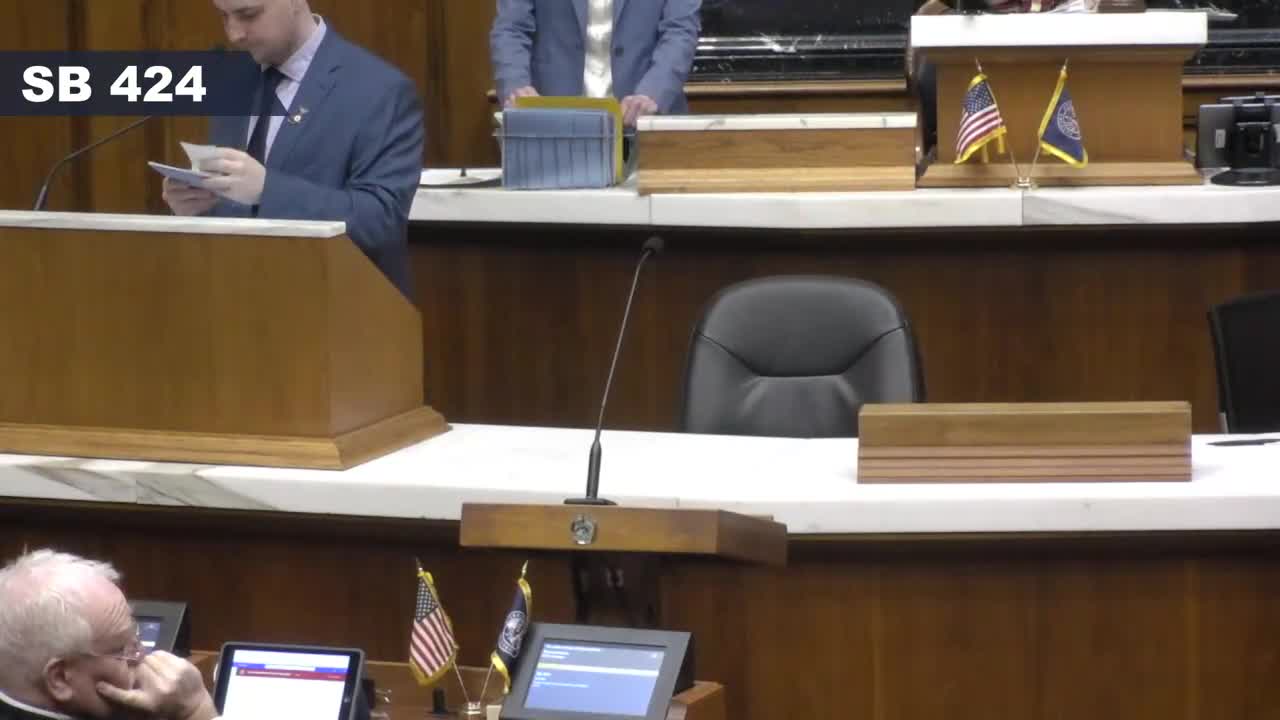
House passage of Senate Bill 424 authorizes utilities to seek recovery of early project development costs for small modular reactors (SMRs) under regulatory oversight; supporters said it aids development and rate stability, critics said it shifts substantial financial risk to ratepayers. The bill passed 59–30.
The Indiana House passed Senate Bill 424 after a heated debate over whether the measure fairly allocates financial risk for small modular reactor (SMR) development.
Senate Bill 424 allows utilities to petition the Indiana Utility Regulatory Commission (IURC) for approval to recover specified project development costs (design, engineering, permitting, licensing, carrying costs and related activities) on a phased basis while projects are still under development. Representative Soliday, speaking for the bill, said the statute includes safeguards: utilities must petition the IURC with detailed plans, the IURC must find the costs reasonable before allowing recovery, and utilities will not be allowed to recover imprudent spending or guaranteed profits absent commission approval.
Opponents warned the proposal shifts the cost of failed projects to ratepayers. Representative Pearson, a vocal critic, described the provision as an unreasonable transfer of risk: “If it doesn't work out, they'll just pay for it… If you can have your lawyers put up a nice petition to the IURC, we'll even let you get return on that investment. We'll let you make a profit. This is a bad bill.” Pearson cited prior SMR-related projects that faltered and private-sector examples he said demonstrated high development costs.
Supporters said the measure brings Indiana into alignment with other states and gives utilities a regulated, transparent way to invest in advanced energy generation with oversight. Representative Soliday argued the bill actually limits exposure for ratepayers versus other financing choices: paying “as you go” can yield lower borrowing costs and reduce the need for the utility to bond the full development cost upfront.
The House recorded a roll-call vote of 59 ayes and 30 noes on final passage. The transcript shows the author thanked co-sponsors and urged colleagues to consider the potential for economic development, and opponents repeatedly warned about cost overruns and the prospect that ratepayers would shoulder sunk costs for projects that might never be completed.
Why it matters: SB 424 creates a regulatory path for utilities to include early-stage nuclear development costs in rate-recovery filings. If applied to SMR projects, the statute could accelerate utility planning but also exposes ratepayers to a portion of the development risk if the IURC ultimately allows recovery of those costs.
What remains unclear from the transcript: How the IURC will apply its prudence standard in practice, what specific categories of carrying costs will qualify, and whether any additional statutory guardrails will be added in conference or in subsequent rulemaking.