Get Full Government Meeting Transcripts, Videos, & Alerts Forever!
Get email alerts on the Pension Contributions topic
No spam. Unsubscribe anytime.
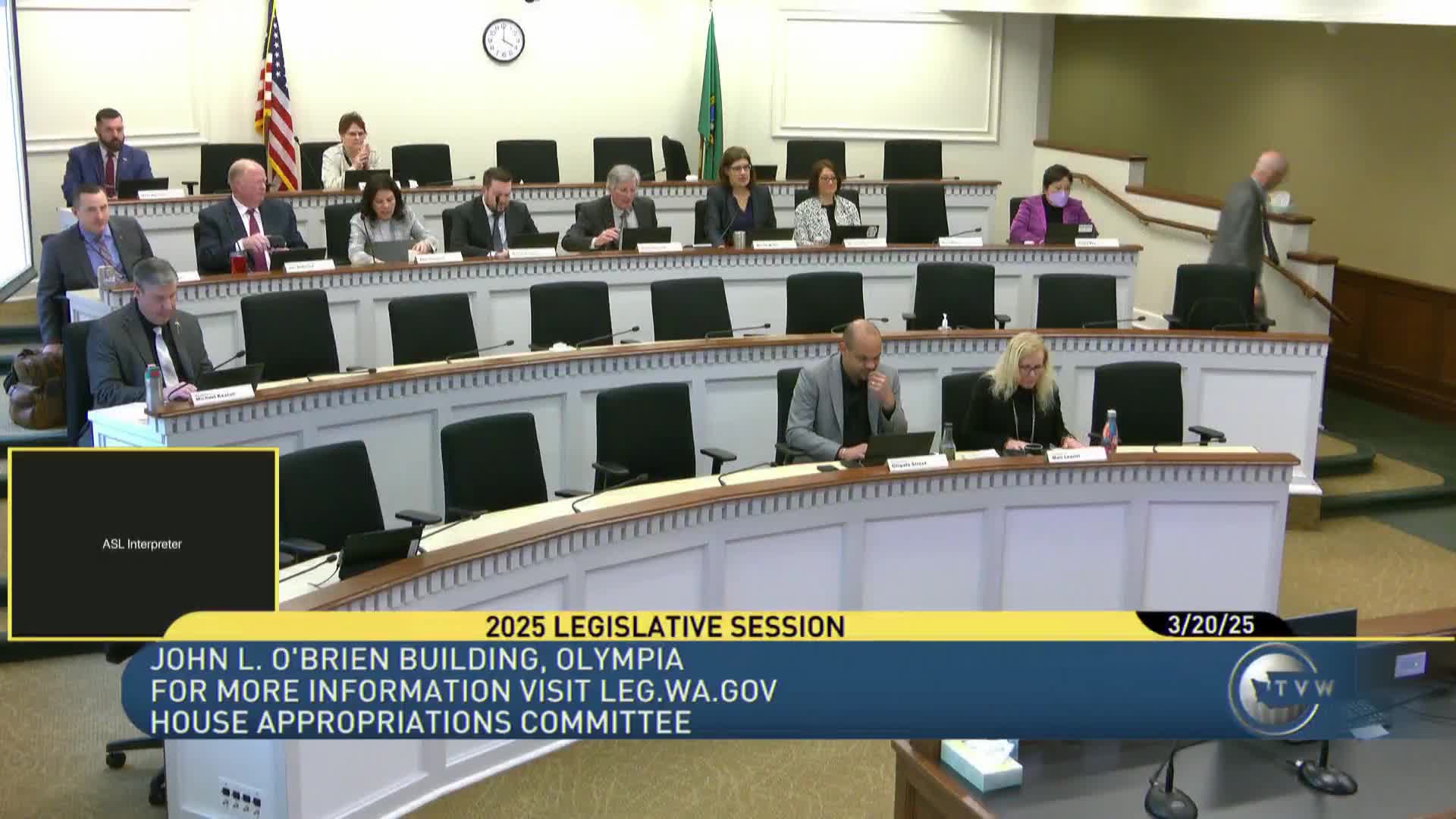
Committee hears fiscal tradeoffs in plan to reduce employer pension contribution rates for one year
Summary
The Appropriations Committee received a staff briefing and public testimony on engrossed substitute Senate Bill 5357, which would reduce employer normal cost contribution rates for several state retirement systems for fiscal year 2026. Staff estimated immediate general‑fund and employer savings but warned costs would shift to future biennia.
The Appropriations Committee heard a staff briefing on engrossed substitute Senate Bill 5357, which reduces employer normal cost contribution rates for several Washington state retirement systems for fiscal year 2026 and correspondingly lowers Plan 2 employer rates for that year.
David Pringle (staff) described the rate reductions and the actuarial framework that governs the calculations. He said the bill lowers employer normal cost contribution rates by specified percentages for multiple systems (examples in testimony: PERS, TRS, SERS, and the Washington State Patrol Retirement System) and noted that the state actuary calculates normal cost rates using the aggregate actuarial cost method, as required by law. Pringle said the reductions reflect a temporary policy choice and that the state actuary had included a multi‑biennium phase‑in after an earlier change in long‑term return assumptions.
Fiscal impacts presented in testimony: Pringle summarized the State Actuary’s estimates that the budget impact of the rate reductions for fiscal year 2026 would be roughly $162,400,000 to the state general fund, about $359,000,000 in total employer funds, and a projected employee contribution reduction of about $210,700,000. He cautioned that the fiscal effect for 2026 would shift costs into later biennia; the actuary projects total employer costs could increase by about $435,000,000 over the long‑term projection and employee costs could increase by about $309,000,000.
Public testimony and questions
Representative Levitt asked whether Plan 3 would be affected. Pringle replied that the employer normal cost rate is calculated for Plan 2 and Plan 3 together on the employer side but does not change Plan 3 individual account contribution rates for members. When asked whether reduced employer contributions would affect an individual’s pension, Pringle said, “No. It wouldn't affect an individual's pension. It would affect how much the employer will need to put in to support that pension over time.”
Sherry Sawyer of the Office of Financial Management testified in support of the engrossed substitute and noted the bill was consistent with the governor’s budget approach; she said OFM appreciated Senate changes and stood ready to answer questions. Emmett Mills of the Washington State School Retirees Association said his group’s position was "other" (neutral) and urged that SSB 5357 be considered together with other pension legislation (including SSB 5085) as a package that uses surpluses to eliminate pension debt and restore benefits to certain retirees.
Why it matters: The bill would provide one‑year employer contribution relief but, according to the actuary’s estimates presented to the committee, would move costs to future biennia and increase projected long‑term employer liabilities. Committee members asked clarifying questions; staff and witnesses emphasized actuarial assumptions, statutory calculation methods and the multi‑biennium phase‑in established after earlier changes to return assumptions.
Next steps
The committee took no formal action at the hearing and moved on to subsequent items. Committee members were given an opportunity to question staff and hear public testimony; no vote on SSB 5357 was recorded in the transcript.