Get Full Government Meeting Transcripts, Videos, & Alerts Forever!
Get email alerts on the Fire District Consolidation topic
No spam. Unsubscribe anytime.
Committee advances bill to let fire districts consolidate without penalizing budget growth
Summary
House Bill 208 would allow fire districts to combine operations and budgets without the current budget-growth disincentive; the committee sent the bill to the floor with a due-pass recommendation after testimony from district leaders and a fire chief.
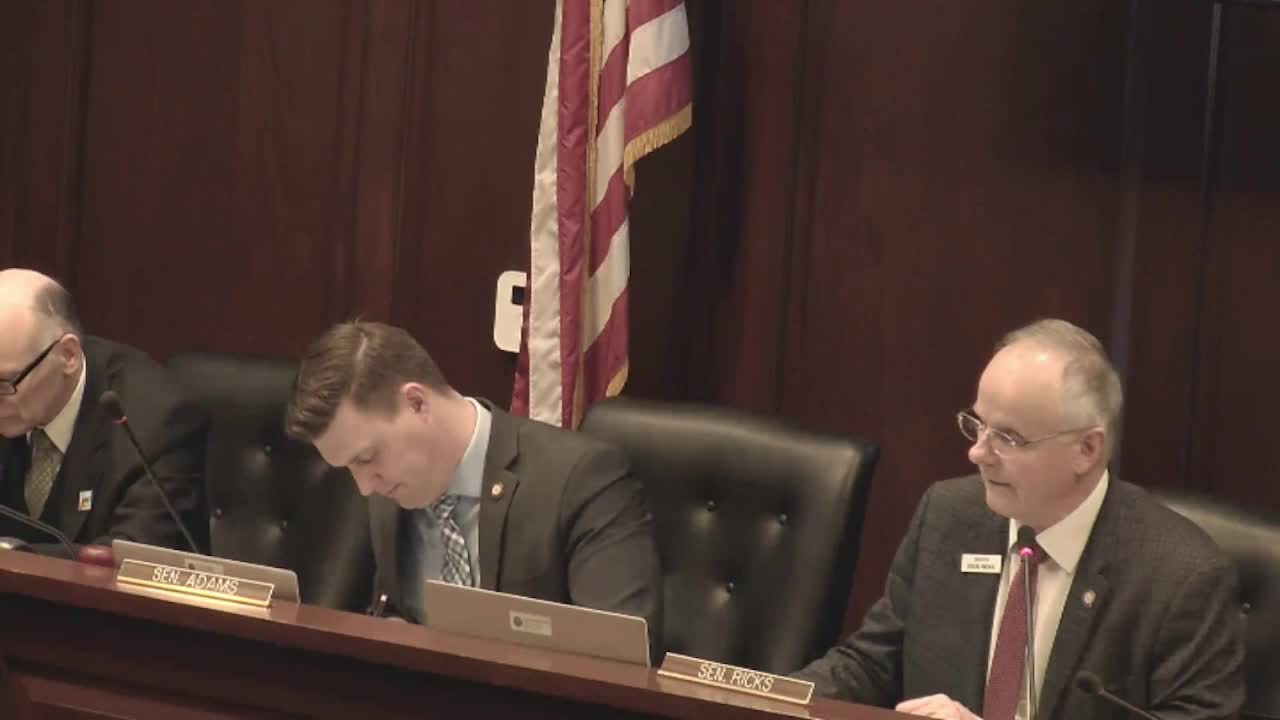
The Senate Local Government and Taxation Committee on an unspecified date advanced House Bill 208, legislation designed to remove a budget-growth disincentive that currently discourages consolidation of fire districts.
Senator Jim Woodward (Legislative District 1) and Representative Mark Sauter, who said he is a retired fire chief and represents the area, told the committee the bill responds to an unintended consequence created by an earlier cap on budget growth (a 3% cap) that interacts with fire district consolidation statutes. Woodward said when two districts consolidate under existing rules, the calculation of budget growth can make consolidation financially unattractive even when operational efficiencies exist.
Sauter described how consolidation could allow two neighboring districts to combine chiefs, maintenance facilities and other overhead to improve service and reduce costs. "This bill does not enable one fire district to gobble up another," Sauter told senators, and he said the proposal preserves local control by keeping elected fire district boards involved and by requiring public hearings and an appeal process.
Chief Greg Tominski of Middleton and Star Fire District described levy calculation mechanics: the two districts' budgets would be combined and the new levy would be set across the combined assessed value, meaning some taxpayers could pay more and others less depending on prior levies and assessed values.
Senator Tater asked about noncontiguous districts; presenters said they would work with affected legislators to resolve language and that the bill currently presumes contiguous boundaries unless "otherwise specifically authorized." The measure has the approval of the State Fire Chiefs Association, presenters said.
Senator Grohl moved to send House Bill 208 to the Senate floor with a due-pass recommendation; Senator Taylor seconded. The committee approved the motion by voice vote with no recorded opposition. Senator Woodward said he would carry the bill on the floor.