Get Full Government Meeting Transcripts, Videos, & Alerts Forever!
Get email alerts on the Criminal Law Riot topic
No spam. Unsubscribe anytime.
Committee weighs adding physical‑injury felony to Idaho riot statute; motion fails and bill held
Summary
Representative Jaren Crane introduced House Bill 125 to add physical injury as a felony qualifier to Idaho's rioting statute (Title 18, chapter 64). Nampa Sergeant Matthew Richardson described cases where identifying individual assailants was difficult; senators expressed concern about vagueness and risk of overcharging. A motion to send the bill
Representative Jaren Crane (District 12, Nampa) told the Senate Judiciary & Rules Committee House Bill 125 would add a physical‑injury element to Idaho's rioting statute, Title 18, chapter 64 (18‑6401). Crane said the measure responds to charging issues raised by the Nampa Police Department and asked Sergeant Matthew Richardson to describe local incidents that prompted the proposal.
Sergeant Matthew Richardson of the Nampa Police Department testified the current riot statute places more emphasis on property destruction than bodily injury and that adding a physical‑injury element would give prosecutors another tool in chaotic, multi‑participant incidents where identifying the specific assailant is difficult. Richardson cited several local incidents, including a bar fight that produced a traumatic brain injury and a 2021 house fight involving multiple people, a stabbing and vehicle destruction, where he said property damage allowed felony charges while injuries otherwise might have resulted only in misdemeanors.
Richardson said the statute could be useful where video and hospital records show an injury but officers cannot identify a single perpetrator; “in that incident every person that was directly involved with the injury that was sustained by that victim, we can charge with a felony riot,” he said. He and other testifiers discussed different injury definitions; several senators urged using language from existing statutes—such as the “traumatic injury” language used in felony domestic‑violence statutes—rather than the broader phrase “physical injury.”
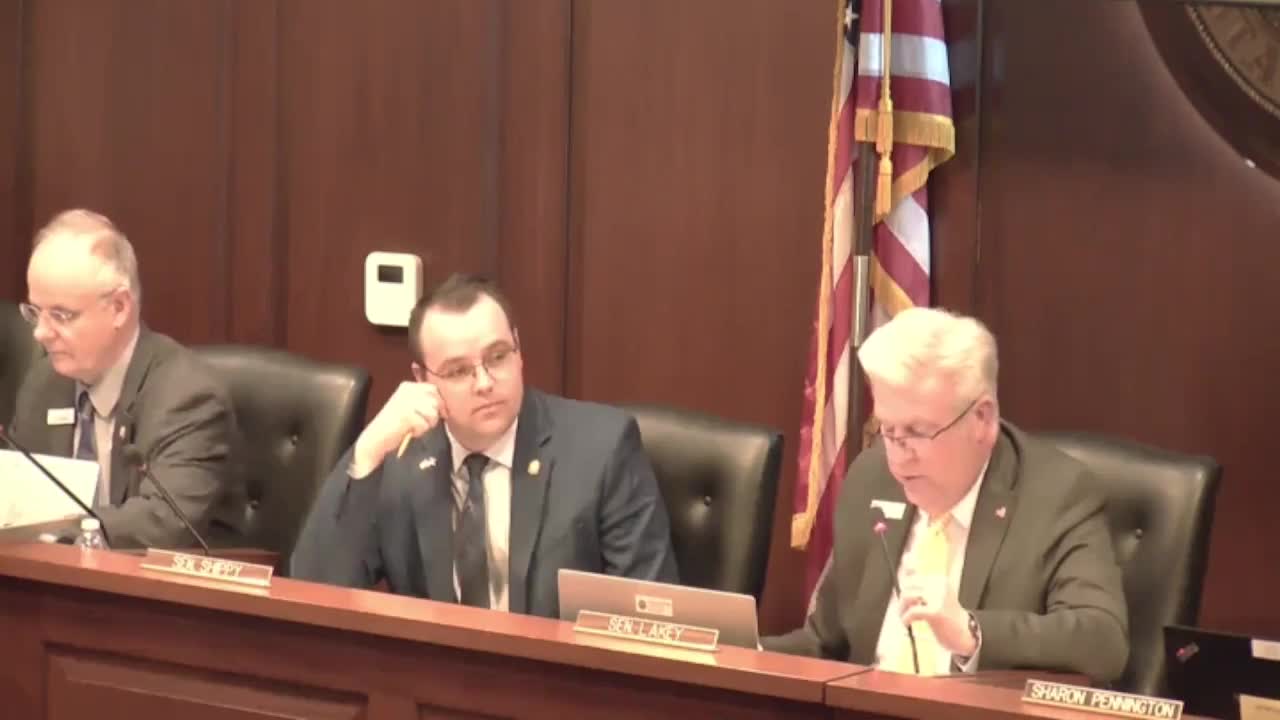
Committee members raised constitutional and prosecutorial concerns. Senator Keiser asked whether participants in a lawful assembly that is later declared unlawful could be swept into felony liability; Senator Wintrow asked why the original statute omitted a physical‑injury element and whether the change was historically motivated by prison/jail riot provisions. Several senators, including Senator Ruckdy and Senator Langdon, warned the committee to avoid expanding tools that could lead to overcharging. Others, including Senator Foreman and Senator Shippey, said the change could be a useful prosecutorial tool if the injury element were carefully defined.
Senators took a roll‑call on a motion to send House Bill 125 to the fourteenth order for possible amendment. The motion, offered by Senator Foreman and seconded by Senator Shippey, failed on the roll call, and the chair then announced House Bill 125 would be held in committee subject to call of the chair.
The committee discussion focused on precise statutory language: whether the bill should mirror “traumatic injury” or “serious bodily harm” from other criminal provisions, the danger of overbroad application to peaceful protesters, and how prosecutors would proceed when video or witnesses are lacking. No amendment was adopted on the hearing record; sponsors and law‑enforcement witnesses said they would work on language if the bill returns to amending order or a future hearing.