Get Full Government Meeting Transcripts, Videos, & Alerts Forever!
Get email alerts on the Higher Education Free Speech topic
No spam. Unsubscribe anytime.
Senate approves campus free‑speech bill after lengthy debate over private lawsuits and institutional authority
Summary
House Bill 2‑40, establishing protections for expressive activities at public colleges and universities, passed the Idaho Senate March 19 after extended floor debate over a private cause of action and the balance between statutory controls and campus governance.
The Idaho Senate on March 19 passed House Bill 2 40, legislation that sets statutory protections for expressive activity on public college and university campuses and prohibits certain campus speech restrictions, after a prolonged floor debate about a private cause of action and state oversight of institutional policy.
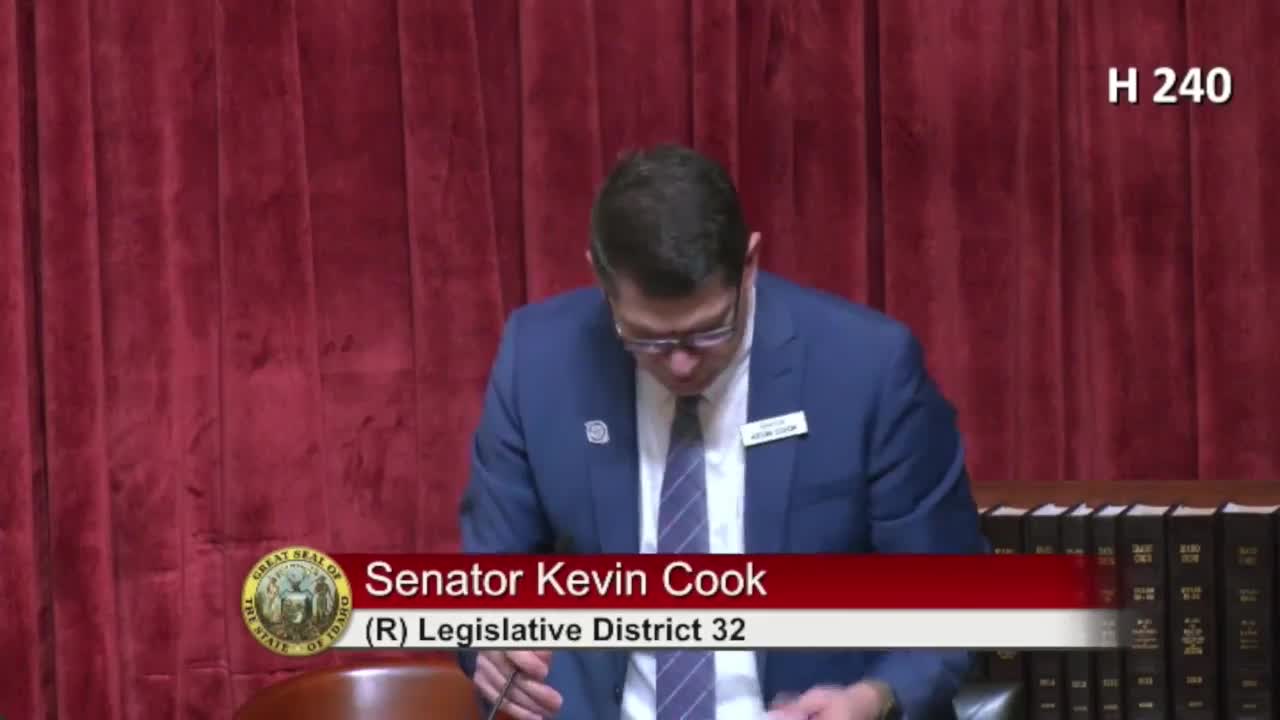
Senator Chris Cook, the floor sponsor, said the bill codifies established U.S. Supreme Court principles recognizing public institutions as a “marketplace of ideas,” and will eliminate “speech zones” and blanket disciplinary responses to lawful expression on public campuses. Cook said the bill requires institutions to educate students about free‑speech rights, train administrators and campus police about their duties, and report free‑speech incidents to the Legislature during the appropriation process.
Opponents on the floor cautioned the measure went too far in limiting institutions’ discretion and raised concern about the bill's private cause of action. Senator Ruddke called it “a great big sledgehammer” aimed at colleges and said the private‑suit provision remains a worry. Senator Melissa Wintrow said moving rule content into statute removes negotiated rulemaking processes and said she was voting against rules‑to‑statute measures this session for that reason.
Supporters said the bill aligns Idaho with about 20 other states and that those states have seen minimal litigation under similar laws. Senator Taiz argued that the measure can reduce litigation costs by handling matters in state rather than federal court, and Senator Nichols said the bill addressed problems already seen in Idaho where campuses used speech zones.
The measure passed the Senate on a roll call following closing remarks from supporters. The bill moves to the House for further action.
Why it matters: The statute alters the balance between institutional policy and legislative control on public higher‑education campuses, restricting some campus disciplinary actions and creating statutory remedies for affected parties. Supporters say it safeguards student expression; critics say it weakens local governance and might increase litigation.
What the bill does: Among other provisions recited on the floor, the bill removes limitations on where students may speak or distribute literature in publicly accessible outdoor areas of campuses, prohibits discrimination against student groups based on beliefs for recognition, requires training and reporting, and provides a private right of action for some alleged free‑speech violations.