Get Full Government Meeting Transcripts, Videos, & Alerts Forever!
Get email alerts on the Mining Permitting topic
No spam. Unsubscribe anytime.
Idaho Senate updates permitting rules for cyanide leaching ore processing; bill passes after debate over rulemaking
Summary
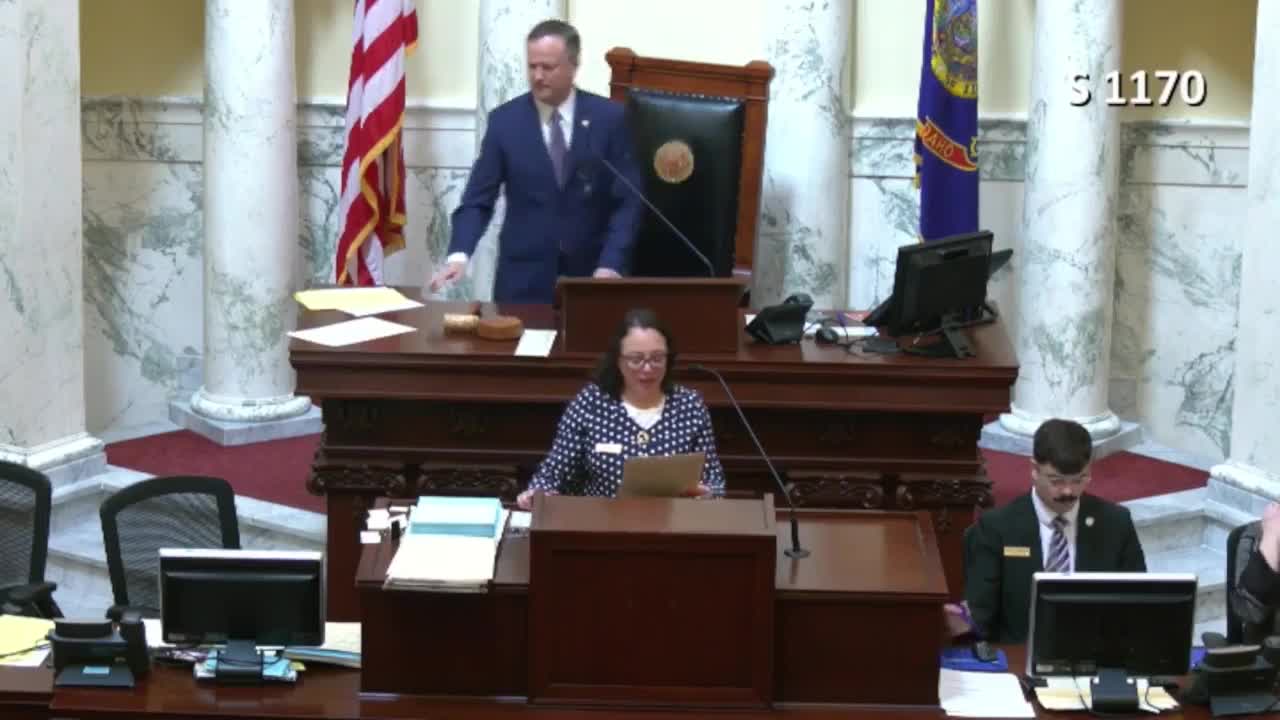
The Idaho Senate on March 19 passed Senate Bill 11 70, a rewrite of the state's permitting process for ore‑processing facilities that use cyanide leaching, after debate over technical standards and whether provisions should be moved from rules into statute.
The Idaho Senate on March 19 passed Senate Bill 11 70, a rewrite of the state's permitting process for ore‑processing facilities that use cyanide leaching, after roughly an hour of debate over technical standards and whether agency rules should be moved into statute.
Senator Rob Hart, the bill sponsor and a member of the Finance Committee, told the Senate the measure updates an Idaho code section that has been on the books for 38 years and “clarify some parts of that code which have been vague and difficult to follow.” He described the bill as a more detailed, building‑code style permit framework and said it allows phased review, negotiable extensions of the existing 180‑day review clock, and defined public‑comment points during review.
The bill requires that certain application documents be signed by an Idaho‑registered professional engineer while specifying which documents need that stamp, Hart said, and it authorizes the Department of Environmental Quality to hire third‑party consultants for technical review.
“Basically, what 11‑70 is, it's a detailed building code for how you go about permitting one of these facilities,” Hart said on the floor, adding that he declared a Rule 39(h) conflict because he is a licensed professional engineer.
Opponents argued the bill removes important flexibility in the administrative rulemaking process. Senator Taylor said a late change in the measure (section 3, page 10) moves rules into statute and that not all stakeholders were included in that decision; she said she preferred further stakeholder negotiation and indicated she would vote against the bill.
Senator Melissa Wintrow also objected to moving rules into statute, saying that the negotiated rulemaking and public comment process is important and that putting those provisions into statute reduces that opportunity. Other senators urged support, noting the bill aims to avoid duplicative agency reviews, permit phased review, and clarify submittal expectations so projects and regulators have a clearer timeline.
Senator C. Guthrie and others said the bill removes redundancies—so, for example, one component of an application would be reviewed by a single state agency rather than triggering multiple reviews—and allows DEQ to open up public comment periods at appropriate stages. Hart and backers said the measure was developed from practitioner experience and agency interaction with industry.
The Senate recorded 30 yes, 4 no and 1 absent/excused on the final roll call; the bill passed and will be transmitted to the House for further action.
Why it matters: The bill reshapes the permitting and public‑participation process for facilities that use cyanide to extract precious metals. Supporters say clarifications will speed permit reviews and avoid duplicate agency work; critics say shifting rule details into statute undercuts negotiated rulemaking and could limit public input.
What’s next: Because the bill passed the Senate, it moves to the House for consideration. If enacted as written, the Department of Environmental Quality would implement the new review structure and defined public‑comment points described in the bill.