Get Full Government Meeting Transcripts, Videos, & Alerts Forever!
Get email alerts on the Education School Funding topic
No spam. Unsubscribe anytime.
Senate passes change to K‑12 discretionary funding formula after heated debate
Summary
The Idaho Senate passed Senate Bill 10‑96, shifting how a portion of K‑12 funds are distributed so discretionary funds are apportioned per pupil attributes rather than by notional classroom units; the measure passed 20‑15.
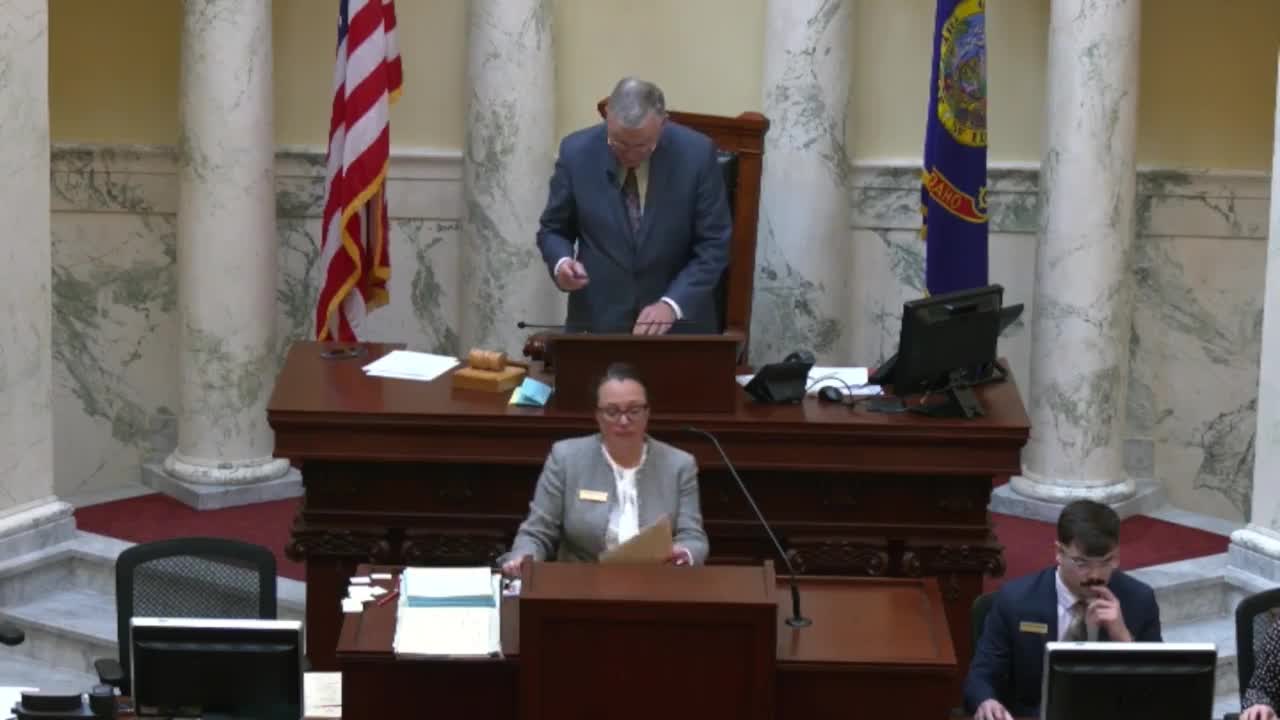
Senator Terry Woodward, sponsor of Senate Bill 10‑96, told the Idaho Senate on March 18 that the bill would change how the state distributes a portion of K‑12 funding so “the money follows the child.” The Senate passed the measure 20 in favor and 15 opposed.
Woodward said the bill applies only to the portion of K‑12 funding commonly called discretionary funds — about 13 percent of total statewide K‑12 spending she cited as roughly $3,300,000,000 — and would allocate that portion based on each child’s characteristics rather than the current notional classroom and divisor tabulation in Title 33.
The sponsor said the change would increase the “resolution” of the distribution and allow funds to be targeted to student needs. She described built‑in safeguards: a two‑year hold‑harmless clause to limit losses for districts during transition and a linear weight adjustment for small schools in the amended version.
Opponents, including senators representing rural districts, said local districts feared becoming “losers” under the new formula and pointed to a Joint Finance and Appropriations Committee fiscal note and projected transition costs. One senator noted the state’s budget book referenced an additional $27 million connected with implementing a new funding formula, and raised concern that hold‑harmless protections could increase near‑term costs.
Supporters and several members who described years of interim work said the bill is an incremental step — limited to discretionary funds — toward modernizing a decades‑old system and gives districts local control over how to spend the dollars.
After floor debate the Senate called the roll. The official count recorded 20 ayes and 15 nays; the majority voted to pass the amended Senate Bill 10‑96. The bill will be transmitted to the House.
The bill’s sponsor and supporters emphasized it does not itself appropriate money; appropriations (the size of the overall education “pie”) remain a JFAC responsibility.
Notes from floor discussion and the bill text show two primary technical elements: (1) allocation of discretionary funds on a per‑student attribute basis rather than the notional classroom divisor; and (2) a temporary hold‑harmless period to limit immediate reductions to district discretionary receipts.