Get Full Government Meeting Transcripts, Videos, & Alerts Forever!
Get email alerts on the Immigration Benefits topic
No spam. Unsubscribe anytime.
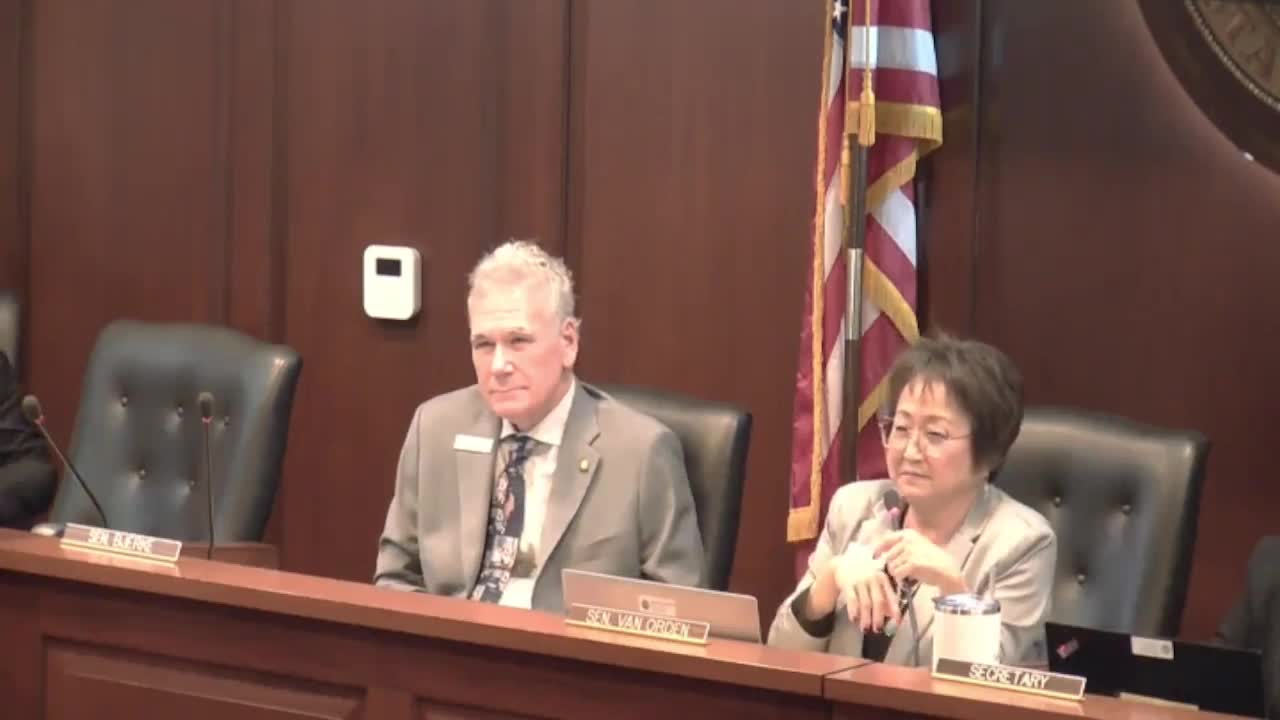
Senate Health and Welfare Committee advances bill requiring proof of legal presence for some state-funded benefits
Summary
The Senate Health and Welfare Committee voted to send House Bill 135 to the Senate floor with a due-pass recommendation after hearing testimony that the bill would require adults to prove lawful presence before receiving some state-funded benefits.
The Senate Health and Welfare Committee voted to send House Bill 135 to the Senate floor with a due-pass recommendation after hearing more than an hour of testimony and debate.
House Bill 135, sponsored in committee by Senator Phil Hart (Legislative District 2), would add language requiring adults to prove they are in the United States legally before receiving certain state-funded benefits administered through the Department of Health and Welfare. "This legislation does not take away benefits that might be necessary in an emergency situation," Hart said, adding that the Department would screen applicants and that emergency benefits would remain available.
Supporters argued the change protects taxpayer dollars. Nicholas Kleinworth, policy director at the Idaho Freedom Foundation, told the committee, "Citizenship means something and it matters to Americans," and said the state should not be a welfare destination.
But opponents — including nonprofit leaders, health advocates, educators and parents — warned the bill would have immediate harms for U.S. citizen children in mixed-status families and would impose administrative burdens on charities that partner with the state. Craig Peterson of Idaho Voices for Children said HB 135 "interferes with the ability of children, including U.S. citizen children, to access food assistance." Randy Ford, president and CEO of the Idaho Food Bank, said the bill could force food banks and charities to collect and store personal information they are not set up to protect and that the increased demand would exceed charitable capacity.
Testimony repeatedly raised questions about how HB 135 would interact with federal programs. Peterson and others said federal rules for SNAP and WIC protect U.S. citizen children even if their parents are undocumented; Peterson said federal rules make those children eligible regardless of parental status. Committee members pressed whether the bill would override federal exemptions. Senator Wintrow pointed to the bill's language and asked whether the measure could exclude immunizations and other public-health measures; several testifiers urged the committee not to remove preventive services that protect the wider public.
Committee members also sought administrative clarifications. Hart told senators that, per his meeting with the Department of Health and Welfare, benefit applications typically include an interview where staff would ask for documentation. He said the bill leaves emergency care available and that nonprofits could still serve people with private funds. Several senators asked Hart to work with the department to draft clarifying amendments to the bill, particularly around language on food assistance for dependent children under age 18 (page 2, lines 40–41 in the bill text).
The committee considered a substitute motion to send HB 135 to the fourteenth order for possible amendment; that substitute motion failed on a recorded count of four ayes and five nays. After further debate the committee approved sending House Bill 135 to the Senate floor with a due-pass recommendation. Committee members and witnesses signaled differing views about next steps: some asked for clarifying amendments to preserve benefits for U.S. citizen children, while others said voluntary charitable funding could fill gaps the bill would create.
The bill now goes to the full Senate for consideration; several senators said they may seek amendments on the floor.
Votes at a glance: The committee voted down a motion to send HB 135 to the fourteenth order for possible amendment (4 ayes, 5 nays). The committee later approved a motion to send HB 135 to the Senate floor with a due-pass recommendation (final roll-call recorded in the minutes).