Get Full Government Meeting Transcripts, Videos, & Alerts Forever!
Get email alerts on the School Construction topic
No spam. Unsubscribe anytime.
Millis committees set schematic design schedule, plan public outreach ahead of November vote
Summary
Town of Millis school building team laid out a compressed schematic-design schedule, confirmed submission and review dates with the Massachusetts School Building Authority and discussed a unified public outreach plan and legal limits on advocacy.
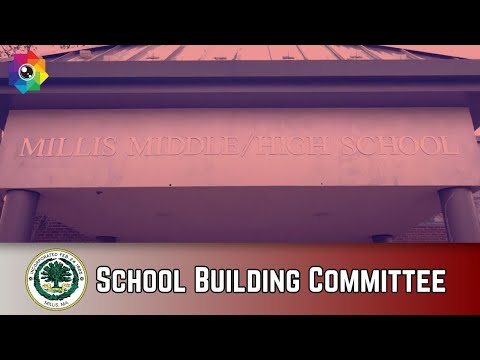
The Town of Millis School Building Committee and the Permanent Building Committee on March 19 reviewed and endorsed a schematic-design work plan meant to keep the district on track for a town vote this fall and a required submission to the Massachusetts School Building Authority (MSBA).
The committee’s project managers said the team must finish schematic design and related cost estimating this summer so the district can submit its schematic design package to the MSBA by Aug. 28, with a required scope-and-budget review to follow in September and an expected MSBA board vote on Oct. 29. The town’s annual meeting is scheduled for Nov. 19, and a ballot vote would follow; both approvals would be needed to secure local funding.
Why it matters: The schematic-design phase refines floor plans, site work and major building systems and produces the budget estimate voters will see. Committee leaders framed the coming months as a compressed schedule that will require more meetings, public forums and decisions about construction delivery and sustainability targets.
Mike Quinlan, senior project manager for Vertex (the town’s owner’s project manager), said the team has “a lot to get through in a relatively short period of time, as we approach the fall town meeting and ballot vote to get the project approved funding wise.” He laid out a timeline that includes MEP (mechanical, electrical and plumbing) reviews, a schematic-level MEP decision, a formal LEED Silver sustainability target, and public forums in spring and early fall.
The committee flagged several decision points: - Delivery method: The committee must decide whether to seek a Construction Manager at Risk (CMR, Chapter 149A) or proceed under the traditional low-bid general-contractor model (Chapter 149). Quinlan explained the CMR approach brings a construction partner into design earlier, “buying the expertise” of the builder to help reduce unknowns; the general-contractor low-bid approach can produce savings on simpler, greenfield-style jobs. The committee agreed to hold a dedicated meeting to study the differences before voting. - Sustainability and MEP: The project team will review how to meet the MSBA’s minimum target of LEED Silver and will present MEP options during April and May meetings so the schools and town can weigh tradeoffs. - Cost estimating: The schematic estimate will be more refined by late August; project staff said a reasonable range should narrow to an estimate by the September scope-and-budget review. The team noted typical volatility in the market and said it expects an estimate range rather than a single fixed number until MSBA eligibility is finalized.
Committee members also discussed public engagement and communications. The project team proposed multiple public forums and “roadshow” presentations in spring and fall; the group moved to schedule a public forum with a school tour for May 1 and to hold additional public sessions after the summer. The committee asked the consultants to prepare boards (site/floor plans and massing) and a short FAQ that can be posted to the project website.
Members emphasized legal limits on communications from elected officials and public bodies. Quinlan summarized the constraint this way: “This committee can inform, but cannot advocate.” The group discussed using a separate parent-led advocacy group (a PAC) for outreach that can legally advocate on the ballot question; the committee agreed it may supply factual materials and an FAQ on the project website, but not campaign materials.
On project scope, the room clarified that outdoor athletic-field work is not part of the schematic package now under review. Jim McCaffrey told the group plainly, “Outdoor fields are not part of this deal,” and the group debated keeping messaging focused to avoid overloading voters with too many separate asks.
Next steps: The design team will advance schematic design, begin program-level workshops with school staff in April, provide updated site and floor plans in April and May, and return with a schematic cost estimate in August for the committee’s review. The MSBA submission deadline is Aug. 28; the MSBA board vote is expected Oct. 29; the town meeting date is Nov. 19.
The committee and consultant team said they will develop a coordinated FAQ and a small set of printed boards for public events and will circulate draft outreach materials to members for review before public distribution.