Get Full Government Meeting Transcripts, Videos, & Alerts Forever!
Get email alerts on the Separation Of Powers topic
No spam. Unsubscribe anytime.
Sponsor seeks power to vacate writs of mandamus; legal groups warn of separation-of-powers risk
Summary
Senate Bill 21 would allow specified executive and legislative leaders to jointly vacate a writ of mandamus ordering a public official to take ministerial actions, a proposal the sponsor called a narrow check on extreme court orders.
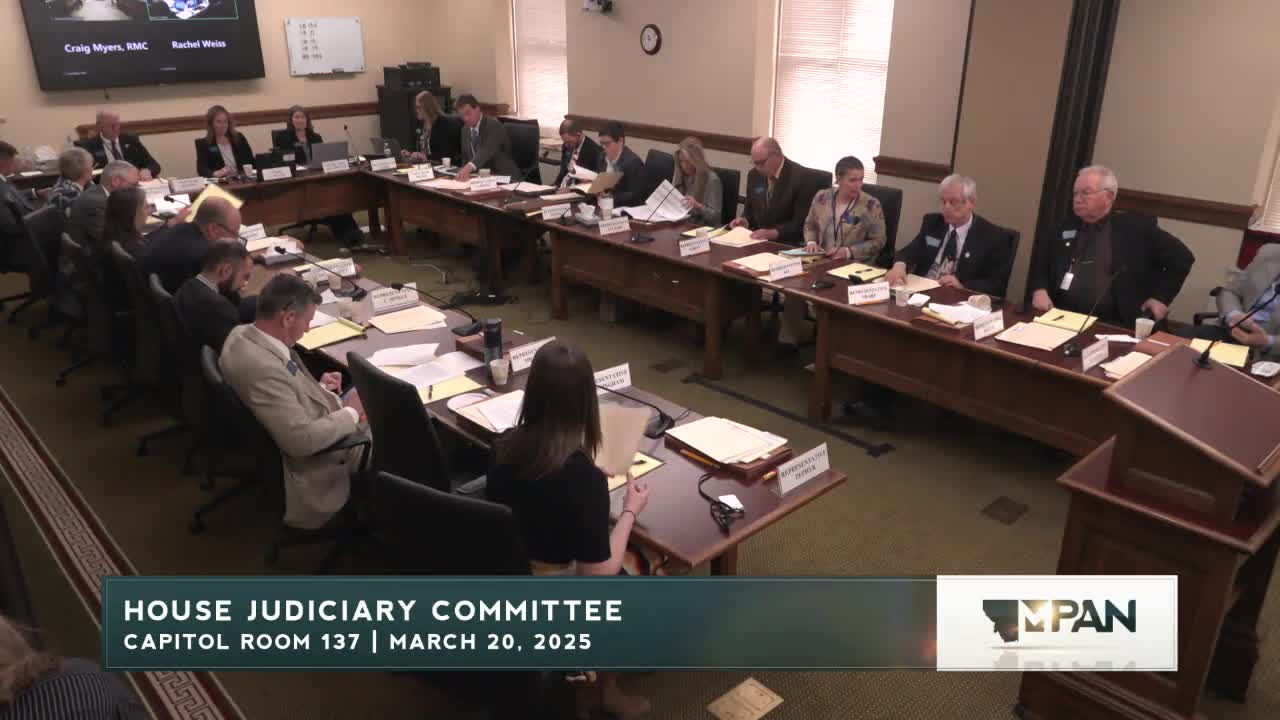
Senator Barry Usher presented Senate Bill 21 to the House Judiciary Committee, saying the bill would let a combination of executive and legislative leaders vacate a writ of mandamus that orders a public official to perform ministerial duties.
Usher said the bill was prompted by a disputed episode last session in which a court ordered the governor and secretary of state to take actions related to a vetoed bill; Usher said that order compelled officials to do things they could not physically perform and described the court action as an overreach. “Sometimes humans make errors, and when you're at the highest court and you can't go anywhere else, there's gotta be a relief valve,” Usher said.
Under the sponsor’s proposal, vacating a writ would require joint action by specified leaders (the sponsor described options such as the governor and a legislative presiding officer or the attorney general plus a legislative leader).
Opponents strongly opposed the bill. Friends of the Third Branch and other testimony called the proposal an unlawful intrusion on judicial authority and warned it would undermine the rule of law and lead to crises in separation of powers. Anne Sherwood said the constitutional provision the sponsor cited authorizes the court to issue writs, but does not allow the legislature to nullify a valid court order.
Other opponents said the bill would let elected officials refuse to process citizen-initiated ballot measures or other ministerial duties by vacating a mandamus; several initiative advocates and former drafters of initiative law warned the change would let officials thwart ballot measures by ignoring ministerial duties and then invoking the vacatur power.
Witnesses pointed to the practical consequences: initiative sponsors and voters could be blocked from circulating or certifying petitions if a mandamus directed clerks or officials to act and a political official chose to vacate the writ. Opponents urged a do-not-pass vote and asked committee members to weigh the long-term constitutional consequences of adding a legislative-executive override of judicial orders.
The sponsor offered to accept amendments that would narrow the mechanism (for example requiring more officials to act jointly) and described the proposal as a rare and narrow remedy rather than a general power.
No committee vote or other formal action on the bill appears in the transcript.
Why this matters: writs of mandamus are an extraordinary judicial tool to compel public officials to perform clear statutory duties; allowing political officials to vacate those writs would create a new check that opponents say risks undermining judicial enforcement of statutory and constitutional obligations.